Top 5 Benefits of Gibberellic Acid for Seed Germination?
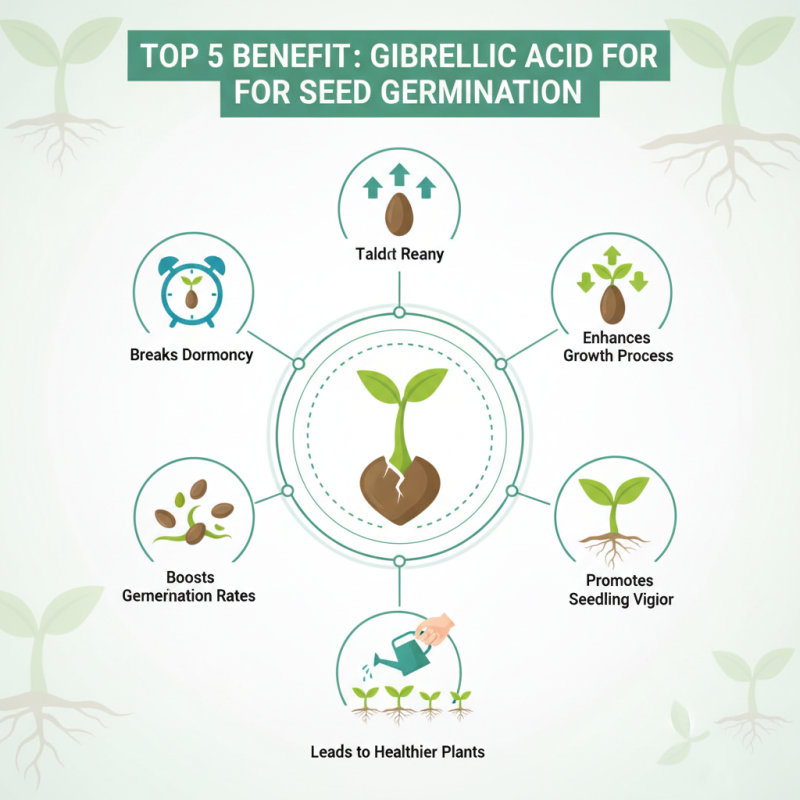
Gibberellic acid germination enhances the growth process for various seeds. This powerful plant hormone plays a crucial role in breaking dormancy. It stimulates crucial biological functions that lead to effective seed sprouting.
Seeds are often dormant due to environmental stressors or genetic factors. Gibberellic acid serves as a catalyst to awaken these seeds. This process can significantly improve germination rates and seedling vigor. The proper use of gibberellic acid can lead to healthier plants.
Understanding the benefits of gibberellic acid for seed germination is essential for growers. It is vital to apply it correctly for the best results. Over-application may lead to unforeseen effects. Future researchers might explore its full potential in agriculture.
Overview of Gibberellic Acid and Its Role in Seed Germination
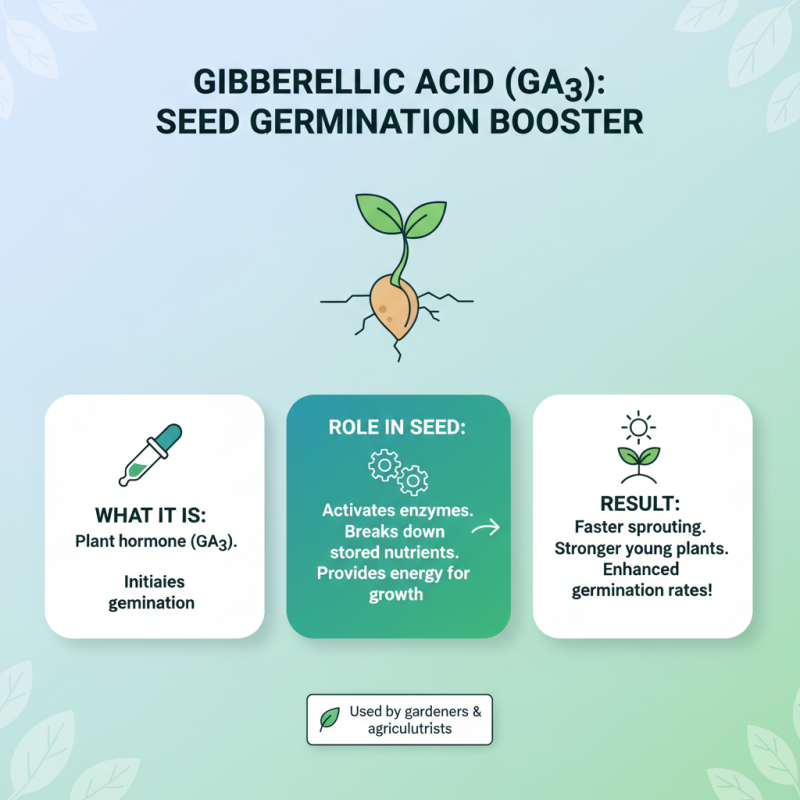
Gibberellic Acid (GA3) is a plant hormone that plays a crucial role in seed germination. It stimulates the production of enzymes that break down stored nutrients in seeds, making them available for growth. This process allows seeds to sprout and establishes a strong foundation for young plants. Many gardeners and agriculturists use GA3 to enhance germination rates effectively.
Using GA3 can also improve seedling vigor. Seeds treated with GA3 often show faster growth and higher resilience to environmental stress. However, not all seeds respond the same way to GA3 treatment. Some may require specific concentrations for optimal results. Testing on a small batch before full application is wise.
Tips: When applying GA3, keep the concentration low to avoid potential toxicity. Observe how your seeds react to the treatment. If germination rates decline, adjustments may be necessary. Additionally, consider environmental factors such as temperature and moisture, as they significantly impact seed germination and GA3 effectiveness.
Mechanism of Gibberellic Acid Action in Seeds
Gibberellic acid (GA) plays a crucial role in seed germination. This natural plant hormone affects various physiological processes. It triggers the production of enzymes needed to break down stored food within the seed. These enzymes convert starches into simple sugars. This energy kick-starts growth and helps the seedling to emerge.
Understanding how gibberellic acid acts can reveal its importance. When seeds absorb water, GA levels rise quickly. This surge signals the seed to start germinating. Furthermore, it encourages the elongation of the seedling. Plants can push through soil more efficiently. But overuse can lead to poor growth or irregularities.
Research indicates that optimal levels of gibberellic acid enhance germination rates. These benefits are particularly evident in certain crop species. However, the reaction can vary depending on environmental conditions. External factors like temperature and moisture levels also influence the effectiveness of GA. Striking the right balance is essential for maximizing seedling health.
Enhancing Seed Germination Rates with Gibberellic Acid
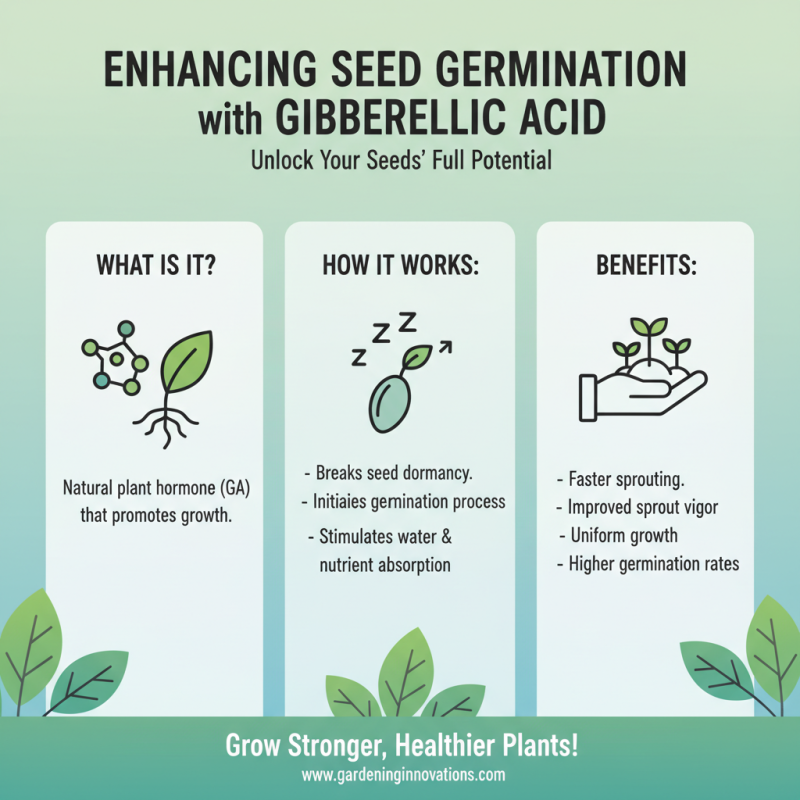
Gibberellic acid (GA) plays a crucial role in enhancing seed germination rates. This natural plant hormone encourages seed growth by breaking dormancy and initiating the germination process. By applying GA, gardeners and farmers can see significant improvements in sprout vigor and uniformity. The hormone stimulates enzymes that help seeds absorb water and nutrients, which are vital for early development.
To make the most of gibberellic acid, timing is important. Apply it when seeds are ready to start germinating. Overuse can lead to unpredictable results, affecting germination rates negatively. Different species have varying sensitivity levels to GA, so test on a small batch first.
Keep in mind that external factors also affect germination, such as temperature and moisture. Ensure a proper growing environment for your seeds. Adjust your GA concentrations based on observed output. A reflective approach will help improve your technique and enhance your success rate. Understanding each factor's impact is key to mastering seed germination with gibberellic acid.
Effects of Gibberellic Acid on Seedling Growth and Development
Gibberellic acid plays a crucial role in seedling growth and development. This plant hormone promotes cell elongation and division. As a result, seedlings often grow taller and healthier. In many cases, plants exposed to gibberellic acid develop stronger stems and leaves. This enhanced growth can lead to increased survival rates.
Moreover, gibberellic acid helps break seed dormancy. It can initiate germination processes that might otherwise be delayed. This means seeds can sprout when conditions are less than perfect. However, it is essential to apply gibberellic acid carefully. Overuse can lead to weak seedlings that are less resilient.
Field studies have shown varied results. Some plants respond dramatically, while others show minimal change. Environmental factors, such as light and moisture, also play a significant role. Inconsistencies in results highlight the need for careful research. Understanding these factors can lead to better agricultural practices.
Top 5 Benefits of Gibberellic Acid for Seed Germination
| Benefit |
Description |
Impact on Seed Germination |
| Enhanced Germination Rate |
Gibberellic acid promotes faster sprouting of seeds. |
Increases the percentage of seeds that successfully germinate. |
| Uniform Germination |
Helps to synchronize the timing of seed germination. |
Results in seedlings emerging at the same time. |
| Improved Seedling Growth |
Enhances overall growth and vigor of seedlings. |
Leads to healthier and more robust plants. |
| Reduced Germination Time |
Speeds up the time it takes for seeds to germinate. |
Allows for quicker crop rotation and planning. |
| Increased Resistance to Stress |
Helps seedlings better withstand environmental stresses. |
Improves survival rates in adverse conditions. |
Practical Applications of Gibberellic Acid in Agriculture and Horticulture
Gibberellic acid (GA3) has a significant role in agriculture and horticulture. It enhances seed germination, promoting faster and more uniform sprouting. Farmers and gardeners often use it to boost crop yields. Its application is particularly beneficial in dealing with seeds that have low germination rates.
In practical applications, GA3 can be sprayed on seeds before planting. This treatment softens the seed coat and allows water absorption. Additionally, it stimulates the growth hormones within the seed. This method is especially useful for crops like barley and tomatoes, where timely germination is critical.
Tips: Monitor the concentration of gibberellic acid. Too much can excessively promote growth, leading to weak plants. Apply it during optimal temperatures to maximize effectiveness. Experiment with different application methods, as direct contact with seeds may vary in results. Careful adjustments can lead to improved outcomes and a better understanding of plant responses.
Using gibberellic acid can also raise questions about the best times to apply it. Some may find that early applications benefit some seeds more than others. Always reflect on your methods and results. Observing plant growth trends will help refine your approach. The goal is to achieve stronger, healthier plants using this powerful growth regulator.
Top 5 Benefits of Gibberellic Acid for Seed Germination