2026 Best Uses of Gibberellic Acid 20 for Plant Growth?
Gibberellic acid 20 is gaining attention in agriculture. This plant growth regulator has shown impressive results across numerous studies. According to industry reports, gibberellic acid 20 can increase crop yield by up to 30%. Farmers are continuously looking for ways to enhance productivity and efficiency. The use of gibberellic acid has proven to be an effective strategy.
Research indicates that gibberellic acid 20 promotes cell elongation and encourages seed germination. For instance, the treatment of seedlings boosts their growth rate significantly. However, the effectiveness varies across plant species and growing conditions. Some farmers report mixed outcomes, suggesting that more refinement is needed.
The application of gibberellic acid 20 is not without challenges. Misapplication can lead to undesirable growth patterns. It is crucial for users to understand the optimal dosage and timing. Industry experts emphasize the importance of precise application techniques to maximize benefits. The evolving nature of agricultural practices requires continual assessment and adaptation.
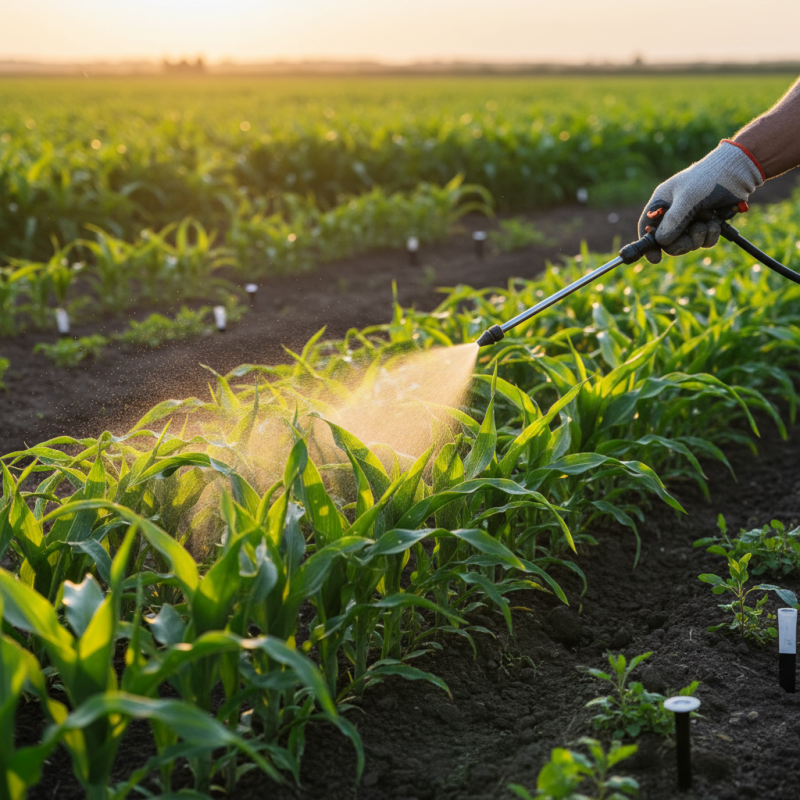
Applications of Gibberellic Acid 20 in Agriculture
Gibberellic Acid 20 is a powerful plant growth regulator. It stimulates growth and enhances the production of fruits and flowers. In agriculture, its applications are diverse and impactful. Farmers often use it to promote seed germination and increase yields. It is especially useful for crops like rice and grapes.
One important tip is to apply it at the right time. Timing affects its effectiveness. Overuse can lead to stunted growth or deformities. A small dose can make a significant difference. Always dilute it properly before application. This ensures better absorption by the plants.
Additionally, monitoring environmental conditions is crucial. Factors like temperature and humidity can affect the results. Keep in mind that not all plants respond the same way. Some might require more or less than others. It's a trial and error process, and adjustments might be needed. Regular observation can guide you in making these adjustments.
Impacts of Gibberellic Acid 20 on Germination Rates
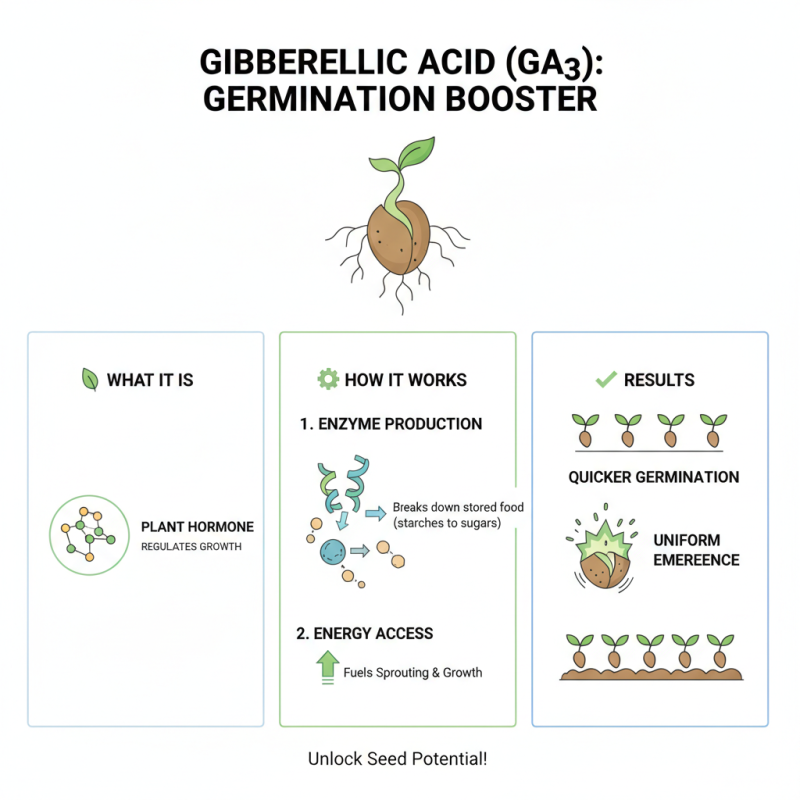
Gibberellic Acid 20 (GA3) plays a crucial role in enhancing germination rates for various seeds. This plant hormone influences several physiological processes. It stimulates the production of enzymes that break down stored food in seeds. As a result, seeds can access energy for sprouting. This promotes quicker and more uniform germination.
Research shows that seeds treated with GA3 generally germinate faster. For instance, certain vegetable seeds can have their germination time reduced by half. However, using too high a concentration could lead to adverse effects. It can cause abnormal growth patterns. Some seeds may even fail to germinate altogether.
Experiments with different application techniques show varied results. Soil drenching, for example, can be effective but requires careful measurement. Over-application can saturate the soil and limit oxygen access. The impact of environmental factors can also complicate results. Temperature and moisture levels must be optimized for best outcomes. These details are vital but often overlooked. Each step counts in achieving the best germination rates with GA3.
Role of Gibberellic Acid 20 in Enhancing Plant Growth
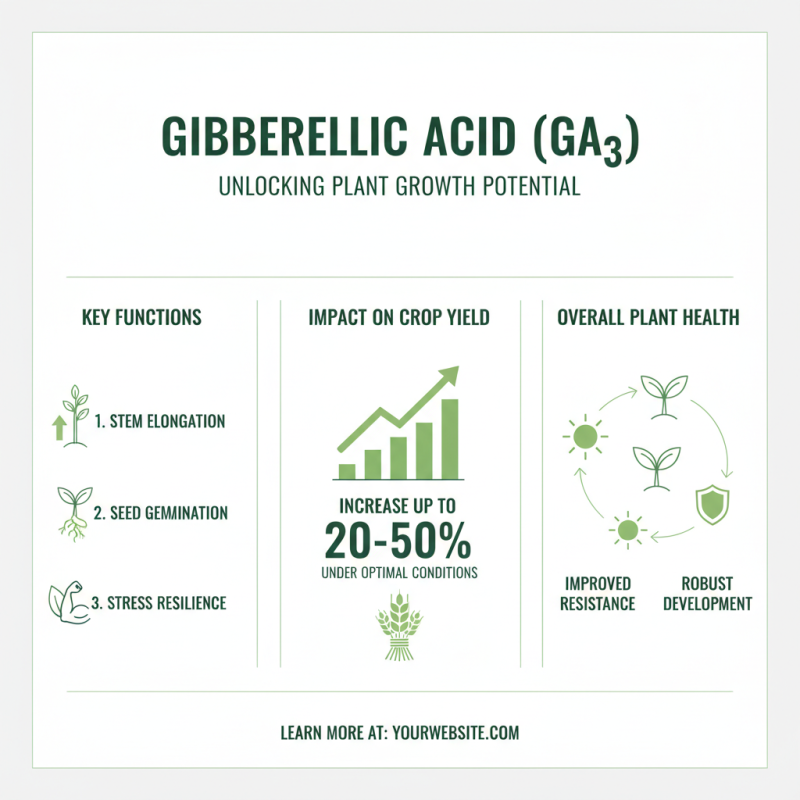
Gibberellic Acid 20 (GA3) plays a critical role in enhancing plant growth. It influences several physiological processes, stimulating stem elongation and seed germination. Studies show that GA3 can increase crop yield by 20-50% under optimal conditions. This remarkable growth hormone boosts the overall health of plants, enhancing their resilience to stress.
One interesting observation is that GA3 can impact flowering time. In some species, applications of GA3 lead to earlier flowering, which can result in extended harvest periods. However, using too much can cause abnormal growth patterns. It’s essential to strike a balance. For instance, over-application may lead to excessive leaf growth instead of fruit production.
**Tips:** For effective application, start with a low concentration. Observe how plants respond to GA3 before gradually increasing the dosage. Timing is crucial; applying GA3 during critical growth stages will yield better results. Monitor plants regularly to detect any unexpected growth changes, as these can inform your application strategy.
Gibberellic Acid 20 for Improving Crop Yield and Quality
Gibberellic Acid 20 (GA20) acts as a powerful growth regulator in crops. Its role in improving crop yield and quality is well-documented. For instance, studies show that using GA20 can increase yields by up to 30% in certain crops. This increase is particularly significant in cereal grains and fruits.
GA20 helps in enhancing leaf area and fruit set, resulting in better photosynthesis. A report from the Agricultural Research Service stated that GA20 application can lead to larger and more uniform fruit sizes. Both quality and marketability improve through this method.
Tips: Apply GA20 during the early growth stages. This encourages better root development. Using it at the right time maximizes benefits but be cautious; over-application might lead to unwanted growth patterns. Monitoring plant responses is essential.
While GA20 shows promise, results may vary by crop type. Factors like soil conditions and climate can influence effectiveness. Farmers should conduct small-scale tests before widespread use. Understanding local conditions can lead to better outcomes with GA20. Use caution and adjust strategies as needed.
Best Practices for Using Gibberellic Acid 20 in Horticulture
Gibberellic Acid 20 is a powerful tool for plant growth in horticulture. It promotes seed germination, elongates stems, and enhances fruit development. Using it effectively can yield impressive results. However, improper application might lead to plant stress. Balance is crucial.
When applying Gibberellic Acid, consider the concentration. Start with a low dose. Observe your plants for responses. Increase gradually if needed. Overapplication can stunt growth. Always test on a small batch first.
Timing also matters. Apply it during active growth stages. Using it too late can hinder results. The right timing ensures maximum effectiveness. Remember, every plant species has different needs. Adjust your practices accordingly. Always document your results to refine your approach.