site_4bbb466c-cafd-4edb-8869-71ed8e60d33a
Excellence in PGR technology
China has become a major sourcing center for high-quality Atomized Metal Powder used in additive manufacturing, metal injection molding, thermal spraying, and precision components. Global buyers need more than competitive pricing. They need stable particle size, controlled chemistry, reliable packaging, and clear technical documentation.
An experienced Chinese supplier should explain its production process openly. Gas atomization and water atomization create different powder characteristics. Particle shape, oxygen content, flowability, apparent density, and sieve distribution can affect production results. Quality teams should review laboratory reports, batch numbers, inspection records, and certificates before approving regular supply. Small details matter. A sealed container, dry storage, and moisture-resistant inner bag can protect powder during international transportation.
Trust develops through evidence, not promises. Reliable suppliers usually provide samples, trial-batch support, production updates, and practical technical communication. They should also understand export documentation and help buyers confirm packaging, labeling, and delivery requirements. However, no supplier is perfect. A powder specification may perform differently across machines, feed systems, or sintering conditions. Even experienced teams can overlook a minor process change. That is why pilot testing and documented feedback remain essential.
This guide introduces key factors for selecting a China-based Atomized Metal Powder supplier. It considers material consistency, manufacturing capability, inspection discipline, customization, communication, and long-term service. Buyers can compare suppliers with greater confidence and avoid decisions based only on attractive quotations. The right partnership should support repeatable production, measurable quality, and responsible global purchasing.
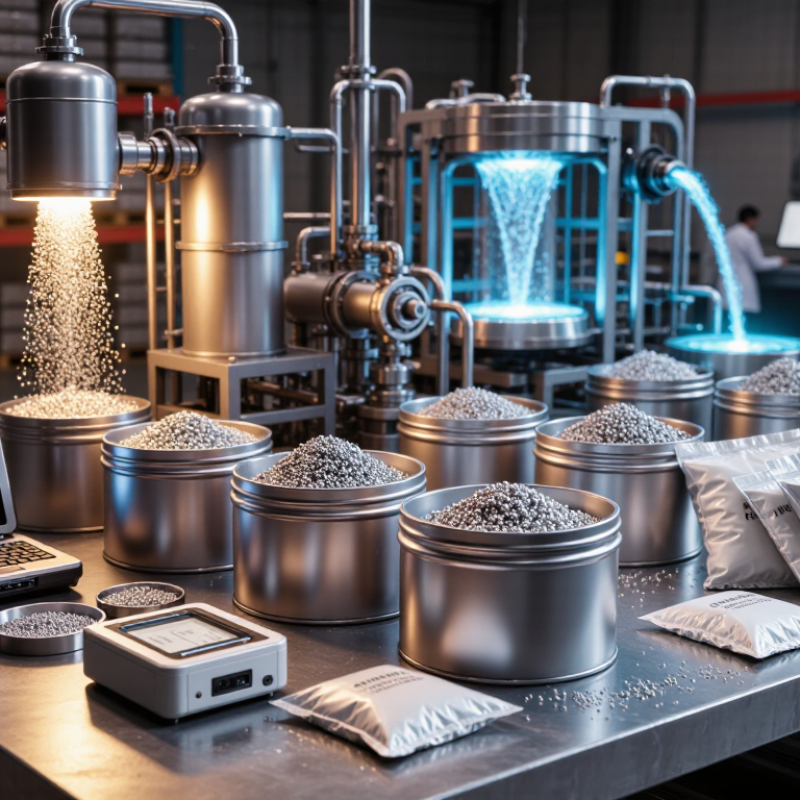
Atomized metal powder is produced by breaking molten metal into fine droplets, then cooling them into particles. The process often uses gas or water streams. Each method creates different shapes, sizes, and surface conditions. Gas atomization commonly produces smoother particles for additive manufacturing and precision molding. Water atomization can offer irregular particles with strong compaction behavior.
For global buyers, these details affect more than the purchase price. Particle size controls flow through feeders and printing systems. Shape influences packing density and powder movement. Oxygen content can affect sintering, strength, and surface quality. A reliable supplier should provide batch data, chemical analysis, particle-size distribution, and traceable production records. Packaging also matters. Moisture-resistant containers help protect powder during long-distance transport. Small details matter.
Tips: Ask for a representative sample before placing a large order. Compare flow rate, apparent density, oxygen level, and sieve results. Confirm testing methods, tolerance ranges, and storage guidance. Request clear documentation for every batch.
Buyers should also examine production consistency, not only laboratory results. A powder may perform well once and change slightly later. That risk deserves attention. I have seen specifications look complete while practical feeding behavior remained uncertain. Testing the powder in the intended equipment is wiser. Good technical communication should include questions, limits, and honest discussion of possible variation.
Atomized metal powder starts with controlled melting. Producers load qualified metal feedstock into an induction furnace. Argon or vacuum protection limits oxidation during melting. Temperature control matters because a small deviation can change viscosity and particle formation.
The liquid stream then enters an atomization chamber. High-pressure gas creates spherical particles with smoother surfaces and better flow. Water atomization cools faster and usually produces irregular particles at lower cost. Gas atomization suits demanding applications, including additive manufacturing and precision components. The 2024 Wohlers Report valued the global additive manufacturing industry at about 20 billion US dollars in 2023, supporting continued demand for consistent metal powders.
After cooling, operators dry, sieve, and classify the powder. Oversized particles return for further processing. Technicians test particle-size distribution, apparent density, flowability, chemical composition, and oxygen content. ISO/ASTM 52907:2019 provides guidance for metal powder characterization and quality control. In practice, experienced suppliers also inspect morphology through microscopy and retain batch samples for traceability.
Quality is not automatic.
A powder may pass basic tests yet perform poorly in printing or pressing. Humidity, storage time, and handling can alter flow behavior. This is where manufacturers should remain cautious. Better documentation, calibrated equipment, and honest batch reporting often matter more than impressive specifications.
Selecting a reliable Chinese atomized metal powder supplier requires more than comparing prices. Start with verified material data. Ask for chemical composition, particle size distribution, morphology, oxygen content, moisture, flow rate, and apparent density. These values should match your process, whether it involves additive manufacturing, thermal spraying, or powder metallurgy. Request recent batch records, not only standard brochures.
A dependable supplier should provide a clear certificate of analysis for every shipment. The document should identify the lot number, testing method, measured values, and acceptance limits. Traceability matters. You should be able to connect a sealed package to production records and raw material sources. Suppliers with quality management certification may offer stronger controls, but certification alone proves little. Audit the testing process when possible. Check laboratory equipment, calibration records, sampling procedures, and storage conditions.
Small details reveal practical experience. Powder containers should be sealed, labeled, and protected from humidity. Ask how rejected batches are handled. Ask about delivery inspections, technical support, and complaint response times. I would question results that appear perfect across every lot. Real production includes controlled variation. No supplier is flawless. During evaluation, I would compare samples through independent testing, even when the supplier seems trustworthy. That extra cost may expose differences in flowability, contamination, or particle shape before they affect your production line.
Choosing an atomized metal powder supplier starts with the intended process, not the product label. Additive manufacturing often needs controlled particle size, near-spherical morphology, and stable flow. Metal injection molding may require finer powder and suitable binder compatibility. Thermal spraying can prioritize deposition behavior and oxidation control. The right grade depends on equipment, not marketing language.
Compare particle size distribution, apparent density, tap density, flow rate, oxygen level, and moisture. Ask for recent batch test reports, sampling methods, and traceability records. A narrow distribution can improve feeding, but it may also raise cost or reduce packing efficiency. Finer powder is not automatically better. In one production trial, a fine grade showed good surface detail but caused inconsistent feeding. That result changed our selection criteria.
Performance should be checked under real operating conditions. Review powder spreadability, layer consistency, sintering response, or coating adhesion, depending on the application. Small differences in humidity and storage time can alter results. Supplier samples should be tested with your machine settings and post-processing route. Certificates provide confidence, but they do not replace practical validation. A reliable supplier should explain limitations clearly, including variation between batches and recommended storage controls. Mistakes happen. Good documentation makes them easier to understand and correct.
Practical comparison of commonly used gas- and water-atomized metal powders for additive manufacturing, powder metallurgy, thermal spraying, brazing, and related industrial applications.
| Powder Grade / Alloy Family | Typical Atomization Route | Common Particle-Size Range | Typical Particle Shape | Typical Apparent Density | Key Performance Characteristics | Typical Applications | Main Selection Considerations |
|---|---|---|---|---|---|---|---|
| Aluminum Alloy Powder Al-Si-Mg Family | Gas atomization is commonly used for high-flow additive-manufacturing powder. | 15–63 µm for laser powder bed fusion; coarser cuts may be supplied for other processes. | Mostly spherical with low satellite content when well classified. | Approximately 1.0–1.6 g/cm³, depending on alloy and measurement method. | Low density, good thermal conductivity, high specific strength, and good powder flow when spherical. Sensitive to oxidation and moisture. | 3D-printed housingsAutomotive partsAerospace componentsHeat exchangers | Check oxygen level, hydrogen content, size distribution, flowability, and compatibility with the selected print parameters. |
| Copper and Copper-Alloy Powder | Gas atomization is preferred for spherical AM powder; water atomization is also used for press-and-sinter grades. | 15–63 µm for AM; approximately 45–150 µm for many powder-metallurgy grades. | Gas-atomized: generally spherical. Water-atomized: more irregular and angular. | Approximately 2.5–4.5 g/cm³, depending on morphology and alloy. | Very high electrical and thermal conductivity. Copper reflects some common laser wavelengths, so process settings and energy input are important. | Electrical contactsInduction componentsThermal managementBrazingPowder metallurgy | Compare purity, oxygen content, tap density, conductivity, particle morphology, and process-specific absorptivity. |
| Stainless Steel 316L Powder | Gas atomization is widely used for additive manufacturing; water atomization is common for conventional powder metallurgy. | 15–63 µm for AM; approximately 45–150 µm for press-and-sinter applications. | Gas-atomized grades are predominantly spherical; water-atomized grades are irregular. | Approximately 2.8–4.5 g/cm³, depending on morphology and test method. | Good corrosion resistance, weldability, ductility, and broad processing compatibility. Low carbon content helps reduce sensitization risk. | Chemical equipmentMedical instrumentsFood-processing partsGeneral AM components | Verify chemical composition, oxygen and nitrogen levels, flow rate, Hall flow, apparent density, and lot-to-lot consistency. |
| Stainless Steel 17-4 PH Powder | Gas atomization is typical for laser and electron-beam additive manufacturing. | 15–63 µm for many AM systems. | Predominantly spherical with a controlled fine-particle fraction. | Approximately 2.8–4.5 g/cm³. | Precipitation-hardening stainless steel offering high strength after suitable solution and aging treatments. Corrosion resistance is generally lower than 316L in some environments. | ToolingValvesAerospace hardwareIndustrial components | Compare heat-treatment response, retained-austenite control, oxygen level, particle-size distribution, and post-build strength data. |
| Nickel-Based Superalloy Powder | Gas atomization under controlled atmosphere is normally selected to limit oxidation and inclusions. | 15–63 µm for laser powder bed fusion; 45–106 µm is common for some directed-energy processes. | Mostly spherical, with strict control of satellites, pores, and nonmetallic inclusions. | Approximately 3.0–5.0 g/cm³. | High-temperature strength, oxidation resistance, and creep resistance. Powder cleanliness and thermal history strongly affect build quality. | Turbine componentsCombustion hardwareOil and gas partsHigh-temperature tooling | Review trace elements, oxygen, nitrogen, inclusion content, internal porosity, flowability, and high-temperature mechanical data. |
| Titanium Alloy Powder Ti-6Al-4V Family | Plasma or inert-gas atomization is commonly used for aerospace and medical AM grades. | 15–63 µm for laser powder bed fusion; 45–106 µm for some directed-energy processes. | Highly spherical powder with low oxygen pickup and controlled satellites. | Approximately 1.8–2.8 g/cm³. | High strength-to-weight ratio, excellent corrosion resistance, and strong biocompatibility potential. Highly reactive at elevated temperatures and requires controlled handling. | Aerospace structuresOrthopedic implantsMotorsport partsChemical equipment | Pay particular attention to oxygen, nitrogen, hydrogen, iron, morphology, flow rate, and storage under controlled conditions. |
| Cobalt-Chromium Alloy Powder | Gas atomization is commonly selected for dental, medical, and high-wear AM grades. | 15–63 µm for many laser powder bed fusion systems. | Predominantly spherical with controlled fine particles and low porosity. | Approximately 2.8–4.5 g/cm³. | High wear resistance, corrosion resistance, stiffness, and elevated-temperature capability. Requires suitable processing and post-treatment to manage residual stress. | Dental frameworksOrthopedic componentsWear-resistant partsHigh-temperature tooling | Compare chemical limits, powder cleanliness, flowability, internal porosity, biocompatibility documentation, and heat-treatment data. |
| Iron-Based Powder | Water atomization is common for press-and-sinter grades; gas atomization is used where higher sphericity is required. | Approximately 45–180 µm for conventional powder metallurgy; finer grades are available for specialized processes. | Water-atomized: irregular and porous. Gas-atomized: more spherical and free-flowing. | Approximately 2.5–4.2 g/cm³. | Cost-effective, widely available, and suitable for compaction. Irregular morphology improves green strength but can reduce flowability. | GearsBushingsStructural partsMagnetic componentsFriction materials | Compare oxygen content, compressibility, green strength, sintered density, dimensional change, and lubricant compatibility. |
| Tool Steel Powder | Gas atomization is generally used for powder-bed fusion and hot-isostatic-processing feedstock. | 15–63 µm for many AM systems; coarser distributions may be used for other consolidation routes. | Predominantly spherical, with controlled carbide-forming elements and low inclusion content. | Approximately 2.8–4.5 g/cm³. | High hardness, wear resistance, and dimensional stability after suitable heat treatment. Cracking sensitivity varies with composition and thermal history. | Molds and diesCutting toolsWear insertsRepair cladding | Evaluate crack sensitivity, carbon and alloy content, particle size, oxygen, heat-treatment response, and achievable hardness. |
China Best Atomized Metal Powder Supplier for Global Buyers
Ordering, Inspection, Packaging, and International Delivery Procedures
Reliable atomized metal powder sourcing begins with a clear technical inquiry. Share the alloy, particle size range, apparent density, flow requirements, and intended process. A professional supplier should confirm production capacity, lead time, test methods, and applicable export documents. Trial quantities are often wiser than large orders. Powder behavior can change between batches.
Before shipment, request a representative sample and a complete certificate of analysis. Check chemical composition, particle distribution, morphology, oxygen content, and moisture levels. Independent inspection can verify the results before loading. Ask whether the inspection uses recognized laboratory methods. Numbers without test conditions may look impressive but remain difficult to compare.
Packaging deserves practical attention. Inner sealed bags should limit moisture exposure, while rigid outer containers should resist impact during handling. Each package should show the grade, lot number, net weight, production date, and storage guidance. Keep containers dry and away from ignition sources when applicable. Safety data should travel with the shipment.
International delivery requires accurate invoices, packing lists, certificates, and customs descriptions. Confirm the destination country’s import rules before dispatch. The carrier should review classification, labeling, insurance, and temperature or humidity concerns. Port delays happen. A delivery plan should include buffer time and a contact for document corrections. In practice, even careful suppliers can miss a small detail, such as a weight mismatch. That weakness deserves review, not concealment. Good communication makes correction faster.
Typical planning time by stage for an international industrial order
The timeline represents a practical export-planning baseline in working days: document review and order confirmation, production, pre-shipment inspection, export packaging, customs clearance, and ocean delivery. Actual timing depends on powder specification, order quantity, inspection scope, port congestion, destination regulations, and the selected Incoterm.
| Cookie | Duration | Description |
|---|---|---|
| _wpfuuid | 11 years | This cookie is used by the WPForms WordPress plugin. The cookie is used to allows the paid version of the plugin to connect entries by the same user and is used for some additional features like the Form Abandonment addon. |
| cookielawinfo-checkbox-analytics | 11 months | This cookie is set by GDPR Cookie Consent plugin. The cookie is used to store the user consent for the cookies in the category "Analytics". |
| cookielawinfo-checkbox-functional | 11 months | The cookie is set by GDPR cookie consent to record the user consent for the cookies in the category "Functional". |
| cookielawinfo-checkbox-necessary | 11 months | This cookie is set by GDPR Cookie Consent plugin. The cookies is used to store the user consent for the cookies in the category "Necessary". |
| cookielawinfo-checkbox-others | 11 months | This cookie is set by GDPR Cookie Consent plugin. The cookie is used to store the user consent for the cookies in the category "Other. |
| cookielawinfo-checkbox-performance | 11 months | This cookie is set by GDPR Cookie Consent plugin. The cookie is used to store the user consent for the cookies in the category "Performance". |
| viewed_cookie_policy | 11 months | The cookie is set by the GDPR Cookie Consent plugin and is used to store whether or not user has consented to the use of cookies. It does not store any personal data. |
| Cookie | Duration | Description |
|---|---|---|
| CONSENT | 2 years | YouTube sets this cookie via embedded youtube-videos and registers anonymous statistical data. |
| vuid | 2 years | Vimeo installs this cookie to collect tracking information by setting a unique ID to embed videos to the website. |