7 Tips for Choosing the Best Flat Bottom Pouch
Choosing the right package involves more than selecting an attractive shape. A Flat Bottom Pouch can stand upright and offer a broad printable panel, but its performance depends on the product, materials, and filling process. The Flexible Packaging Association reported U.S. flexible packaging industry sales of $42.9 billion in its 2023 State of the U.S. Flexible Packaging Industry report. That figure reflects a large, established sector—not proof that every pouch suits every product.
Small details matter. Coffee may need strong oxygen and moisture barriers; dry snacks may need a reliable seal and easy opening. Powdered products can expose weak seals quickly. Even a good-looking sample can disappoint on a fast filling line. No format is perfect.
These seven tips focus on decisions buyers can verify: pouch dimensions, material layers, barrier requirements, closure options, printing, production compatibility, and supplier quality checks. Ask for specifications, sample pouches, and test results relevant to your product. Confirm that the pouch runs well on your equipment, not just in a sales presentation. When comparing quotes, check what is included, such as printing setup, minimum order quantities, and delivery terms. A lower unit price may not mean lower total cost.
There is judgment involved. A pouch that protects well may use more material than expected, and a premium finish may add little value on a crowded shelf. Use the tips as a practical shortlist, then test your leading option under real storage and handling conditions.
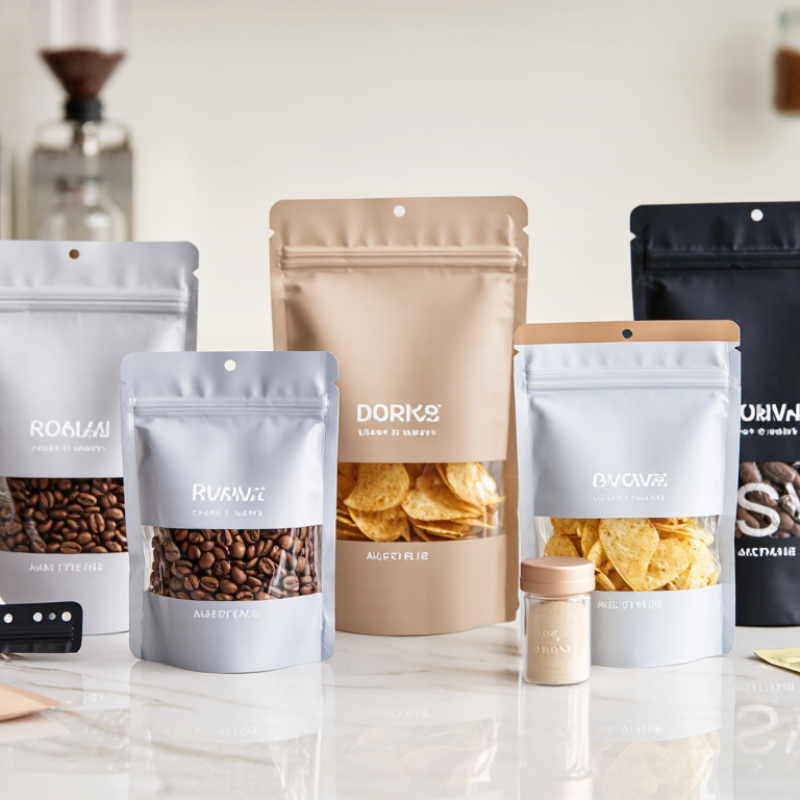
Understand the Product and Its Packaging Requirements
Before choosing a flat bottom pouch, define what the product needs protection from. A dry snack may need a barrier against moisture and oxygen, while a light-sensitive powder may also require protection from light. Note the product’s texture, oil content, aroma, and expected shelf life. Small details matter. A few crumbs near the seal can affect closure quality.
Consider how much product each pouch must hold and how it will be filled. Measure the product by weight and volume; bulky pieces can need more space than their weight suggests. Check the pouch’s base width, gusset depth, and headspace with a filled sample. A pouch that stands well when empty may lean once loaded. That is easy to miss.
Think about storage and delivery conditions, too. Will packages sit in a warm warehouse, travel long distances, or face frequent handling? Match the material structure and closure to those real conditions, then ask a packaging specialist to confirm compatibility. Test the pouch on the actual filling equipment, not only by hand. Seal temperature, speed, and product dust can change results. A polished mock-up is not proof. I would also leave room to revise the design after trial runs; early estimates are sometimes wrong.
Choose the Right Pouch Size, Capacity, and Shape
Choosing a flat-bottom pouch starts with the product, not the shelf. Measure the product’s settled volume, then leave room for filling and closure. A pouch that looks roomy when empty can become tight once its base gusset opens. Check width, height, and gusset depth together; each affects usable capacity. Include headspace for sealing, especially for powders that settle during transit. A practical test: fill a sample pouch, seal it, and place it upright on a shelf. Does it stand without bulging? Small tests beat guesswork.
The Flexible Packaging Association’s 2024 State of the U.S. Flexible Packaging Industry report put 2023 sales at $42.9 billion, showing how widely these formats are used. But market growth cannot tell you which dimensions fit your product. The U.S. EPA’s 2018 waste report estimated that containers and packaging generated 82.2 million tons of municipal solid waste. Right-sizing can avoid excess material, though the smallest pouch is not always the best choice. Consider shipping cartons, display space, and how customers scoop or pour. A broad base improves stability; a taller, narrower profile may use shelf height better. Test filled samples in real cartons, too. This step is easy to skip—and sometimes costly.
Choosing a Flat Bottom Pouch: Size vs. Estimated Capacity
Compare example pouch dimensions to see how width, height, and bottom gusset affect estimated capacity.
Capacity values are approximate geometric estimates calculated as width × height × bottom gusset. Actual usable capacity varies with pouch construction, material, filling method, and product shape. Choose a pouch based on the product’s volume and dimensions, then confirm fit with a sample.
Compare Materials, Barrier Properties, and Shelf-Life Needs
A flat bottom pouch can stand neatly on a shelf, but its layers do the harder work. Start with the product’s sensitivity. Coffee may need protection from oxygen and moisture, while powdered foods can also be affected by light and odors. A pouch that looks sturdy is not automatically a strong barrier.
Compare material structures using technical data, not appearance alone. Paper adds a natural look and some stiffness, but usually needs protective layers to limit moisture and oxygen. Plastic laminates can offer stronger barriers, though the exact performance depends on the film combination and thickness. For products sensitive to light, an opaque layer may help. Ask for transmission data and confirm that the pouch’s seals and zipper meet the same performance needs. Small details matter.
Shelf life should guide the specification. A product expected to sit for months in a warm, humid storeroom may need different protection from one sold quickly in a cool shop. Match barrier levels to the product, storage conditions, and planned shelf life, then validate them with packaging tests. It is tempting to choose the highest barrier available, but that may add cost without a clear benefit. I would not guess from a sample pouch alone; real products and storage conditions can behave differently.
Select a Closure and Features for Storage and Convenience
A flat bottom pouch stands upright on a pantry shelf, but its closure determines how useful it stays after opening. For snacks or dry ingredients used over several days, a press-to-close zipper can help limit spills and exposure to air. Check that the zipper runs smoothly and seals across the full width. A stiff, misaligned track is frustrating.
Tip: Match the closure to how the contents are used. A tear notch and heat-sealed top suit products intended to be opened once, while a zipper offers repeat access. Keep enough space above the zipper for a clean seal; crumbs or powder caught in the track can stop it closing properly. Small detail, real difference.
Think about storage conditions, too. A pouch kept in a humid kitchen may need a stronger moisture barrier than one stored in a cool, dry cupboard. A clear window makes contents easy to see, though it can reduce protection from light, depending on the material. I once chose a pouch by appearance alone; it looked tidy, but the closure was awkward with one hand. That was a poor test. Try opening and reclosing a sample, then check whether it stands securely when partly full.
