What is Gibberellic Acid and How Does it Affect Plant Growth?
Gibberellic acid is a powerful plant hormone. It plays a crucial role in promoting growth and development. Derived from fungi, this organic compound significantly impacts various physiological processes in plants.
Research shows gibberellic acid enhances seed germination and elongation. It affects stem growth and leaf expansion in numerous species. For instance, in rice and barley, the presence of this hormone can lead to taller plants and improved yields. However, effects can vary depending on concentration and application method.
Despite its benefits, using gibberellic acid requires careful consideration. Overapplication may result in weaknesses in plant structure. Additionally, not all plants respond similarly to this hormone. Understanding these nuances is essential for effective utilization.
What is Gibberellic Acid?
Gibberellic acid is a plant hormone that plays a crucial role in growth and development. It is part of the gibberellins family, a group of hormones that regulate various processes in plants. Found naturally in fungi, this compound stimulates stem elongation, seed germination, and flowering. Farmers and gardeners often use it to enhance crop yields.
The effects of gibberellic acid are quite fascinating. When applied to seeds, it can break dormancy, allowing them to sprout. This can significantly alter harvest times. Additionally, it can produce taller plants, which can be both an advantage and a disadvantage. While increased height can be beneficial for some crops, it may lead to instability in others, exposing them to wind damage.
Moreover, gibberellic acid influences fruit development. It can enhance fruit size but may also affect taste and quality. Understanding its multifaceted role in plant biology is essential. There is still ongoing research into its potential side effects, emphasizing the need for careful application. The balance between growth promotion and plant health must be considered.
Effect of Gibberellic Acid on Plant Growth
This chart demonstrates the effect of different concentrations of Gibberellic Acid (GA3) on the height of plants. The control group shows the baseline height, while increasing levels of GA3 correspond to significant increases in plant height, suggesting a positive effect of Gibberellic Acid on growth rates.
The Historical Discovery of Gibberellic Acid
Gibberellic acid, a plant hormone, has a rich history. It was first discovered in the 1930s by Japanese researchers. They isolated it from a fungus named Gibberella fujikuroi. This fungus affected rice plants, causing excessive growth. Such remarkable effects drew attention and sparked further research into gibberellins.
In the 1950s, scientists began to synthesize gibberellic acid artificially. This development allowed for extensive studies on its impact on various plants. Reports indicated that gibberellic acid could increase seed germination rates by up to 50%. Additionally, it promotes stem elongation, which can lead to taller and healthier plants. However, its use raises questions about balance. Over-application can lead to weak stems and other growth issues.
Today, many agricultural practices incorporate gibberellic acid. It is commonly used in crops such as grapes and barley. The growth acceleration is compelling, but sustainability concerns linger. Researchers worry about the long-term effects on plant health and ecosystems. More studies are needed to understand these implications better. The journey of gibberellic acid is ongoing, marked by potential yet challenged by complexity.
Mechanism of Action: How Gibberellic Acid Affects Plants
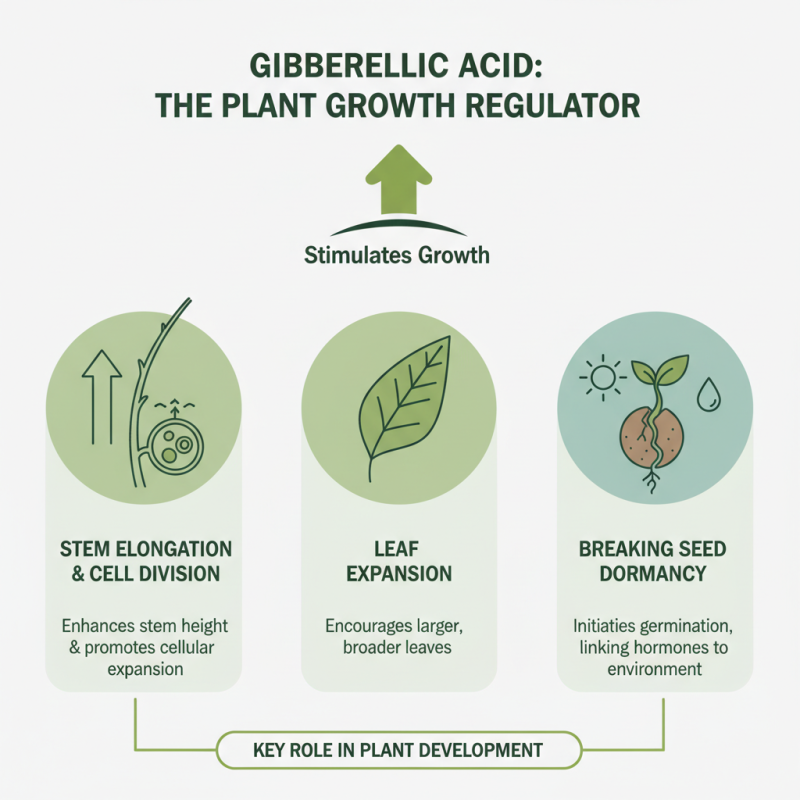
Gibberellic acid, a plant growth regulator, plays a vital role in the growth dynamics of various plants. It stimulates cell elongation and division. This enhances stem growth and encourages leaf expansion. In many plants, it helps break dormancy in seeds. This creates a link between hormonal responses and environmental cues.
Gibberellic acid acts by binding to specific receptors in plant cells. This triggers a cascade of events leading to increased gene expression related to growth. It also promotes flowering in some species by regulating the transition from vegetative to reproductive stages. However, the effects may vary among different plant types. Over-application can lead to abnormal growth patterns or even reduced crop yields.
Understanding gibberellic acid's mechanism offers insights into plant biology. Sometimes, the outcomes are unpredictable. What works for one plant might not be effective for another. Balancing its use is crucial for maximizing growth while preventing negative effects. This awareness can lead to more sustainable agricultural practices. The journey of exploration continues in the world of plant hormones.
Effects of Gibberellic Acid on Plant Growth and Development
Gibberellic acid (GA) is a natural plant hormone that plays a significant role in plant growth. It is responsible for stimulating various developmental processes. These include seed germination, stem elongation, and the flowering process. When applied effectively, it can lead to impressive gains in growth rate.
One of the most fascinating effects of gibberellic acid is its influence on seed germination. Seeds treated with GA often sprout faster and more uniformly. This can be a game changer for farmers and gardeners looking for quicker yields. In some cases, overuse can cause unexpected issues, such as abnormal growth or poor plant health. It's essential to balance the application.
GA also promotes stem elongation. This is particularly useful for some crops that require height. However, excessive growth can weaken the plant structure, making it prone to damage. Some plants may become leggy, which is not ideal. Observing these effects critically can lead to better management practices. Not all plants react the same way to GA, and each situation warrants careful monitoring.
Applications of Gibberellic Acid in Agriculture and Horticulture
Gibberellic acid (GA3) is a powerful plant growth regulator. It stimulates seed germination, stem elongation, and fruit development. In agriculture, growers utilize it to enhance crop yield and quality. For instance, studies show that treated seeds can germinate 30% faster than untreated ones. This implies a quicker turnaround for farmers and potentially higher profits.
In horticulture, gibberellic acid finds applications in promoting flowering. Certain fruit trees benefit from GA3, experiencing increased blooming. Research indicates that applying GA3 can improve the size and uniformity of fruits like grapes and apples. In controlled experiments, GA3-treated apples averaged 20% larger than non-treated samples. This growth can lead to better market prices.
However, the use of GA3 is not without challenges. Excess application may lead to undesirable growth patterns. Some growers report issues with overly tall plants, which can become less stable. This brings up the need for careful calibration in its use. Balancing growth and plant health is crucial in maximizing benefits while minimizing drawbacks.