What is Gibberellic Acid and What Are Its Uses in Plants?
Gibberellic acid is a powerful plant hormone. It plays a crucial role in growth and development. Experts have highlighted its significance. Dr. Emily Carter, a leading botanist, once stated, “Gibberellic acid uses in plants can revolutionize agricultural productivity.”
This plant growth regulator is essential for seed germination. It encourages plants to break dormancy. Additionally, gibberellic acid promotes stem elongation. These processes can enhance crop yields significantly. Farmers often rely on it for various crops.
However, the application of gibberellic acid isn't without challenges. Overuse can lead to unpredictable results. Plants may grow too tall or weak. It's vital to strike a balance. Understanding gibberellic acid uses in plants requires careful consideration. Continuous research and observation are needed to maximize its benefits while minimizing drawbacks.
What is Gibberellic Acid? Definition and Discovery History
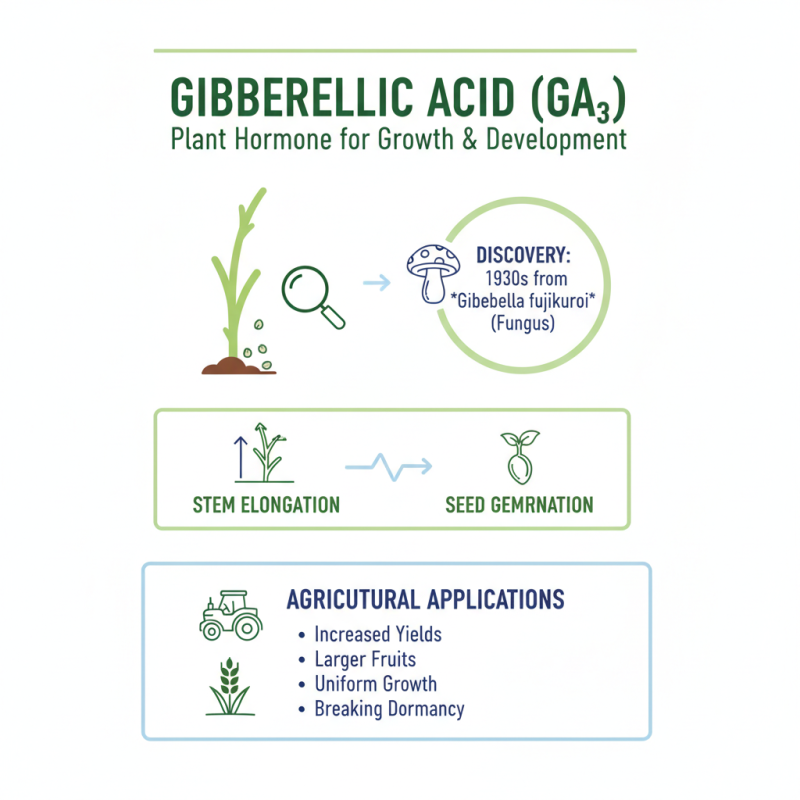
Gibberellic acid (GA3) is a plant hormone that plays a crucial role in growth and development. Discovered in the 1930s, it was initially identified from a fungus, Gibberella fujikuroi. Researchers found that this substance could dramatically promote stem elongation and seed germination. This led to greater interest in its applications for agriculture.
In terms of usage, gibberellic acid has been documented to enhance fruit growth and improve yields. A report from the International Journal of Agriculture indicates that treatments with GA3 can increase grape size by up to 30%. This hormone affects various processes, including flowering, enzyme production, and seed development. The versatility of GA3 makes it an important tool for farmers and horticulturists alike.
However, the application of gibberellic acid is not without its challenges. Overuse can lead to abnormal growth patterns in plants. There are instances where excessive application resulted in weakened stems and reduced resistance to diseases. These issues highlight the need for careful management and understanding of GA3's effects. Continuous research is needed to find a balanced approach for its application in modern agriculture.
Chemical Structure and Natural Sources of Gibberellic Acid
Gibberellic acid (GA) is a key plant hormone. It plays a vital role in growth and development. Chemically, it’s a diterpenoid. The formula is C19H22O6. This compound is derived from the fungus known as Gibberella fujikuroi. This fungus was first discovered in infected rice plants. The effects of GA were noticed, leading to further studies.
Natural sources of gibberellic acid extend beyond fungi. Some plants produce it during their life cycle. These include certain species of celery and peas. In nature, gibberellins promote seed germination. They also enhance stem elongation and flowering. The actions of this hormone are fascinating yet complex. Different plants might respond differently to GA applications. Some may flourish, while others may not show significant changes. That's an aspect worth exploring further. Understanding these variations remains a challenge for scientists and gardeners alike.
Mechanisms of Action: How Gibberellic Acid Affects Plant Growth
Gibberellic acid is a plant hormone that plays a significant role in regulating growth. It influences processes like seed germination, flowering, and fruit development. This hormone helps break seed dormancy, ensuring that germination occurs under optimal conditions. When the conditions are right, gibberellic acid triggers enzymes that kickstart the germination process.
In addition to promoting germination, it impacts stem elongation. Plants treated with gibberellic acid often grow taller and develop longer internodes. This can be beneficial for crops where height is desired. However, excessive use can lead to weak stems that may not support the plant well. Such an issue often requires farmers to reflect on the right dosage.
Gibberellic acid also affects flowering timing. It can induce flowering in some plants, leading to larger yields. Yet, in certain cases, the plants may flower too early; premature flowering can reduce overall harvest quality. This necessitates careful consideration of application timing for the best results. Balancing these effects is crucial for successful growth management in agriculture.
Applications in Agriculture: Uses of Gibberellic Acid in Crop Management
Gibberellic acid (GA3) is a natural plant hormone that plays a critical role in growth and development. Its applications in agriculture are expanding rapidly. Growers use GA3 to improve crop yields and enhance fruit quality. For instance, using gibberellic acid can increase the size of grapes by up to 20%. This growth regulator helps to break dormancy in seeds and prompts earlier flowering in many crops.
In crop management, GA3 proves useful for various fruits and vegetables. For example, it is particularly beneficial for maximizing grain size in rice and barley, leading to improved harvests. According to a report from the Food and Agriculture Organization, global rice production could rise by 10% with optimal GA3 application. However, proper dosage is vital, as too much can harm instead of help. Over-application may lead to excessive stem elongation and weaker plants.
**Tip:** Start with small doses when applying gibberellic acid. Monitor your plants closely for reactions. Adjust your strategy based on the outcomes. Balancing growth and health is essential. Remember, not all crops respond the same way. Test on a small scale before large-scale application. Adapt your methods according to specific crop needs.
Effects on Seed Germination and Fruiting in Various Plant Species
Gibberellic acid (GA3) plays a significant role in seed germination. It promotes the breakdown of seed dormancy. A study indicated that applying GA3 can enhance germination rates by up to 75% in some crops, like tomatoes. This acid triggers enzymes that mobilize stored nutrients, enabling faster sprout development. In laboratory conditions, it was observed that certain seeds germinated two weeks earlier when treated with gibberellins.
The impact of gibberellic acid extends to fruit development as well. In various plant species, GA3 promotes fruit set and maturation. For example, it has been shown to increase strawberry yields by 43% when used appropriately. However, not all plants respond positively. Some species might exhibit excessive growth or abnormal fruit development with high concentrations of GA3. This inconsistency can lead to frustration among growers who expect uniform results.
Furthermore, the timing of application is crucial. Early or late application can compromise outcomes. Researchers suggest careful experimentation with dosage and timing to find the optimal balance. Observing plant responses remains essential. Each species has unique requirements, and not all will thrive under the influence of gibberellic acid.