What is Gibberellic Acid Application in Agriculture?
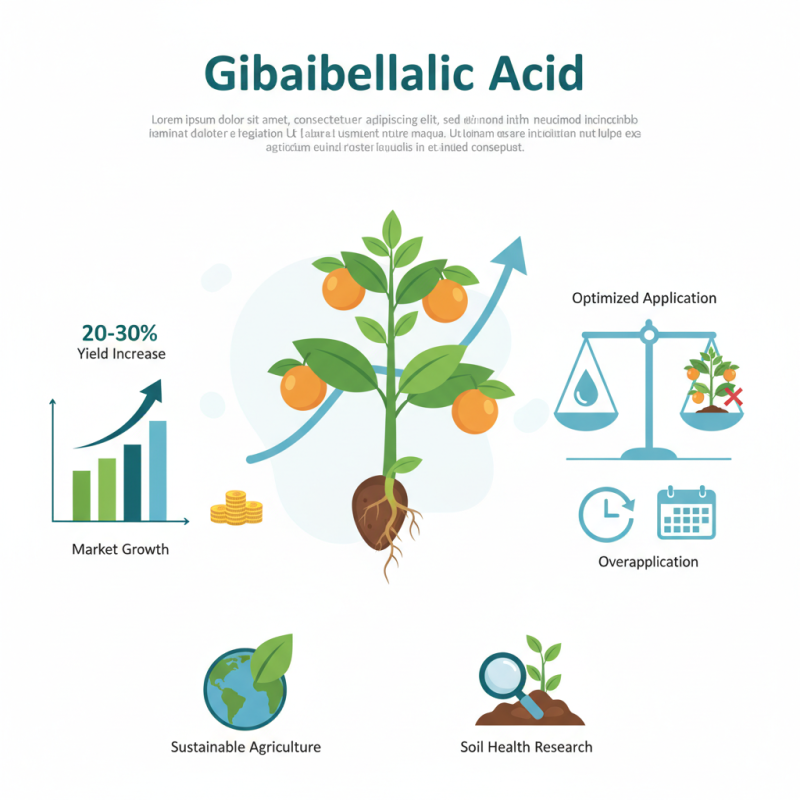
Gibberellic acid application is revolutionizing agriculture. This natural plant growth regulator enhances crop yield significantly. Reports show a potential increase in yields by 20-30% when applied correctly. It plays a vital role in seed germination and stem elongation. These factors lead to stronger plants and better harvests.
Farmers are increasingly using gibberellic acid. However, there are challenges. Overapplication can result in adverse effects, like reduced crop quality. It is essential for farmers to balance application rates for optimal results. Monitoring and adjusting the timing of applications is crucial in practice.
Recent studies indicate that the global market for gibberellic acid is expected to grow. This reflects its importance in sustainable agriculture. However, there remains a need for further research. Understanding the long-term effects of gibberellic acid application on soil health is essential. As the agriculture industry evolves, thoughtful use will ensure both productivity and sustainability.
Overview of Gibberellic Acid in Agriculture
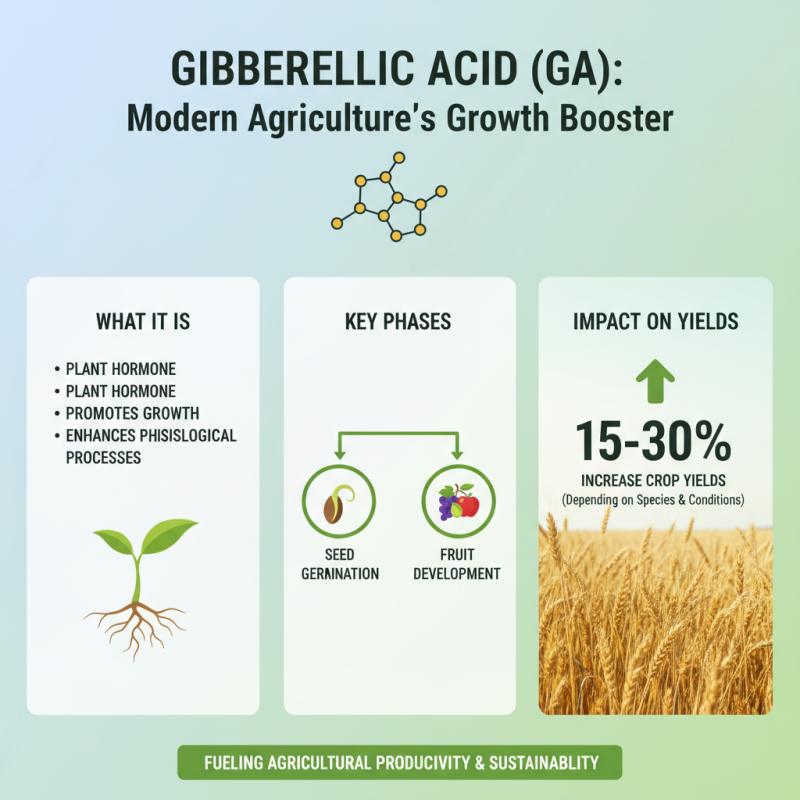
Gibberellic acid (GA) plays a vital role in modern agriculture. It is a plant hormone that promotes growth and enhances various physiological processes. This substance is particularly important during critical growth phases, like seed germination and fruit development. Research indicates that applying GA can increase crop yields by 15-30%, depending on the species and environmental conditions.
Its effectiveness varies among crops. For instance, in grape production, GA can enhance berry size and improve overall quality. However, excessive application may lead to issues like abnormal growth patterns. A study published in the Journal of Agricultural Sciences found that improper GA use can reduce fruit set and negatively impact marketability. These findings remind farmers to approach GA application with caution.
Proper timing and dosage are crucial. Applying gibberellic acid during inappropriate growth stages may hinder plant development. A balance is needed to maximize benefits while minimizing drawbacks. Understanding the soil's nutrient levels and environmental factors is equally important. As agriculture increasingly relies on such hormones, farmers must gather accurate data for informed decisions.
Mechanisms of Action and Biological Effects of Gibberellic Acid
Gibberellic acid (GA) plays a vital role in agriculture. It influences plant growth and development in various ways. One of its main actions is stimulating stem elongation. This process allows plants to reach sunlight more effectively. Furthermore, GA promotes seed germination by breaking dormancy. As seeds absorb water, they activate enzymes that begin growth.
Another significant effect of gibberellic acid is its impact on flowering. Some plants respond positively to GA, resulting in earlier flowering times. This can benefit farmers aiming for a quicker harvest. However, not all crops react the same way. Some may require specific conditions for optimal results. So, understanding individual plant needs is crucial.
In addition, gibberellic acid affects fruit development. It can enhance fruit size and quality. Yet, excessive use may lead to undesirable traits, like irregular shapes. It’s important for farmers to find a balance. Using GA thoughtfully can lead to beneficial outcomes, but misuse risks crop health.
Gibberellic Acid Application in Agriculture
This bar chart illustrates the effectiveness of Gibberellic Acid in various agricultural applications, such as seed germination, stem elongation, flowering, fruit development, and overall yield improvement.
Application Methods and Timing for Crop Growth Enhancement
Gibberellic acid (GA) is a plant hormone widely used in agriculture. Its application can significantly enhance crop growth. Timing and method of application are crucial for achieving the best results.
For effective use, GA should typically be applied during key growth stages. Early application can encourage seed germination. Farmers often apply it right after planting. This is when plants are most receptive. Additionally, applying GA during flowering can improve fruit set and yield.
Tips: Always test on a small area first. Monitor plant response closely. Adjust applications based on your observations. Over-application can lead to unwanted growth issues. Less is often more.
Foliar sprays are common for GA application. They provide a direct method to deliver the hormone. Timing is everything: typically, sprays are done in the morning or late afternoon. However, weather conditions should be considered. A windy day can result in uneven distribution. The challenge is finding the right balance.
Understanding the specific needs of each crop is essential. Not all plants respond the same way to GA. Some may require higher doses. Others might thrive with less. It's a trial-and-error process, but it can lead to impressive results.
What is Gibberellic Acid Application in Agriculture? - Application Methods and Timing for Crop Growth Enhancement
| Crop Type |
Application Method |
Application Timing |
Expected Benefits |
| Rice |
Foliar Spray |
Early Growth Stage |
Increased height and improved yield |
| Barley |
Soil Drench |
Before Flowering |
Enhanced seed development |
| Grapes |
Root Application |
Pre-Bloom |
Improved fruit size and color |
| Tomatoes |
Foliar Spray |
Early Fruit Set |
Higher fruit yield and quality |
| Wheat |
Soil Application |
Post-Anthesis |
Increased grain filling and weight |
Effects on Seed Germination and Plant Development
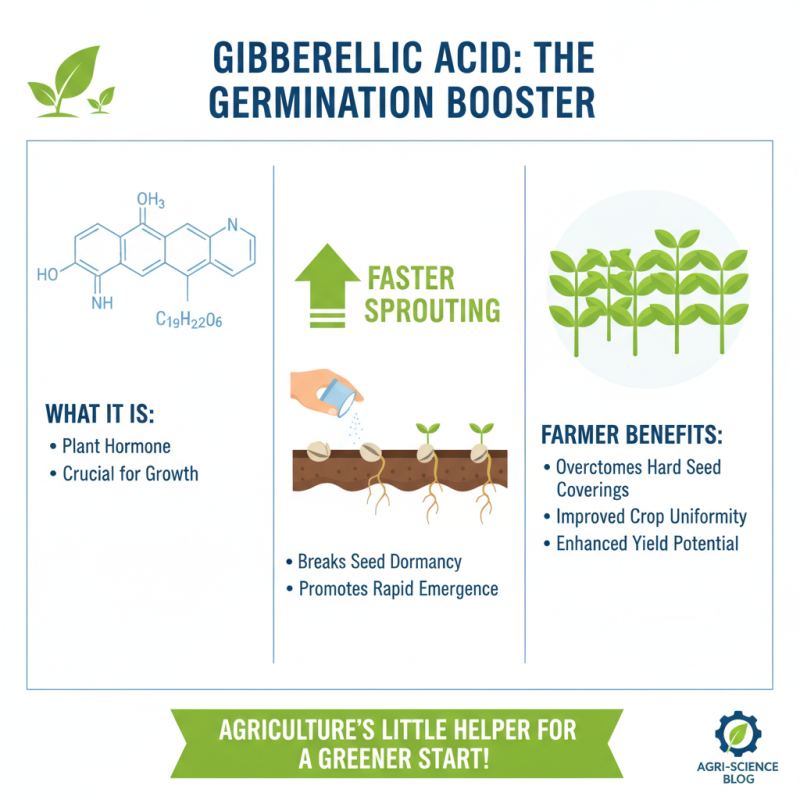
Gibberellic acid is a plant hormone that plays a vital role in agriculture. Its ability to influence seed germination is remarkable. When applied, it can break seed dormancy and promote faster sprouting. For instance, it can help seeds that are hard to germinate due to their tough coverings. Many farmers have observed quicker emergence in certain crops with its use.
Plant development is also significantly enhanced by gibberellic acid. It encourages stem elongation, leading to taller plants. This can be particularly beneficial for crops that require height for better light absorption. However, over-application might create weak stems. The balance here is delicate, as excess can lead to lodging in cereal crops.
Farmers need to consider environmental factors when using gibberellic acid. Soil moisture, temperature, and species type can all affect outcomes. Understanding these interactions can strengthen the effectiveness of this hormone. Continuous monitoring and adjustments are crucial. The journey of optimizing its use is ongoing, leaving room for learning and adaptation.
Challenges and Considerations in Gibberellic Acid Use
Gibberellic acid (GA) plays a key role in agriculture.
It promotes plant growth, enhances seed germination, and increases fruit size. However, using GA is not without challenges.
One major concern is the timing of application.
If applied too early or too late, the desired effects may not occur.
Farmers should also consider the concentration of GA used.
Too much can lead to unwanted growth patterns. On the other hand, too little might not yield significant results.
It’s crucial to find the right balance. Monitoring environmental factors like temperature and humidity is essential.
These can affect plant responses to GA.
Tip: Always conduct a small trial before large-scale application.
This helps determine the right concentration for your crops.
Another challenge is the potential for inconsistent results.
Different plant species respond differently to GA. This variability can make it hard to predict outcomes.
Factors like soil type and plant health also play a role.
Tip: Keep detailed records of each application and its effects.
This information will help refine your methods over time.
Being open to adjustment is vital in making GA work effectively.