Gibberellic Acid Effect on Plants How Does It Influence Growth and Development?
Gibberellic acid is a plant hormone with remarkable effects. Its influence on plant growth and development is profound. Researchers have found that gibberellic acid effect on plants varies across different species. It promotes stem elongation, seed germination, and flowering.
These impacts can lead to significant changes in agricultural practices. Farmers may rely on gibberellic acid for larger and more robust crops. However, the use of this hormone requires careful consideration. Overapplication can result in excessive growth or poor fruit quality.
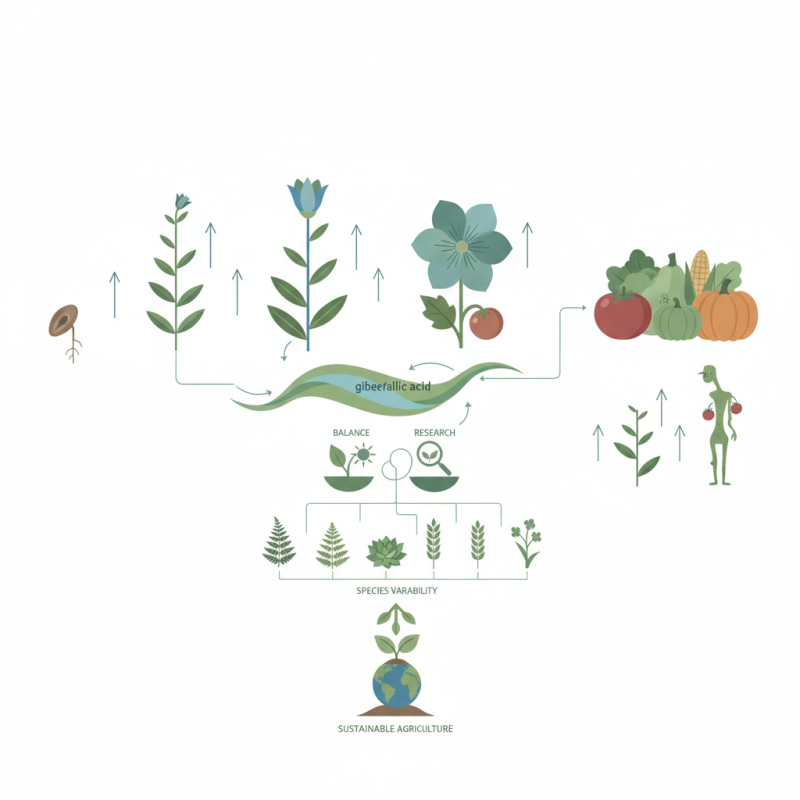
Understanding the balance is key. It is essential to recognize the generational effects of gibberellic acid on plant health. Caution in application can yield positive results. Each plant species responds uniquely to gibberellic acid, and this variability invites crucial discussions. Ultimately, deeper research into the gibberellic acid effect on plants can lead to more sustainable agricultural methods.
Gibberellic Acid: A Key Regulator of Plant Growth and Development
Gibberellic Acid, commonly known as GA3, is a vital growth regulator in plants. Research indicates that GA3 plays a significant role in various developmental processes, including seed germination, stem elongation, and flowering. According to a study by the American Society of Plant Biologists, gibberellins can increase seed germination rates by up to 60%. This promotes quicker crop cycles, essential for agricultural efficiency.
A closer look reveals that gibberellic acid impacts plant height significantly. In experiments, treated plants displayed up to 50% more growth in height compared to untreated ones. However, while these effects can enhance yield, they also raise concerns about plant stability. Taller plants are sometimes more vulnerable to environmental stressors like wind or heavy rains. This interplay between growth and vulnerability underscores the need for careful application of GA3.
Additionally, gibberellic acid influences flowering, which can lead to earlier fruit production. However, management practices are crucial. Overapplication may disrupt natural growth patterns. It can lead to overly extended internodes, weakening the plant structure. Balancing GA3 usage requires a nuanced understanding of crop needs and local environmental conditions. These complexities must be addressed to optimize plant development responsibly.
Mechanisms of Action: How Gibberellic Acid Influences Growth Processes
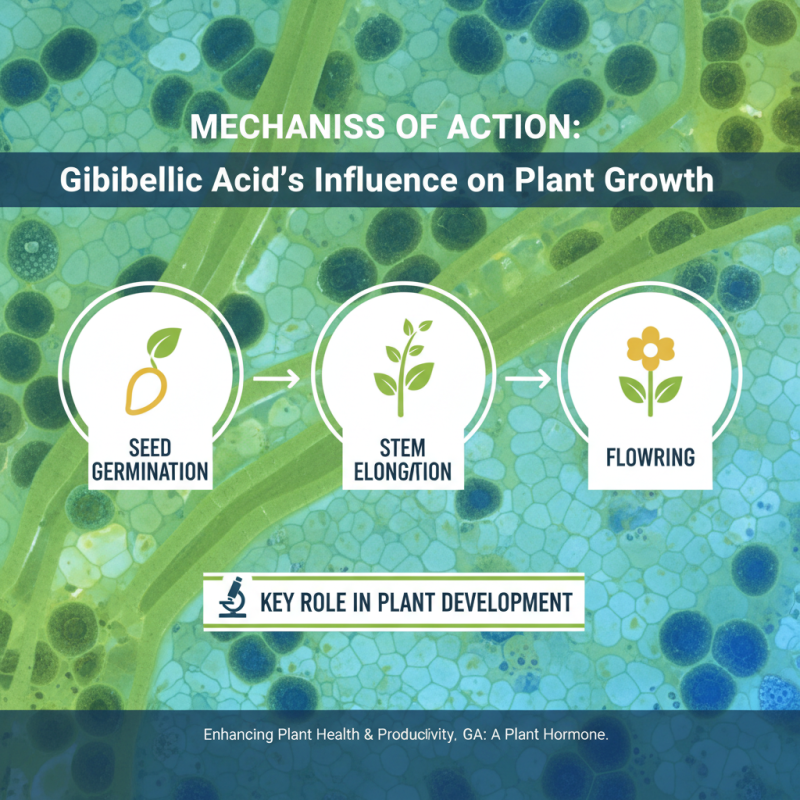
Gibberellic acid (GA) plays a crucial role in plant growth and development. This plant hormone is essential for various physiological processes. It significantly influences seed germination, stem elongation, and flowering in many species. Understanding how GA operates can provide insight into enhancing plant health and productivity.
One of the primary mechanisms of GA is its effect on gene expression. It stimulates the production of enzymes that break down starch. This process provides energy for seedlings as they grow. Additionally, GA interacts with proteins that regulate growth, promoting cell division and elongation. These actions facilitate rapid growth in response to favorable environmental conditions.
However, the response to gibberellic acid can vary among different plants. While some may flourish, others could exhibit stunted growth or abnormal development. Not all plants respond positively to increased GA levels. It's crucial to recognize that balance is key. Excessive application of GA can lead to undesirable results. Understanding these nuances can help in optimizing GA use in agriculture and horticulture.
Effects of Gibberellic Acid on Seed Germination and Dormancy Breaking
Gibberellic acid (GA3) plays a significant role in the germination of seeds and breaking dormancy. This plant hormone stimulates growth and regulates various developmental processes. Research indicates that GA3 can enhance seed germination rates by as much as 50% in some species. For instance, seeds that typically require stratification can germinate more efficiently when exposed to GA3.
The mechanism behind GA3 involves the breakdown of seed dormancy. It induces the synthesis of enzymes that mobilize stored nutrients in the seed. A study published in the "Journal of Experimental Botany" found that GA3 promotes the production of alpha-amylase, which breaks down starch into sugars. This provides essential energy for the growing seedling.
However, the effects of GA3 are not universally positive. In some cases, excessive application can lead to erratic growth patterns. Moreover, the concentration of GA3 is critical. A study by the American Society of Horticultural Science reported that high concentrations can inhibit germination instead of promoting it. This underscores the need for careful consideration of application rates to optimize seed germination and development effectively.
Gibberellic Acid Effect on Plants: How Does It Influence Growth and Development?
| Aspect |
Description |
Effect |
| Seed Germination |
Gibberellic acid stimulates the metabolic processes in seeds, promoting enzyme activity involved in germination. |
Accelerated germination rate and higher germination percentage. |
| Stem Elongation |
Promotes cell division and elongation in the stem tissue. |
Increased height and improved light interception. |
| Leaf Expansion |
Encourages expansion of leaf cells, resulting in larger leaves. |
Enhanced photosynthetic area, improving growth. |
| Fruit Development |
Initiates fruit set and can promote seedless fruit development. |
Improved fruit size and shape; increased yield. |
| Dormancy Breaking |
Reduces dormancy in many seeds and buds, facilitating growth. |
Earlier growth onset and synchronization of germination. |
Gibberellic Acid and Its Role in Stem Elongation and Leaf Expansion
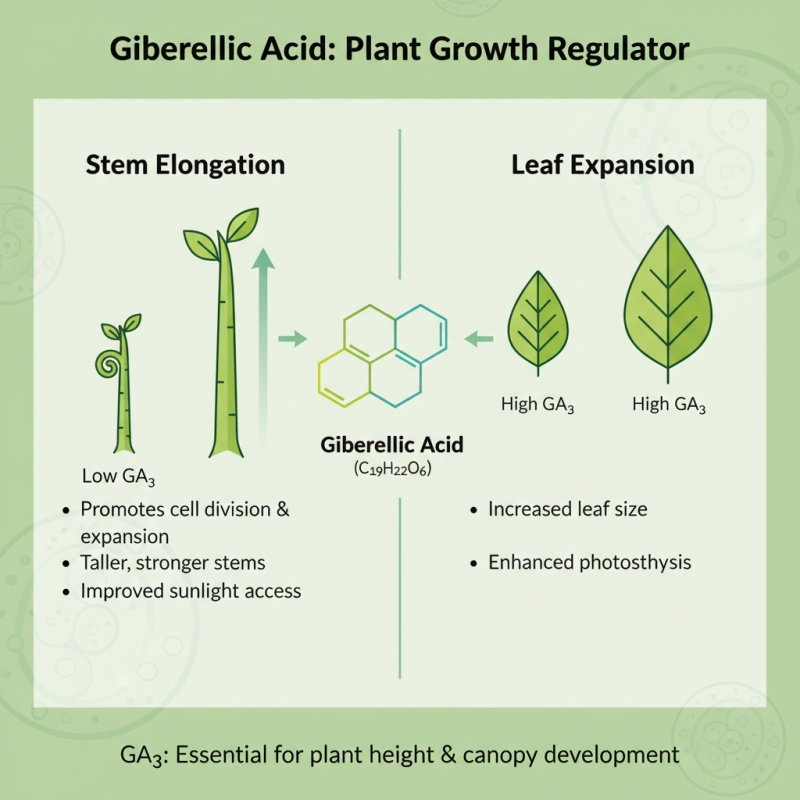
Gibberellic acid (GA3) plays a crucial role in plant growth. One of its primary functions is promoting stem elongation. When plants receive sufficient levels of GA3, their stems grow taller and more robust. This elongation allows plants to reach sunlight more effectively, enhancing their photosynthetic capacity.
Leaf expansion is another significant effect of gibberellic acid. Larger leaves can capture more light, leading to improved growth. Studies show that GA3 influences cell division and enlargement in leaves, which is essential during the early stages of development. However, excessive application can cause abnormalities, such as distorted leaf shapes.
The impact of GA3 should be monitored carefully. A balance is required. Too little may stunt growth, while too much can lead to weak structures. Understanding the specific needs of different plants is vital. Each species may react differently to gibberellic acid levels. Thus, careful experimentation is necessary for optimal results.
Commercial Applications of Gibberellic Acid in Agriculture and Horticulture
Gibberellic acid (GA3) is a powerful plant growth regulator used widely in agriculture and horticulture. It promotes cell elongation, seed germination, and flowering in various plants. Farmers utilize GA3 to enhance yields and improve fruit quality. Its effectiveness is observable in crops like grapes and tomatoes, where it leads to larger fruits and increased harvests.
However, improper use can lead to unexpected results. Over-application might cause excessive growth or delayed maturity. It's essential to apply the right concentration. Each crop type may have its unique response. Therefore, conducting preliminary trials is advisable before large-scale application.
**Tips:** Monitor your plants after application. Look for changes in growth patterns. Adjust GA3 concentrations based on your observations. Always consider environmental factors, such as temperature and humidity. These can significantly influence the effectiveness of gibberellic acid.
In horticulture, GA3 is frequently used in floriculture. It promotes flowering in ornamental plants, leading to more vibrant displays. Understanding the specific needs of each plant is crucial for success. Researching local agricultural norms can provide valuable insights, improving application strategies.