Uses of Gibberellic Acid in Plants Benefits and Applications?
Gibberellic acid is a vital plant hormone with numerous applications. The uses of gibberellic acid in plants are diverse and impactful. This natural compound promotes growth, enhances seed germination, and affects flowering processes. By manipulating plant hormones, farmers can improve crop yield and quality.
In agricultural practices, gibberellic acid has become essential. It helps elongate stems in certain crops, leading to taller plants. This height can make some plants more desirable and marketable. Additionally, it plays a role in breaking dormancy in seeds, allowing for quicker germination in optimal conditions.
Despite its benefits, the application requires caution. Overuse of gibberellic acid can lead to undesirable outcomes. Plants may grow too rapidly and become weak. Balancing its use necessitates understanding each plant's specific needs. Continual research into the uses of gibberellic acid in plants will reveal more about its potential and limits.

Gibberellic Acid: An Overview of Its Role in Plant Growth
Gibberellic acid (GA) plays a critical role in the growth and development of plants. This plant hormone is responsible for regulating key processes like cell elongation and seed germination. According to a report by the American Society of Agronomy, gibberellic acid can increase the growth rate of various crops by up to 30%. This considerable boost can significantly impact agricultural productivity.
Plants treated with GA often show enhanced flowering and fruiting. For instance, experiments reveal that GA can induce flowering in long-day plants. A study noted that applying GA increased flowering frequency by 60%.
However, not all plants respond uniformly to gibberellic acid. Some species may only show minor improvement or even adverse effects when treated. The concentration of GA applied is crucial. Misapplication can hinder rather than benefit plant growth, highlighting the need for careful management.
GA is also recognized for its role in breaking dormancy in seeds. This property makes it valuable for horticulture and agronomy. The timing and dosage of gibberellic acid application require attention. Research indicates that improper use can result in decreased germination rates. Further studies are necessary to maximize the benefits while minimizing risks associated with its application.
Mechanisms of Gibberellic Acid Action in Plant Physiology
Gibberellic acid (GA) plays a vital role in plant growth and development. It acts as a plant hormone that regulates various physiological processes. One major action of GA is promoting stem elongation. This elongation allows plants to reach light, enhancing their chances of survival. In addition, GA encourages seed germination by breaking dormancy. It signals seeds to absorb water, triggering metabolic processes.
Another important mechanism of GA is its influence on flowering. Certain plants require GA to induce flowering at specific times. This timing can affect fruit quality and yield. GA also helps in fruit development and ripening. Fruits treated with GA often show improved size and sweetness. However, this can lead to dependency among growers, creating a cycle of continuous use.
Despite its benefits, reliance on gibberellic acid raises critical questions. Overuse may disrupt natural plant growth patterns. It could also lead to reduced genetic diversity in plants. Furthermore, the balance between GA and other hormones is crucial for healthy plant physiology. Understanding these interactions is essential for sustainable agricultural practices.
Agricultural Applications of Gibberellic Acid in Crop Production
Gibberellic acid (GA) plays a vital role in agriculture. This plant hormone influences growth and development. Farmers increasingly use it to enhance crop yields. The applications are vast and impactful.
In many crops, GA promotes seed germination. It breaks seed dormancy, making the process quicker. This leads to earlier harvests. In addition, it boosts stem elongation, producing taller plants. Taller plants often capture more sunlight. Increased sunlight can enhance photosynthesis.
GA also helps with fruit development. It encourages fruit expansion, leading to larger sizes. Some crops benefit from improved flowering and fruit set. However, using gibberellic acid requires caution. Over-application can lead to undesirable effects. Monitoring is crucial to optimize benefits. Balancing use is essential for sustainable farming practices.
Effects of Gibberellic Acid on Crop Growth
This chart illustrates the impact of different concentrations of Gibberellic Acid on the height increase of crops. As the concentration of Gibberellic Acid increases, a corresponding increase in the plant height is observed, demonstrating its effectiveness in promoting growth in agricultural applications.
Enhancing Fruit and Flower Development with Gibberellic Acid
Gibberellic Acid (GA) plays a vital role in enhancing fruit and flower development. This plant hormone stimulates cell division and elongation. As a result, fruits become larger and more appealing. For example, grapes treated with GA often grow bigger clusters. This can lead to higher yields for farmers.
However, not all is perfect with GA usage. Overapplication can lead to irregular growth patterns. Some fruits may lose their natural flavor. This happens when they grow too quickly without proper nutrient intake. Additionally, timing is crucial. Applying GA too late or too early can yield disappointing results. Farmers must carefully monitor conditions to maximize benefits.
In flower development, GA encourages earlier blooming. This is beneficial for ornamental plants and crops. However, reliance on such treatments can reduce plant resilience. Plants might become less adaptable to environmental changes. Thus, while GA has undeniable advantages, users must tread carefully in its application. Experience and observation remain key to success in plant growth.
Uses of Gibberellic Acid in Plants Benefits and Applications
| Application |
Benefits |
Plant Types |
Notes |
| Promoting Seed Germination |
Increases seed viability and accelerates germination time. |
Cereal grains, vegetables |
Effective in seeds with hard coats. |
| Enhancing Flower Development |
Boosts flower size and quantity. |
Fruit trees, ornamental plants |
Commonly used in commercial flower production. |
| Increasing Fruit Size |
Results in larger and more uniform fruit. |
Grapes, apples, citrus |
Often applied during critical growth stages. |
| Delaying Fruit Ripening |
Extends shelf life by postponing ripeness. |
Bananas, tomatoes |
Helps during transportation and storage. |
| Improving Plant Height |
Encourages stem elongation for better growth. |
Cereals, grasses |
Useful in controlled environments. |
Benefits of Gibberellic Acid in Plant Stress Resistance and Adaptation
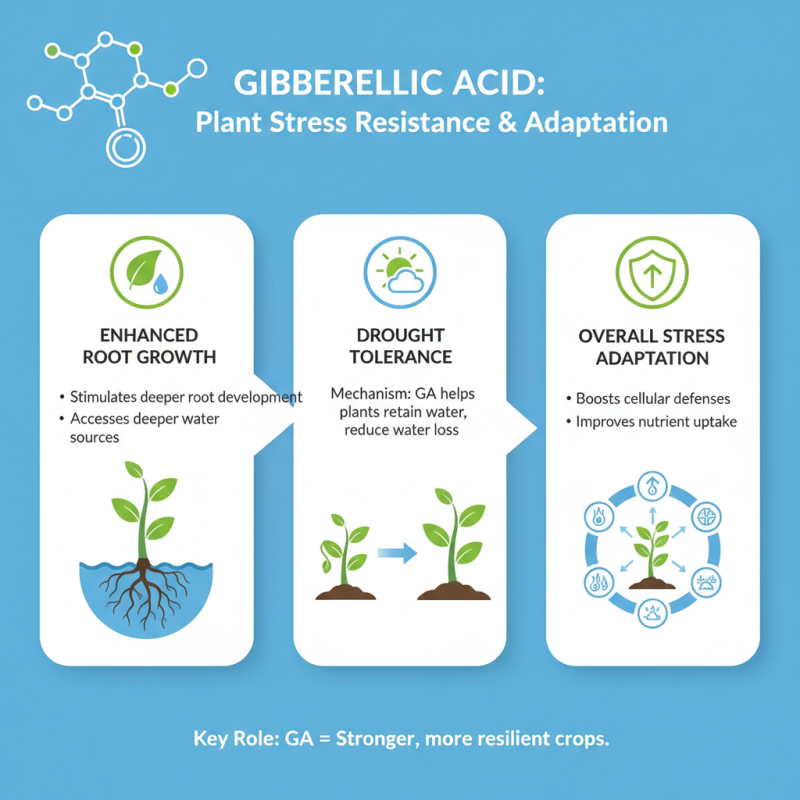
Gibberellic acid (GA) plays a crucial role in enhancing plant stress resistance and adaptation. This plant hormone affects various physiological processes, helping crops cope with challenging conditions. For instance, during drought periods, GA can stimulate root growth. Stronger roots help access deeper water sources. This adaptation allows plants to survive longer without rainfall.
Moreover, GA can boost plant resilience against diseases. It promotes growth during unfavorable weather. Plants treated with gibberellic acid show improved vigor. However, the application of GA is not always straightforward. Overuse may lead to excessive growth and reduced yield. Finding the right balance is essential for effective use.
Additionally, research indicates that GA enhances tolerance to salinity. Plants exposed to salty conditions often struggle to thrive. GA treatment can mitigate some negative effects. This is particularly relevant in regions facing increased salinity due to climate change. While the benefits of gibberellic acid are clear, ongoing studies are necessary. Understanding its full potential requires more exploration and careful application strategies.