site_4bbb466c-cafd-4edb-8869-71ed8e60d33a
Excellence in PGR technology
Choosing the right Tiller Cultivators can seem simple: match the machine to the garden. In practice, soil texture, bed width, root density, and operator strength all affect the choice. A compact electric model may suit raised beds, while a heavier machine can feel awkward around tight corners. Small details matter. The National Gardening Association’s 2024 National Gardening Survey tracks household gardening participation and spending, while USDA’s 2022 Census of Agriculture documents the scale and diversity of U.S. farming. Neither report ranks tiller models, so they offer context—not a shortcut to choosing one.
These ten tips focus on the decisions that matter at ground level: matching tiller type and working width to your plot, checking power and weight, and comparing controls, maintenance, and safety features. Consider the soil after rain, too. Clay can cling to tines; dry, compacted ground can make a small machine bounce. Manufacturer specifications help, but they cannot predict every garden’s conditions. If possible, inspect a machine in person and consider who will operate it. A powerful tiller is not automatically the best one. It may be more tool than the job requires. Even careful comparisons leave room for judgment, and that is worth admitting. A practical choice should fit your actual beds, storage space, and comfort—not just a product chart.
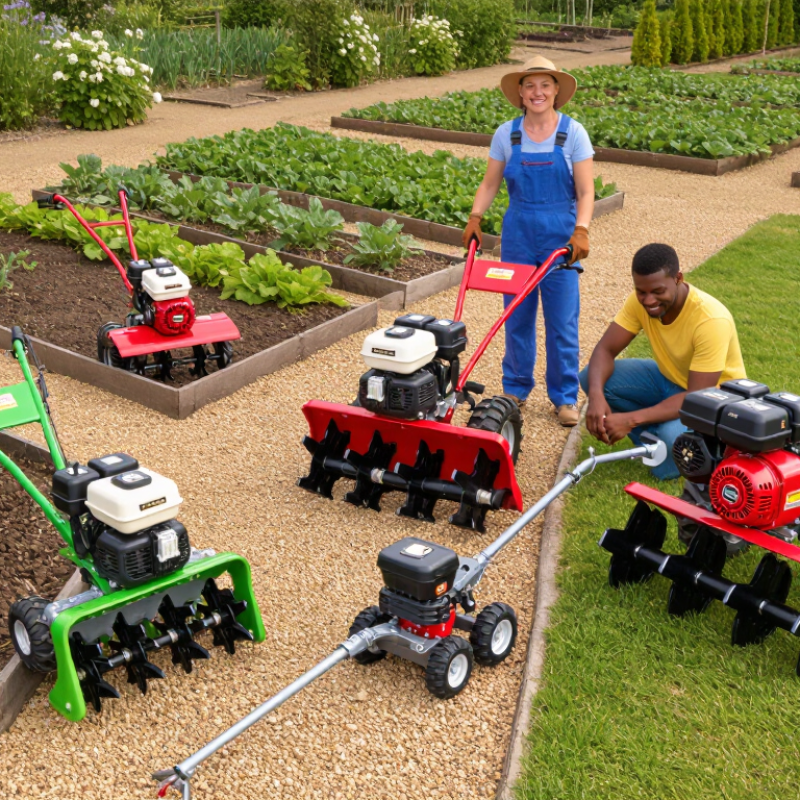
A tiller-cultivator breaks and loosens surface soil, mixes in compost, and helps manage small, young weeds. It is not a substitute for a plow or a tool for every patch of ground. Small models suit raised beds, garden rows, and confined plots where larger equipment cannot turn easily. Wider, more powerful machines can cover open ground, but rocks, thick roots, and heavy clay may slow them down. That distinction matters.
Soil condition is just as important as machine size. Work soil when it crumbles in your hand; when it smears or forms a slick lump, wait. Tilling wet ground can compact it and damage the structure that roots depend on.
USDA’s 2022 Census of Agriculture reported about 104.4 million acres managed with no-till practices, a reminder that frequent soil disturbance is not essential everywhere.
For a home garden, shallow, targeted cultivation may be enough. I’d be cautious about assuming deeper tilling always means better preparation; it can bring buried weed seeds to the surface and disturb soil life. Check the working depth, clear the bed of stones, and make a short test pass before tackling the whole plot.
The 2024 National Gardening Survey reports that 80% of U.S. households took part in lawn and garden activities in 2023. That does not mean every garden needs a powerful tiller. Measure the beds, paths, and gate opening first. A narrow cultivator suits raised beds and tight corners; wider machines save time on open plots but can be awkward around established plants. Measure twice.
Soil changes the choice. The USDA NRCS Web Soil Survey provides mapped information on soil texture and drainage, useful clues before you shop. Sandy soil is usually easier to work, while clay can become heavy and sticky when wet. Penn State Extension advises waiting until soil crumbles rather than smears during cultivation. A quick hand test helps, though it is easy to misjudge after rain. Maps also cannot show every patch in a small yard.
Match the machine to the task. For mixing compost into a few shallow beds, a light cultivator may be enough. Breaking compacted ground or opening long rows calls for more working width and power. Check how deeply the tines work and whether that depth suits your plants; deeper is not automatically better. I would also leave room to turn at bed ends. That detail is often overlooked.
10 Tips for Choosing the Best Tiller Cultivators?
Compare Gas, Electric, and Manual Tiller Models
Gas tillers suit large beds, compacted soil, and longer work sessions. Their engines provide strong digging power, but they need fuel, routine maintenance, and room to operate. They can also feel heavy in tight spaces. Check the machine’s weight and tine width before choosing; a wide model may struggle between closely spaced plants.
Electric tillers are often easier to start and maintain. Corded models work well near an outlet, though the cord can snag on beds or shrubs. Battery models offer more freedom, but runtime may limit work in dense soil. Manual cultivators are quiet, lightweight, and useful for small plots or touch-ups. They take more effort, especially when the ground is dry or packed. No option fits every garden.
Tips: Match the tiller to your soil and bed size. For a small, regularly maintained garden, a manual tool may be enough. For mixed beds, consider an electric model with a manageable width. Choose gas only if you need its extra power and can handle its upkeep. Test the grip and balance if possible; specifications don’t reveal everything. I’ve found that even a capable tiller can feel awkward after a few rows. Brush aside stones and check for buried obstacles before working.
| Tip | What to Compare | Gas Tillers | Electric Tillers | Manual Cultivators |
|---|---|---|---|---|
| 1. Match the tool to the job | Decide whether you need to break new ground, prepare an existing bed, or weed between plants. | Often suited to larger jobs and tougher soil, depending on the machine. | A practical choice for maintaining garden beds and light-to-moderate cultivation. | Best for shallow cultivation, small areas, and targeted weeding. |
| 2. Estimate the area | Consider the garden’s size, shape, and how often you will use the tool. | Can suit larger plots, but requires fuel, maintenance, and storage space. | Convenient for small and medium beds; battery runtime or cord access limits coverage. | Works well for compact beds; covering a large area takes more time and effort. |
| 3. Check soil conditions | Clay, compacted, rocky, or root-filled soil can be harder to cultivate than loose, previously worked soil. | A suitable model may provide the power needed for demanding conditions; results depend on design and soil preparation. | Generally more comfortable in loose or previously cultivated soil than in very hard ground. | Most effective in loose soil and for surface-level work; difficult ground requires more physical effort. |
| 4. Compare working width and depth | Look at the manufacturer’s stated tilling width and depth, and check whether width is adjustable. | Available in a wide range of sizes; larger working widths can cover ground faster but may be harder to maneuver. | Specifications vary; narrower models can be easier to guide around established beds. | Usually works a narrow, shallow strip at a time, which helps with precise cultivation. |
| 5. Choose a power source | Weigh convenience, available power, runtime, and the amount of work between breaks. | Runs on fuel and can work away from outlets; requires refueling and engine care. | Corded models need a suitable outdoor extension cord and nearby power; cordless models need charged batteries. | Needs no fuel, battery, or electrical outlet; operation depends on the user’s effort. |
| 6. Consider weight and maneuverability | Check product weight, handle design, wheel arrangement, and how easily the tool turns or transports. | Many models are heavier and may be challenging to lift, turn, or store. | Often lighter than comparable gas equipment, though battery and motor designs affect weight. | Typically simple to carry and control, but hand tools still require bending and repeated movement. |
| 7. Factor in noise and emissions | Think about nearby homes, working hours, ventilation, and your preference for quieter operation. | Produces exhaust during use and is generally louder than electric or manual tools. | Produces no exhaust at the point of use and is generally quieter than gas-powered equipment. | Operates without engine noise or exhaust. |
| 8. Compare upkeep and ongoing costs | Include purchase price, consumables, maintenance, replacement parts, and storage needs. | Requires fuel and regular engine maintenance; service needs depend on the engine and use. | Usually avoids routine engine servicing; batteries, if used, may eventually need replacement. | Has few operating costs; inspect the handle and working head and keep the tool clean. |
| 9. Check safety and controls | Review the manual, safety features, grip, guards, and recommendations for protective equipment. | Look for accessible shutoff controls and appropriate guards; keep hands and feet clear of rotating tines. | Check the switch or lock-off control; manage cords carefully on corded models and follow battery instructions. | There are no powered tines, but use gloves and safe lifting technique to reduce the risk of blisters or strain. |
| 10. Plan for storage and transport | Measure available storage space and consider how the tool will reach the garden. | May need more room and careful fuel storage; confirm it fits your shed and transport setup. | Check whether handles fold and how the cord or battery should be stored. | Usually needs little storage space and is easy to move by hand. |
Note: Tiller performance, working dimensions, weight, and maintenance requirements vary by model. Check the product specifications and owner’s manual before buying or operating any equipment.
Match the tilling width to your garden layout, not just the size of the plot. A narrow tiller can fit between raised beds and turn around near fences. Wider models cover open ground faster, but may be awkward in tight rows. Measure gates and paths before buying. Small spaces need precision. Bigger is not always better.
Check the working depth against what you plan to grow. Shallow cultivation can loosen the top layer and control small weeds, while deeper tilling may help prepare compacted ground. But depth depends on soil conditions, and forcing a machine into hard, dry earth can cause bouncing or strain. Test a small patch first. It takes a minute. Consider power in the same way: dense soil usually needs more capability than a loose, established bed. More power can also mean extra weight, noise, or effort to control.
Maneuverability matters once the machine is running. Look for balanced handles, manageable weight, and controls you can reach without shifting your grip. If possible, push a comparable machine across uneven ground; a smooth showroom floor tells you little about roots and clods. I would not judge turning ease from a specification sheet alone. Check how the tiller reverses or lifts at row ends, too. A little awkwardness there can add up over a full afternoon.
Safety features deserve a close inspection before comparing engine power. Look for a reachable stop switch, sturdy tine guards, and handles that keep your hands clear of moving parts. Check whether the controls feel manageable with gloves on. Small details matter. A heavy machine can be difficult to steady on uneven ground, especially when its tines catch roots or compacted soil. Read the manual’s safety guidance and wear eye protection, sturdy shoes, and hearing protection when appropriate.
Maintenance affects both reliability and the real cost of ownership. Ask how often the machine needs oil changes, air-filter cleaning, and tine checks. See whether routine parts are easy to access without special tools. After use, soil packed around the tines can hide wear, so cleaning them promptly helps reveal damage. It is easy to underestimate this chore. If storage space is limited, measure the machine and check whether the handles fold or the tines can be removed.
Compare the purchase price with fuel or electricity costs, replacement parts, and likely repairs. A lower price may not be a bargain if the machine is awkward to service or too powerful for a small garden. I would match the tiller’s width and depth to the beds I actually maintain, not the largest patch I might someday tackle. That estimate can be wrong, so leave room in the budget for protective gear and basic upkeep.
Use these suggested 1–10 priority scores as a practical comparison guide, not as measured industry statistics. Give particular attention to safety features, maintenance requirements, and total ownership cost alongside soil conditions, tilling width, power, handling, storage, and warranty.
| Cookie | Duration | Description |
|---|---|---|
| _wpfuuid | 11 years | This cookie is used by the WPForms WordPress plugin. The cookie is used to allows the paid version of the plugin to connect entries by the same user and is used for some additional features like the Form Abandonment addon. |
| cookielawinfo-checkbox-analytics | 11 months | This cookie is set by GDPR Cookie Consent plugin. The cookie is used to store the user consent for the cookies in the category "Analytics". |
| cookielawinfo-checkbox-functional | 11 months | The cookie is set by GDPR cookie consent to record the user consent for the cookies in the category "Functional". |
| cookielawinfo-checkbox-necessary | 11 months | This cookie is set by GDPR Cookie Consent plugin. The cookies is used to store the user consent for the cookies in the category "Necessary". |
| cookielawinfo-checkbox-others | 11 months | This cookie is set by GDPR Cookie Consent plugin. The cookie is used to store the user consent for the cookies in the category "Other. |
| cookielawinfo-checkbox-performance | 11 months | This cookie is set by GDPR Cookie Consent plugin. The cookie is used to store the user consent for the cookies in the category "Performance". |
| viewed_cookie_policy | 11 months | The cookie is set by the GDPR Cookie Consent plugin and is used to store whether or not user has consented to the use of cookies. It does not store any personal data. |
| Cookie | Duration | Description |
|---|---|---|
| CONSENT | 2 years | YouTube sets this cookie via embedded youtube-videos and registers anonymous statistical data. |
| vuid | 2 years | Vimeo installs this cookie to collect tracking information by setting a unique ID to embed videos to the website. |