site_4bbb466c-cafd-4edb-8869-71ed8e60d33a
Excellence in PGR technology
Finding dependable China-based suppliers for wholesale Tofu Cat Litter takes more than comparing prices. Buyers should examine the product itself: ingredient transparency, pellet size, dust levels, absorption, clumping, and odor control. A sample can reveal details a product sheet may miss, such as how quickly pellets soften or whether a bag feels dusty when poured. Small differences matter.
This guide explains how to assess manufacturers and trading companies, compare product specifications, and ask useful questions before placing an order. Request current samples, clear packaging details, production capacity, lead times, and written terms for payment and quality checks. Verify claims with supporting documents where available, and confirm that the supplier can maintain consistent batches. A low quote is not always a good deal. Freight, packaging, and communication can change the real cost.
There is no single supplier that suits every buyer. Some businesses need private-label packaging; others value steady stock and responsive service more. Be cautious when details are vague, and do not treat polished photos as proof of product quality. Even a careful review has limits: samples may not represent every future shipment. Comparing evidence, asking direct questions, and recording agreed specifications can help buyers make a more informed wholesale decision.
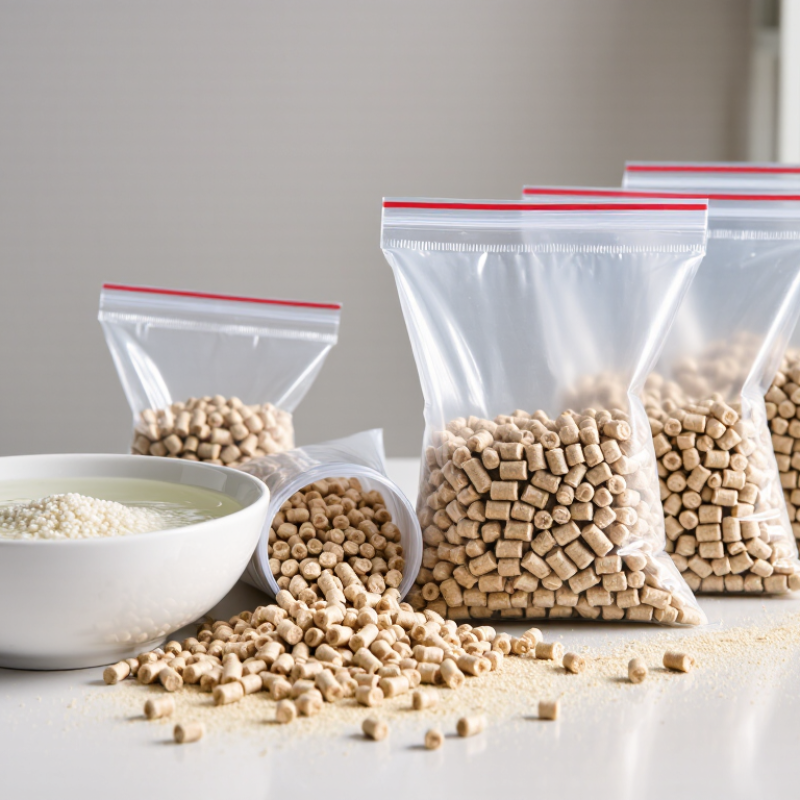
Tofu cat litter is usually made with plant-based materials such as soybean residue. Buyers often value its light weight, clumping, and reduced tracking around the tray. But “flushable” claims need careful checking; formulas and local wastewater systems differ. Test a small sample first. Check dust levels, clump strength, scent, and how quickly opened bags absorb moisture.
China’s wholesale opportunity sits within a much larger pet market. The 2024 China Pet Industry White Paper reported that urban dog and cat spending reached RMB 279.3 billion in 2023, including RMB 130.2 billion for cats. Grand View Research estimated the global cat litter market at about US$5.1 billion in 2023; that figure covers all litter types, not tofu alone. For importers, these numbers signal demand, not guaranteed sales. Ask suppliers for ingredient specifications, batch test results, production capacity, and packaging options. Compare samples after several days in humid storage. A neat factory visit helps, but it cannot replace repeat-batch checks. That part is easy to underestimate.
Tofu cat litter is typically made from processed soybean fiber, sometimes combined with starch or other plant-based binders. Wholesale suppliers may offer short granules, longer pellets, or blended sizes. Fine granules can feel softer under a cat’s paws and form compact clumps, while larger pellets may track less around the litter box. Texture preferences vary between cats. Small details matter.
Compare particle size, moisture content, bulk density, dust level, absorption rate, and clump strength before choosing a product. Ask suppliers how each figure is measured; test methods can differ. A low-dust description is not a substitute for checking a sample in a real litter tray. Check how quickly urine is absorbed, whether clumps hold when scooped, and how much residue remains at the tray’s bottom. Test before scaling. One detail buyers can overlook is storage: humidity may affect the product’s condition during shipping or warehousing. Request packaging specifications and keep trial cartons under conditions similar to your intended supply chain.
When evaluating Chinese tofu cat litter suppliers, begin with the product, not the catalogue. Ask for a sample from a regular production batch. Check pellet size, color, smell, and how much dust appears when you pour it. Test clumping with the same amount of water each time. Note whether clumps hold together during scooping and whether wet litter sticks to the tray. Small differences matter.
Ask suppliers for a clear ingredient list and recent quality records. Confirm how they measure moisture, absorbency, and dust levels. Request production dates and batch identification on sample packaging. A polished sample is not enough. Consistency across batches matters more, and it can be hard to judge from one shipment. That deserves a second look.
Review the practical details in writing. Confirm minimum order quantities, lead times, packaging options, and how damaged cartons are handled. Ask how the supplier protects litter from moisture during storage and transport. If possible, arrange a factory video call or an independent inspection before placing a large order. Keep your own test notes, including the room conditions and amount used. Even careful testing has limits; household results may differ from laboratory measurements. Use that uncertainty when comparing suppliers.
Use this buyer’s scorecard to compare suppliers consistently. The benchmarks below are suggested screening criteria, not universal product standards; confirm the final specifications against your market requirements and product tests.
| Evaluation dimension | What to request or check | Suggested screening benchmark | Evidence to review | Score (1–5) |
|---|---|---|---|---|
| Product composition | Ask for a full ingredient and additive declaration, including binders, fragrances, colorants, and any deodorizing ingredients. | Composition is documented, consistent with the product description, and suitable for the intended market. | Product specification sheet, ingredient declaration, and batch documentation. | ____ |
| Physical specifications | Confirm pellet or granule form, dimensions, color, moisture, bulk density, and acceptable variation between batches. | Written specifications are measurable and agreed before ordering; sample results match the stated limits. | Technical data sheet and inspection results from a representative production batch. | ____ |
| Clumping and dust | Test clump formation, clump strength, breakage, loose dust, and the amount of residue left in the tray. | Performance meets your own test protocol and remains consistent across samples and batches. | Side-by-side sample test, written test method, and retained sample from the order. | ____ |
| Odor control and user experience | Evaluate odor control, fragrance intensity if applicable, tracking, ease of scooping, and dust during pouring. | Claims are supported by a defined test or user trial; fragrance and performance suit the target customer. | Sample trial notes, test conditions, and any substantiation for product claims. | ____ |
| Safety and compliance documents | Check which documents and labeling rules apply in the destination market. Request relevant test reports and safety information. | Documents are current, traceable to the offered product, and issued by a verifiable source where required. | Applicable test reports, safety data where relevant, and destination-market label review. | ____ |
| Quality control and traceability | Ask how incoming materials, production batches, finished goods, and customer complaints are recorded and controlled. | Each order can be linked to a production batch, inspection record, and documented complaint process. | Quality-control procedure, sample batch record, and corrective-action example with sensitive details removed. | ____ |
| Packaging and transport protection | Confirm net weight, bag material, seal quality, moisture protection, carton or pallet arrangement, and export marks. | Packaging is agreed in writing and protects the product during the planned route and handling conditions. | Packaging specification, pre-shipment photos, and a packed sample or packaging test where appropriate. | ____ |
| Wholesale terms and capacity | Compare minimum order quantity, sample and production lead times, monthly capacity, payment terms, and quotation validity. | Terms are itemized and consistent with your forecast; capacity claims can be checked against a production plan. | Formal quotation, order schedule, capacity details, and agreed remedy for delays or nonconformity. | ____ |
| Export and shipping readiness | Clarify the trade term, port or delivery point, shipping documents, cargo dimensions, and responsibility for customs information. | Responsibilities and document requirements are confirmed before deposit or production. | Pro forma invoice, packing details, draft shipping documents, and agreed Incoterms® rule. | ____ |
| Communication and corrective action | Assess response clarity, specification confirmation, escalation contacts, and handling of quality issues. | Replies are specific and documented; the supplier agrees on inspection, complaint, and corrective-action steps. | Written response record, agreed quality terms, and named roles for order and quality communication. | ____ |
| Total score (maximum 50) | ____ / 50 | |||
Scoring guide: 1 = insufficient evidence or major gaps; 3 = acceptable with follow-up required; 5 = clear, verified, and aligned with your requirements. Verify product samples and documents before placing a wholesale order.
Wholesale pricing for tofu cat litter depends on more than the quoted price per bag. Ask suppliers to separate product cost, inner packaging, cartons, and export packing. Compare the same bag weight and formula, or the figures can mislead. Small orders cost more. A compact trial shipment may carry higher unit costs because setup and freight are spread across fewer bags.
Minimum order quantities vary with bag size, private-label packaging, and production schedules. Request the MOQ for both standard packaging and custom-printed bags. Confirm whether mixed sizes count toward one order. Before paying a deposit, check a physical sample for pellet consistency, dust, and packaging seals. A sample can look tidy while a full production run varies. That risk is worth discussing.
Export logistics need attention early. Ask for carton dimensions, gross weight, pallet details, and the estimated production lead time. These details help a freight forwarder compare sea freight and other suitable options. Confirm who handles export documents and which delivery terms appear in the quotation. Keep written records of specifications and inspection results. Details matter. A lower quote may still be practical, but only if the shipment arrives on schedule and the goods match the agreed sample. I would leave extra time for port delays; estimates are not promises.
A wholesale tofu cat litter supplier should be checked beyond a polished catalog. Request its business details, production address, product specifications, and recent quality records. Confirm that the factory can trace each lot to its raw materials and production date. Ask how it manages changes in fiber sources, moisture, and particle size. Clear answers are more useful than broad claims about “premium quality.”
Request samples from more than one production lot, if available. Test them in the same tray and room conditions you use at home or in your store. Note clumping time, dust on the tray edge, paw tracking, odor control, and how quickly used litter breaks apart. Small details matter. A sample cannot predict every shipment; that limitation is easy to forget. Keep a written record, including photos and test dates, so comparisons are fair.
Before placing a large order, agree on measurable acceptance criteria with the supplier. These might cover granule size, moisture range, packaging weight, and acceptable dust levels. Ask for pre-shipment inspection options and a process for handling out-of-specification goods. Retain a sealed sample from each approved lot for later comparison. Even careful checks can miss variation, so start with a manageable order and review the results before scaling up.
| Cookie | Duration | Description |
|---|---|---|
| _wpfuuid | 11 years | This cookie is used by the WPForms WordPress plugin. The cookie is used to allows the paid version of the plugin to connect entries by the same user and is used for some additional features like the Form Abandonment addon. |
| cookielawinfo-checkbox-analytics | 11 months | This cookie is set by GDPR Cookie Consent plugin. The cookie is used to store the user consent for the cookies in the category "Analytics". |
| cookielawinfo-checkbox-functional | 11 months | The cookie is set by GDPR cookie consent to record the user consent for the cookies in the category "Functional". |
| cookielawinfo-checkbox-necessary | 11 months | This cookie is set by GDPR Cookie Consent plugin. The cookies is used to store the user consent for the cookies in the category "Necessary". |
| cookielawinfo-checkbox-others | 11 months | This cookie is set by GDPR Cookie Consent plugin. The cookie is used to store the user consent for the cookies in the category "Other. |
| cookielawinfo-checkbox-performance | 11 months | This cookie is set by GDPR Cookie Consent plugin. The cookie is used to store the user consent for the cookies in the category "Performance". |
| viewed_cookie_policy | 11 months | The cookie is set by the GDPR Cookie Consent plugin and is used to store whether or not user has consented to the use of cookies. It does not store any personal data. |
| Cookie | Duration | Description |
|---|---|---|
| CONSENT | 2 years | YouTube sets this cookie via embedded youtube-videos and registers anonymous statistical data. |
| vuid | 2 years | Vimeo installs this cookie to collect tracking information by setting a unique ID to embed videos to the website. |