site_4bbb466c-cafd-4edb-8869-71ed8e60d33a
Excellence in PGR technology
Inulin Powder is a soluble dietary fiber used in foods, beverages, and nutrition products. Buyers often compare more than price. Origin, plant source, fiber content, solubility, taste, and batch consistency can shape a successful purchase. A fine powder that disperses smoothly in a test beverage may still perform differently in a baked formula. Small details matter.
This guide reviews ten suppliers relevant to global buyers and highlights the questions that make comparisons more useful. Supplier capabilities can vary by region and change over time. A ranked list is a starting point, not a guarantee. Ask each company for current technical data sheets, certificates, allergen statements, and representative samples. Check whether specifications fit your application, packaging needs, order volume, lead time, and export requirements. Do not rely on marketing claims alone. Verify them. This is easy to overlook.
The profiles can help buyers distinguish manufacturers from distributors and identify practical points for supplier discussions. Independent checks, such as customer references and sample trials, may reveal gaps before a large order. Yet careful checks cannot remove every uncertainty; results depend on the recipe, processing conditions, and other ingredients. Use the list to build a shortlist, then confirm details directly with each supplier. A cautious comparison can prevent avoidable surprises later.
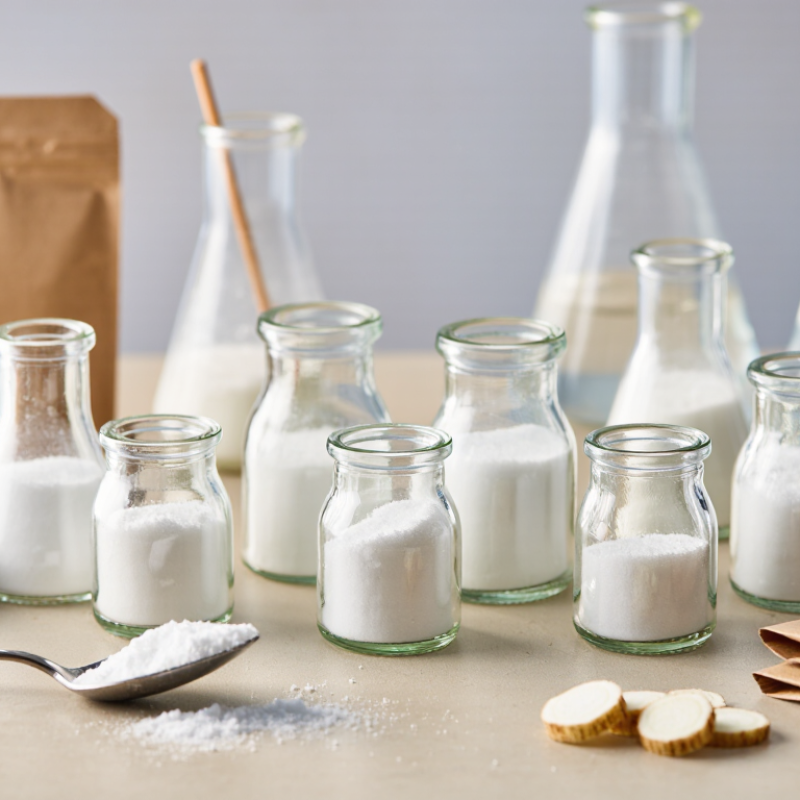
Inulin is a soluble dietary fiber found in chicory roots and smaller amounts in foods such as onions, garlic, and asparagus. Commercial powder is commonly extracted from chicory and added to foods to increase fiber or improve texture. It can provide mild sweetness and bulk, helping reduce some sugar or fat in products such as yogurt, baked goods, and nutrition bars. The U.S. FDA lists inulin and inulin-type fructans among recognized dietary fibers. That matters for product formulation, but it does not mean every product delivers the same nutritional benefit.
The Grand View Research report on the global inulin market valued it at about US$1.9 billion in 2023, reflecting growing commercial interest in fiber ingredients. Market growth alone, however, says little about powder quality or how well it works in a recipe. In practical trials, formulators check how easily the powder disperses, whether it changes mouthfeel, and how much sweetness it adds. Too much may cause digestive discomfort for some people, so serving size and gradual introduction deserve attention. The texture can still disappoint. Buyers should compare the supplier’s specifications, such as fiber content, moisture, and particle size, rather than relying only on a “prebiotic” label.
Evaluating an inulin powder supplier starts with a clear specification, not a polished brochure. Ask for the botanical source, fiber content, degree of polymerization, moisture level, and processing method. These details help show whether the powder suits a beverage, bar, or supplement blend. Small details matter. Request a recent certificate of analysis for the exact lot, then compare its results with the product specification. Check microbiological results and relevant contaminant testing, and ask whether an independent laboratory verifies them. A certificate is useful, but it is not the whole story.
Assess traceability from raw-material origin through milling and packing. Reliable suppliers should explain lot coding, retained samples, change control, and how they investigate deviations. Test the powder in your own formula: does it disperse in cold water, thicken after standing, or leave a gritty finish? A small application trial can reveal more than a sales sample. Ask for evidence. Slow or vague replies are worth noting, though they do not prove poor quality.
Compare packaging, lead times, minimum order quantities, and shipment records with your production schedule. Ask whether each delivery can be linked to its batch documents. Can technical staff answer specific questions without making broad promises? No supplier is perfect, and specifications may need adjustment as formulas change. Keep a written scorecard, but leave room for judgment. In practice, convenience can outweigh price, though that choice deserves a second look.
Suggested evaluation weights for comparing inulin powder suppliers
Use these suggested weights as a comparison framework, not as measured supplier performance. Review specifications, certificates, samples, and shipping terms when assessing each supplier.
For global buyers, a useful Top 10 inulin powder shortlist should compare suppliers on evidence, not polished claims. Check each supplier’s product specification for inulin content, moisture limits, particle size, and source material. Ask for a recent certificate of analysis and confirm which tests apply to each production batch. Details matter. A document is only useful when its figures match the product and lot being purchased. Buyers should also review available pack sizes, minimum order quantities, lead times, and export experience for their destination.
Request samples when practical, then assess color, flow, solubility, and taste in the intended application. A powder that works in a dry blend may behave differently in a drink or baked product. Compare technical support, response times, and the clarity of shipping documents across shortlisted suppliers. A neat spreadsheet can still miss problems, especially when specifications use different test methods. Not always. Ask suppliers to explain unclear terms before comparing prices. Freight, storage needs, and supply continuity can change the real cost, so the lowest quotation may not be the most dependable fit.
A useful comparison of inulin powder suppliers starts with the product itself. Check the plant source, fiber content, moisture level, particle size, and solubility. Chicory-root inulin may behave differently from other sources in a drink or baked mix. Request a current specification sheet and a sample from a production lot, not only a polished sample. Small details matter.
Certifications can support supplier screening, but names on a document are not enough. Confirm that certificates are current, cover the relevant production site, and match the product being quoted. Ask for a recent certificate of analysis, allergen information, and batch traceability records. A neat certificate list can still leave gaps. Ask for evidence.
Capabilities show whether a supplier can meet real purchasing needs. Compare monthly capacity, minimum order quantities, packaging options, lead times, and export documentation support. If you need a finer powder or a specific fiber concentration, ask how changes affect testing and delivery. Evaluate how quickly technical staff answer practical questions. One imperfect point: sample performance may not fully predict a full-scale production run, so confirm how suppliers manage lot-to-lot consistency.
This is an anonymized sourcing comparison framework, not a verified ranking of named companies. Profiles describe common supplier and product types; certifications, specifications, origin, and capabilities vary by supplier and must be confirmed directly.
| Profile | Typical source and product | Common product characteristics | Potential applications | Capabilities to compare | Certifications and documents to verify |
|---|---|---|---|---|---|
| 01 · Chicory-root specialist | Chicory-root inulin powder | Typically supplied as soluble dietary fiber; chain-length distribution and purity depend on grade. | Fiber enrichment, bakery, dairy-style foods, and nutrition products. | Root origin, extraction process, particle size, solubility, and available specification ranges. | Request current food-safety certificates, product specification, allergen statement, and contaminant test results. |
| 02 · Chicory oligofructose producer | Shorter-chain fructooligosaccharide (FOS) powder, often derived from chicory inulin | Generally more soluble and sweeter than long-chain inulin; exact composition varies by product. | Beverages, nutrition bars, dairy-style products, and sweetness or texture adjustment. | FOS profile, sugar content, moisture, solubility, and availability of liquid or powdered formats. | Verify food-safety certification, composition data, microbiological limits, and applicable market documentation. |
| 03 · Long-chain inulin supplier | Predominantly longer-chain chicory inulin grades | Often selected for fiber contribution and texture; dispersibility and processing behavior are grade-specific. | Fat replacement, texture development, and fiber enrichment in formulated foods. | Chain-length data, viscosity or texture performance, heat and pH tolerance, and application support. | Request a technical data sheet, certificate of analysis, process information, and relevant audited-site certificates. |
| 04 · Agave-derived ingredient supplier | Agave-derived inulin or fructan powder, where offered | Composition can differ from chicory-derived products; confirm the ingredient identity and fructan profile. | Specialty foods and formulations seeking an alternative botanical source. | Botanical traceability, source region, fructan profile, residual sugars, and supply consistency. | Verify botanical identity, origin records, specification, food-safety documents, and any organic claim certificates. |
| 05 · Jerusalem artichoke processor | Jerusalem artichoke-derived inulin or fructan ingredient | Crop and processing conditions can affect composition; confirm whether the product is purified inulin or a broader extract. | Specialty food, dietary fiber, and ingredient-development projects. | Crop availability, harvest season, extraction yield, batch consistency, and powder handling properties. | Request source and process details, composition analysis, contaminant testing, and food-safety documentation. |
| 06 · Organic-grade focused supplier | Inulin powder with an organic-certified supply option, if available | The underlying inulin source and functionality depend on the specific product; organic status applies only when validly certified. | Products with organic certification requirements in the target market. | Certified scope, chain of custody, segregation, minimum order quantities, and export-market coverage. | Check the current certificate, certifying body, product scope, validity dates, and destination-market recognition. |
| 07 · Conventional bulk ingredient supplier | Food-grade inulin powder, commonly offered in bulk packaging | A general-purpose option; source, purity, and functional properties must be assessed from the product specification. | Large-scale food manufacturing and standard fiber-enrichment applications. | Production capacity, lead time, packaging, lot traceability, and continuity of supply. | Request current food-safety audit evidence, lot-specific COA, traceability policy, and export documents. |
| 08 · Specialty-grade and blended-ingredient supplier | Inulin grades or blends designed for particular formulation needs | Blends may include other fibers or carriers; review the full ingredient declaration and composition. | Custom food formulations requiring specific texture, dispersibility, or fiber targets. | Custom blending, sample access, formulation support, and change-control procedures. | Verify full composition, allergen and GMO statements where relevant, specification, and site-level certificates. |
| 09 · Distributor with multi-origin sourcing | One or more inulin products sourced from external manufacturers | Product properties and manufacturing origin depend on the named item and source facility. | Buyers seeking local stock, mixed orders, or regional logistics support. | Inventory, delivery coverage, manufacturer transparency, storage controls, and lot-level traceability. | Confirm certificates apply to the actual manufacturer and product; obtain COA, origin, and traceability records. |
| 10 · Application-support focused supplier | Food-grade inulin powder with technical assistance, depending on supplier | Performance depends on source, grade, dosage, and the finished-product process. | Product development, pilot trials, and reformulation projects. | Technical response time, sample availability, application testing, and support for scale-up. | Request product-specific documentation and confirm certificates, regulatory statements, and support scope for the intended market. |
Buyer due diligence: compare the intended-use specification, inulin/FOS composition, dietary-fiber assay method, moisture, microbiological and contaminant limits, packaging, shelf life, minimum order quantity, lead time, and landed cost. Certification availability is supplier-, site-, product-, and market-specific; verify current documents before purchase.
Choosing an inulin powder supplier for international delivery takes more than comparing prices. Start with a clear product specification: source, fiber content, moisture limit, particle size, and microbiological criteria. Ask for a recent certificate of analysis tied to the production batch, not just a generic product sheet. Request a sample, too. A sample can still flatter; confirm that routine batches meet the same agreed specifications.
Packaging and transit conditions deserve close attention. Inulin powder can absorb moisture, so check that bags have an effective inner liner and arrive sealed, dry, and intact. Ask how pallets are protected during loading and whether the supplier can provide realistic lead times during busy seasons. Small details matter. A low quote may exclude freight, insurance, or destination handling, so clarify delivery terms and every charge before placing an order.
Import paperwork and product requirements vary by destination and intended use. Confirm required documents with a qualified customs broker or local import specialist before shipment, and make sure commercial invoices, packing lists, and batch records use consistent product descriptions. Keep a retain sample and inspect the delivered lot against the agreed specification. Delays can still happen, even with careful planning; a little buffer is usually wiser than promising an exact arrival date to your production team.
| Cookie | Duration | Description |
|---|---|---|
| _wpfuuid | 11 years | This cookie is used by the WPForms WordPress plugin. The cookie is used to allows the paid version of the plugin to connect entries by the same user and is used for some additional features like the Form Abandonment addon. |
| cookielawinfo-checkbox-analytics | 11 months | This cookie is set by GDPR Cookie Consent plugin. The cookie is used to store the user consent for the cookies in the category "Analytics". |
| cookielawinfo-checkbox-functional | 11 months | The cookie is set by GDPR cookie consent to record the user consent for the cookies in the category "Functional". |
| cookielawinfo-checkbox-necessary | 11 months | This cookie is set by GDPR Cookie Consent plugin. The cookies is used to store the user consent for the cookies in the category "Necessary". |
| cookielawinfo-checkbox-others | 11 months | This cookie is set by GDPR Cookie Consent plugin. The cookie is used to store the user consent for the cookies in the category "Other. |
| cookielawinfo-checkbox-performance | 11 months | This cookie is set by GDPR Cookie Consent plugin. The cookie is used to store the user consent for the cookies in the category "Performance". |
| viewed_cookie_policy | 11 months | The cookie is set by the GDPR Cookie Consent plugin and is used to store whether or not user has consented to the use of cookies. It does not store any personal data. |
| Cookie | Duration | Description |
|---|---|---|
| CONSENT | 2 years | YouTube sets this cookie via embedded youtube-videos and registers anonymous statistical data. |
| vuid | 2 years | Vimeo installs this cookie to collect tracking information by setting a unique ID to embed videos to the website. |