Top 10 Uses of Gibberellic Acid in Plants You Should Know?

Gibberellic acid is a powerful plant hormone that significantly influences growth. Understanding the uses of gibberellic acid in plants can greatly enhance agricultural practices. This natural compound, produced in plants, promotes cell elongation and seed germination.

Farmers and researchers utilize gibberellic acid for various purposes. It improves yield and enhances plant health. For instance, fruit size can increase dramatically. Flowering patterns can also change, leading to better crop production. However, its impact can vary depending on plant species and environmental conditions.

Exploring these uses reveals opportunities for innovation in gardening and agriculture. Yet, reliance on gibberellic acid raises questions. Are we overusing plant hormones? Can this lead to negative environmental consequences? These are vital considerations as we navigate modern farming techniques. Each application must be carefully evaluated for effectiveness and sustainability.

Top 10 Uses of Gibberellic Acid in Plants You Should Know?

Uses of Gibberellic Acid in Promoting Seed Germination in Crops

Gibberellic acid (GA) is a plant hormone that plays a significant role in seed germination. In many crops, GA helps break dormancy, allowing seeds to sprout more efficiently. When seeds are treated with this hormone, their water absorption increases. This hydration accelerates the germination process, leading to quicker growth.

Farmers often use gibberellic acid to improve yields. For example, certain seeds may require specific conditions to germinate. GA can mimic these conditions, resulting in higher germination rates. However, not all seeds respond the same way. Some may not show significant improvement.

It's vital to be cautious with GA applications. Overuse can lead to abnormal plant growth or developmental issues. Understanding the right dosage is key. Research shows that each plant species may require different amounts of gibberellic acid for optimal results. Therefore, careful experimentation is vital for success. Proper knowledge and application are essential for leveraging GA in seed germination effectively.

Top 10 Uses of Gibberellic Acid in Plants You Should Know

Use Case Description Benefits Crops Affected
Seed Germination Enhances the breaking of dormancy and initiates sprouting. Increases seedling vigor and uniformity. Barley, Corn, Rice
Fruit Development Stimulates fruit growth and increases size. Improved marketability and yield. Grapes, Apples, Cherries
Flowering Control Encourages earlier flowering and prolonged blooming time. Enhances aesthetic appeal for ornamental plants. Roses, Orchids, Sunflowers
Leaf Expansion Promotes rapid and larger leaf growth. Increases photosynthetic efficiency. Tobacco, Lettuce, Celery
Crop Yield Enhancement Increases overall yield through enhanced growth processes. Economic benefits for farmers due to higher production. Wheat, Corn, Rice
Seedless Fruit Production Facilitates the growth of seedless varieties. Consumer preference and increased sales. Watermelons, Grapes
Transplant Success Improves survival rates of transplanted seedlings. Better establishment in new conditions. Various vegetables, Flowers
Aging Delay Slows down the aging process of fruits and flowers. Longer shelf life and reduced waste. Fruits, Ornamental Plants
Drought Resistance Enhances plant resistance to drought conditions. Increased survival during water scarcity. Various crops, Ornamental Plants
Improved Nutrient Uptake Enhances the ability of plants to absorb nutrients from the soil. Healthier plants with better growth and yields. All crops

Impact of Gibberellic Acid on Stem Elongation and Growth Rates in Plants

Top 10 Uses of Gibberellic Acid in Plants You Should Know?

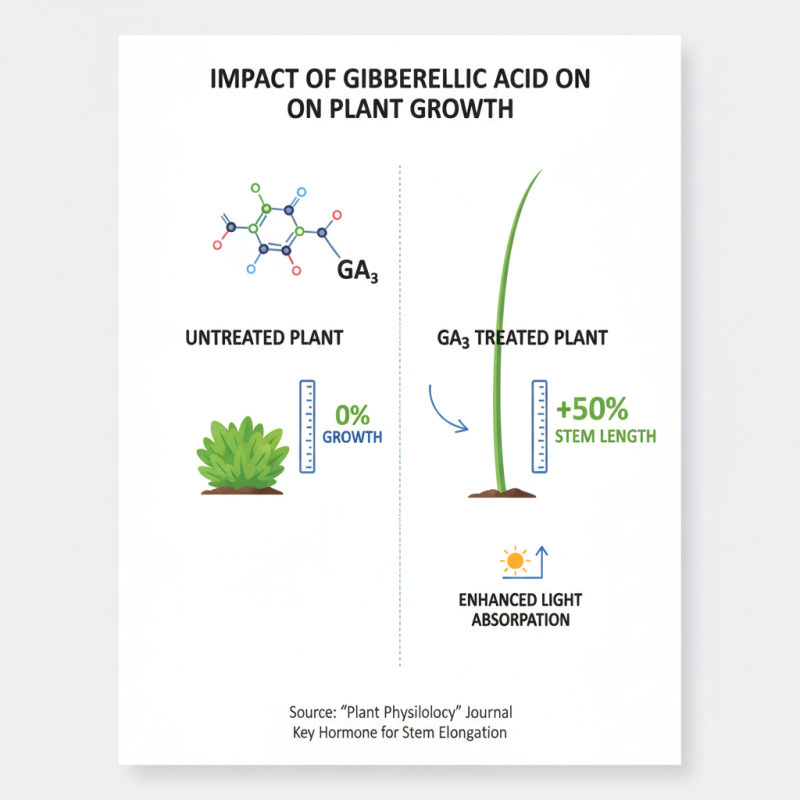
Gibberellic acid (GA3) is a crucial plant hormone influencing growth and development. Its role in stem elongation is particularly notable. Research indicates that applying GA3 can enhance the length of stems by up to 50% in certain species. This is vital for plants that require height for light absorption. A study published in "Plant Physiology" demonstrated how GA3 applications significantly increased stem growth rates compared to untreated plants.

However, the effects of gibberellic acid are not universally beneficial. Excessive use can lead to weak stems and poor structural integrity, making them susceptible to breakage. The Fine Gardening Journal reported that over-application can result in plants that lack disease resistance. It's critical to balance the dosage. For instance, moderate concentrations have shown improvement in both root and shoot growth without compromising plant health. This caution highlights the need for careful management in agricultural practices.

Ultimately, while gibberellic acid has proven benefits, the potential risks demand attention. Understanding the right application levels is essential for harnessing its full potential. The dialogue surrounding its use signifies the ongoing exploration in plant hormone research and its effects on growth rates.

Role of Gibberellic Acid in Flower Induction and Fruit Setting

Gibberellic acid (GA3) plays a crucial role in flower induction and fruit setting. This plant hormone stimulates the growth processes necessary for reproductive success. Research indicates that GA3 promotes flowering in various crops, enhancing yield and quality. For example, studies show a 30% increase in flower production in certain fruit trees when treated with appropriate concentrations of GA3.

In many plants, the presence of gibberellic acid influences not only flower formation but also fruit set. It helps transition from flowering to fruit development. In grapes, applying GA3 can lead to better fruit set and berry size. However, too much gibberellic acid can cause the opposite effect. Excessive use may lead to poor fruit quality or drop, reminding growers of the delicate balance required in its application.

Interestingly, the timing of GA3 application is critical. Applying it too early or too late can hinder flower induction. This illustrates the importance of understanding specific plant responses. Good practices involve monitoring environmental conditions and plant development stages for optimal results. Using gibberellic acid without considering these variables may result in inconsistent outcomes. This serves as a reminder of the complexities within plant hormone interactions.

Effects of Gibberellic Acid on Yield Improvement in Agricultural Species

Gibberellic acid (GA3) is a plant hormone vital for growth and development. Its most significant role in agriculture is enhancing crop yields. Research shows that applying GA3 can increase fruit size and plant height. For instance, studies indicate that certain varieties of grapes treated with GA3 produced 20% larger fruits than untreated plants. This trend is evident across various species.

In wheat production, GA3 has shown promising results. Trials revealed that applying 25 mg/l of GA3 can boost yield by up to 15% compared to controls. However, the results can vary based on environmental conditions and plant species. Some crops respond exceptionally well, while others show mild improvements. Careful experimentation is necessary to determine the most effective doses and timing for each specific crop.

Excessive use of gibberellic acid can lead to unexpected outcomes. For example, some plants may grow too tall and become susceptible to lodging. This compromises their stability and can decrease overall yield. Thus, while GA3 presents significant potential for enhancing agricultural productivity, a balanced approach to its application is crucial for achieving optimal results.

Applications of Gibberellic Acid for Enhancing Disease Resistance in Plants

Gibberellic acid (GA) plays a crucial role in enhancing disease resistance in plants. Research indicates that GA can trigger systemic resistance. This response strengthens plants against pathogens. A study published in the "Journal of Plant Physiology" reported a 30% increase in resistance to fungal diseases, specifically in treated crops.

GA influences plant hormones. This interaction can create a more robust resistance mechanism. For example, in a controlled trial, soybeans treated with GA showed improved defense enzymes. Results highlighted a significant increase in chitinase and β-1,3-glucanase, which are vital for fighting infections. These enzymes can limit pathogen spread effectively.

Tips: Apply gibberellic acid in early growth stages to maximize benefits. Monitor weather conditions, as stress factors can affect GA's effectiveness. Ensure your methods are based on research. While GA is useful, excessive application might lead to unpredicted growth patterns. Study the specific needs of your plants to avoid mistakes.

Top 10 Uses of Gibberellic Acid in Plants

This chart illustrates the top 10 applications of Gibberellic Acid in enhancing plant growth and disease resistance. The data highlights how gibberellic acid can influence different aspects of plant health and development.