How to Use Gibberellic Acid to Enhance Plant Growth Effectively
Gibberellic acid is a vital component in modern horticulture, renowned for its ability to promote plant growth and development. According to Dr. Emily Blakely, a leading expert in the field of plant physiology, "Gibberellic acid and plant growth are intricately linked, as it regulates key physiological processes that enhance seed germination, stem elongation, and flowering." This powerful plant hormone has become a go-to tool for farmers and gardeners looking to optimize plant health and yield in various cultivation environments.
The effective application of gibberellic acid can lead to remarkable transformations in plant growth, resulting in healthier and more robust crops. By understanding the mechanisms behind this plant growth regulator, horticulturists can harness its potential to accelerate the growth cycle and improve crop resilience. This guide will explore the practical methods of using gibberellic acid, providing valuable insights and techniques for successfully integrating this hormone into your gardening and farming practices. Whether you're a novice gardener or a seasoned agronomist, mastering gibberellic acid could unlock new possibilities for your plants’ development and productivity.

Understanding Gibberellic Acid and Its Role in Plant Growth
Gibberellic acid (GA3) is a naturally occurring plant hormone that plays a crucial role in regulating various growth processes, including seed germination, stem elongation, and flowering. This compound, derived from fungi, stimulates cell division and elongation, leading to enhanced growth in plants. Understanding how GA3 interacts with plant physiology can help gardeners and farmers utilize it effectively to promote healthier, more vigorous crops.
To get the most out of gibberellic acid, it's essential to apply it at the right stages of plant development. For instance, using GA3 during the early stages of growth can significantly improve seedling vigor and increase yields. Additionally, applying it before flowering can enhance flower production and fruit set.
Tips: When using gibberellic acid, ensure you dilute it properly according to the recommended concentrations to avoid any adverse effects. Timing is also critical; it's best applied during cooler parts of the day to reduce evaporation and increase absorption. Lastly, monitor your plants closely for any signs of stress or overgrowth, adjusting application rates as needed to maintain healthy growth.
The Science Behind Gibberellic Acid: Mechanisms of Action
Gibberellic acid (GA3) is a plant hormone that plays a crucial role in regulating various aspects of plant growth and development. It promotes cell elongation, seed germination, and flowering, making it a valuable tool for enhancing agricultural productivity. The mechanisms of action behind gibberellic acid are multifaceted, primarily revolving around its influence on gene expression and enzyme activation. By stimulating the production of certain enzymes, GA3 facilitates processes like starch mobilization during seed germination, allowing young plants to access vital nutrients quickly.
Additionally, gibberellic acid affects the synthesis of growth-related proteins and modifies the responsiveness of plants to other hormones. For instance, it counteracts the effects of abscisic acid, a hormone that typically inhibits growth, thereby enabling a more balanced growth response. The interaction between gibberellic acid and the plant's genetic framework demonstrates the complexity of its role, as it can activate specific genes associated with growth and development, leading to improved biomass accumulation and enhanced resilience against environmental stressors. This intricacy underlines why gibberellic acid is becoming increasingly popular in sustainable farming practices to optimize plant growth.
Optimal Application Methods for Gibberellic Acid in Agriculture
Gibberellic acid (GA) is a plant hormone widely used in agriculture to promote growth and development. One of the optimal application methods for GA is foliar spraying, which allows the hormone to be absorbed directly by the leaves. This method is particularly effective during critical growth stages such as seed germination, flowering, and fruit development. It is essential to time the application according to the plant's growth cycle to maximize its benefits. Generally, a diluted solution of GA should be sprayed early in the morning or late in the afternoon to minimize evaporation and maximize absorption.
Another effective application method is through soil drenching, where a GA solution is applied directly to the soil around the plant's base. This technique ensures that the roots can absorb the hormone, promoting overall root growth and enhancing nutrient uptake. Soil application is particularly beneficial for crops that have a high demand for nutrients or those that are prone to stress. Care should be taken to avoid over-application, as too much gibberellic acid can lead to undesirable elongation or reduced fruit quality. The choice of method depends on the specific crop and growth objectives, as well as environmental conditions.
Effects of Gibberellic Acid Concentration on Different Plant Species
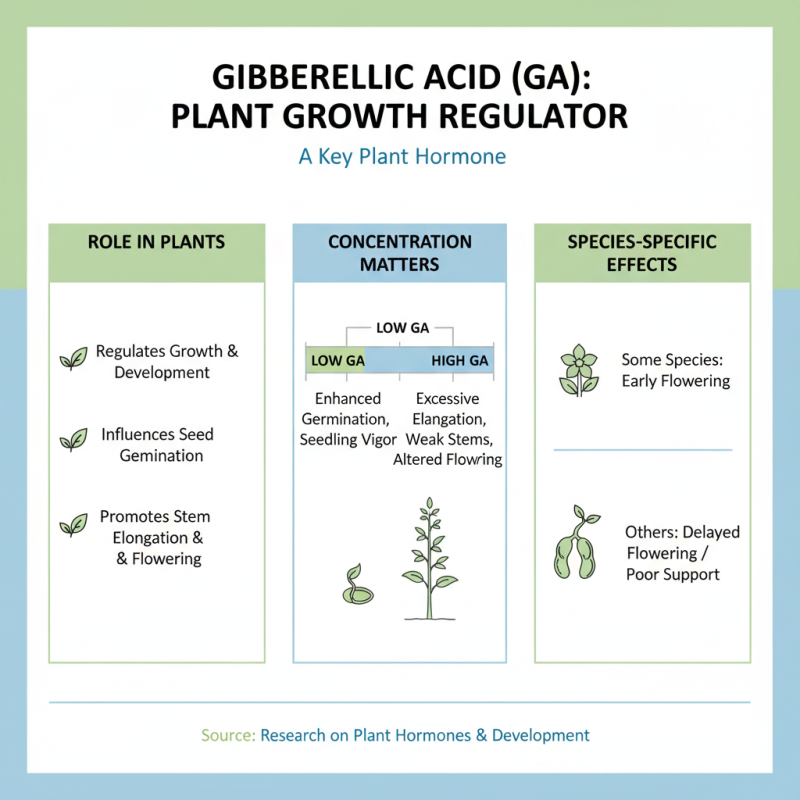
Gibberellic acid (GA) is a vital plant hormone that plays a crucial role in regulating growth and development. The concentration of GA can significantly influence the physiological responses of different plant species. Research has shown that varying concentrations of gibberellic acid can lead to distinct effects in terms of seed germination, stem elongation, and flowering times. For instance, some species may exhibit enhanced germination rates and vigor at lower GA concentrations, while higher concentrations could lead to excessive elongation and poor structural support in others.
Different plant species also show varied sensitivity to gibberellic acid applications. For example, legumes often benefit from moderate GA concentrations, which encourage robust growth and increased yield. Conversely, certain perennial plants may respond negatively to high levels of gibberellic acid, resulting in stunted growth or even plant stress. Therefore, it is essential to tailor the gibberellic acid concentration to the specific needs of each plant species to achieve optimal growth outcomes and avoid adverse effects. Effective use of this plant growth regulator hinges on understanding these species-specific responses and adjusting concentrations accordingly for efficient cultivation practices.
Measuring the Impact of Gibberellic Acid on Crop Yield and Quality
Gibberellic acid (GA3) is a crucial plant hormone known for its ability to influence growth and development. Its role in crop yield enhancement has garnered significant attention in agricultural research. By promoting cell elongation and division, GA3 can result in taller plants with improved leaf area, which directly impacts photosynthesis efficiency. As a result, crops treated with gibberellic acid often present enhanced growth traits, leading to increased biomass and higher yields.
The impact of gibberellic acid on crop quality is equally noteworthy. It has been shown to affect fruit development, size, and overall quality by optimizing the ripening process and encouraging uniformity in harvest. For instance, in fruit-bearing crops, GA3 treatments can lead to larger and more attractive fruits, thereby increasing their market value. Moreover, the application of gibberellic acid can improve the nutritional content of certain crops, fulfilling the growing demand for high-quality food products. Through careful measurement and analysis, farmers can leverage gibberellic acid to not only boost yield but also enhance the overall quality of their produce, making it a vital tool in sustainable agriculture.