Top 10 Benefits of Gibberellic Acid on Plant Growth?
Gibberellic acid is a powerful plant growth regulator. It has been widely studied for its significant impact on various aspects of plant development. According to a report by the International Society for Horticultural Science, gibberellic acid enhances seed germination and promotes faster growth in numerous species. Its role in agriculture is increasingly recognized as vital for improving yields.
Dr. Richard H. McBratney, a leading expert in plant biochemistry, states, "The potential of gibberellic acid on plant growth cannot be underestimated; it opens new avenues for agricultural innovation." These insights underline the importance of gibberellic acid in modern agriculture. Despite its benefits, challenges in application and efficacy can arise. Understanding these limitations is crucial for optimizing its use.
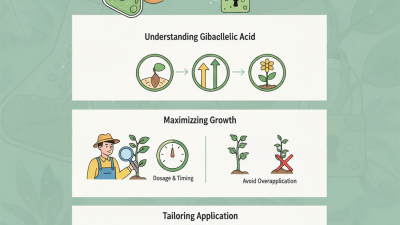
The characteristics of gibberellic acid on plant growth highlight its versatility. However, growers must carefully consider dosage and timing. Improper use can lead to unpredictable results. This underscores the need for thorough research and practical experience in application. Balancing benefits with potential risks is essential for maximizing plant growth.
Understanding Gibberellic Acid and its Role in Plant Growth
Gibberellic acid (GA) is a crucial plant hormone that significantly influences growth and development. This compound, a type of gibberellin, plays a vital role in processes such as seed germination, stem elongation, and flowering. Understanding its mechanisms offers insights into optimizing plant health. GA helps break seed dormancy, allowing plants to sprout under favorable conditions. This characteristic highlights its importance in agriculture, especially for crops that require precise timing for planting.
However, the application of gibberellic acid is not a one-size-fits-all solution. Overuse can lead to undesirable growth patterns, resulting in weak stems or excessive leaf production. Some plants may respond unpredictably to GA treatment. Regular monitoring and careful dosage are essential. Researchers emphasize that each species may react differently to gibberellic acid, requiring tailored approaches for effective use. By understanding these nuances, growers can harness GA for better crop yields and healthier plants.
Enhancing Seed Germination Through Gibberellic Acid Application
Gibberellic acid is a plant hormone known for its role in promoting growth. One of its most significant applications is enhancing seed germination. Many gardeners and farmers use it to boost sprouting in various seeds. When applied correctly, gibberellic acid helps overcome dormancy in seeds, leading to improved germination rates.
Research shows that treating seeds with gibberellic acid can increase the speed of sprouting. This hormone encourages the breakdown of stored nutrients, providing energy for the emerging plant. In some cases, seeds that normally require specific conditions may germinate faster when treated with gibberellic acid. It’s fascinating how this simple chemical can change the growth pathway for many plants.
However, its use requires caution. Over-application can lead to abnormal growth patterns. Some plants may become too leggy or weak. It's vital to test different concentrations and observe the response of the seeds. Continuous research in this area can help refine the use of gibberellic acid in agricultural practices. Enjoy experimenting but remain aware of the potential consequences.
Promoting Stem Elongation and Leaf Expansion with Gibberellic Acid
Gibberellic acid (GA) is a powerful plant growth regulator. It plays a key role in promoting stem elongation and leaf expansion. By applying GA, gardeners can achieve taller plants and larger leaves. This increase in size can improve photosynthesis, ultimately leading to healthier plants.
For optimal results, timing is crucial. Apply gibberellic acid during the early stages of plant growth. This is when seedlings are most responsive to growth stimuli. The concentration of GA is also important. Too much can lead to excessive elongation, making plants weak. Experiment to find the right dosage for your specific plant type.
Consider environmental factors as well. Light and temperature will influence how well GA works. Plants in low light or cooler temperatures may not respond as strongly. Observing your plants closely can provide insights. If you notice stretching or weaker stems, it might be a sign of over-application. Adjust your technique to avoid these pitfalls.
Increasing Fruit Yield and Size Using Gibberellic Acid Treatment
Gibberellic acid (GA) is a powerful growth regulator that significantly enhances fruit yield and size. When applied appropriately, GA stimulates cell elongation and division. This results in larger, juicier fruits. Many growers see a noticeable increase in overall fruit production after GA treatment.
Understanding the right dosage is crucial. Too little may not produce desirable effects, while excessive amounts could harm plants. Research indicates that using GA early in the fruit development stage often yields the best results. Additionally, climatic conditions play a role in its effectiveness.
For those looking to maximize their yields, consider the timing of application. Apply GA during the flowering phase for breeding trees or crops. Monitor your plants closely after treatment. They may exhibit unexpected growth patterns. Adjust your care strategies based on these observations.
Experimenting with GA can lead to notable improvements in fruit production. Make sure to take notes on your application process. Learning from your outcomes will enhance your future efforts. Consistency is key, but every crop can react differently. Being mindful of these variations can ultimately refine your approach.
Improving Plant Resilience to Environmental Stress with Gibberellic Acid
Gibberellic acid (GA) plays a vital role in enhancing plant resilience to environmental stress. This plant hormone can help improve growth in challenging conditions. Drought, salinity, and low temperatures can negatively affect plants. However, applying GA can mitigate these adverse effects. Research shows that GA treatments increase root growth, enabling better water uptake. A strong root system is essential for plant health.
Moreover, GA helps regulate the physiological responses of plants. Under stress, plants often display stunted growth or yellowing leaves. GA application promotes cell elongation and division, which counteracts these symptoms. Interestingly, some studies highlight that GA can modify stomatal behavior. This change enables plants to maintain better water balance during drought.
Environmental stresses can lead to poor crop yields. Farmers are increasingly looking for sustainable solutions. Using GA shows promise as a natural approach to enhance crop robustness. However, the results can vary based on plant species and environmental conditions. More research is needed to fully understand GA's potential benefits and optimization strategies. Balancing the use of GA while considering specific growth conditions may yield the best outcomes.
Top 10 Benefits of Gibberellic Acid on Plant Growth