China Best Gibberellic Acid Supplier in South Africa
South Africa’s fruit growers work against tight flowering windows, uneven rainfall, and demanding export-quality standards. In this setting, gibberellic acid can support specific growth objectives, but results depend on crop, application timing, concentration, and formulation. It is not a shortcut. A poorly matched treatment may disappoint.
For buyers comparing gibberellic acid south africa suppliers, product quality needs more than a competitive price. Check the active-ingredient assay, batch consistency, formulation details, certificate of analysis, and clear storage instructions. The USDA Foreign Agricultural Service’s South Africa Citrus Annual provides useful market context for one major fruit sector; FAOSTAT adds internationally comparable crop-production data. These sources help frame demand, but they do not prove that any particular product will perform in a local orchard.
Plant biochemist Peter Hedden has published extensively on gibberellin biology, including its role in plant growth and development. His research supports a practical reminder: plant responses are context-dependent. That matters in the field. A grower should assess the crop, growth stage, and intended outcome before selecting a treatment. Suppliers should explain specifications plainly and provide traceable documentation, not promise uniform results across crops. One detail is easy to overlook: water quality and application conditions can also affect practical performance. This introduction therefore treats supplier choice as a technical decision, not just a purchasing exercise.
Gibberellic Acid (GA₃): CAS 77-06-5, Formula C₁₉H₂₂O₆, Molar Mass 346.38 g/mol
Gibberellic acid (GA₃) is identified by CAS 77-06-5. PubChem records its formula as C₁₉H₂₂O₆ and molar mass as 346.38 g/mol. These figures are practical checks when reviewing a certificate of analysis, product label, or safety data sheet. Check the assay. Confirm that the stated identity matches the shipment documents, especially when sourcing internationally for South African growing conditions.
For buyers comparing suppliers, chemical identity is only the starting point. Ask for batch-specific analytical results, clear storage guidance, and instructions suited to the intended crop and application method. The South African Citrus Growers’ Association’s 2023 industry statistics reported roughly 165 million 15-kg cartons of citrus exports. That scale makes consistent fruit quality commercially important, but it does not mean GA₃ will produce the same response in every orchard. Crop stage, weather, and treatment conditions matter.
A precise formula cannot predict field performance. I would not treat a tidy specification as proof of efficacy; that distinction is easy to miss. Compare supplier documentation with local agronomic advice and the product’s approved label before use. PubChem’s compound record is useful for checking core chemical data, while field trials and technical guidance are needed to assess practical performance. Details matter.
How GA₃ Works: Plant Growth Effects and Crop-Specific Application Rates
Gibberellic acid (GA₃) is a plant-growth regulator, not a fertilizer. It activates growth pathways that promote cell expansion, longer shoots, and, in some crops, flowering or fruit development. The response depends on cultivar, crop stage, temperature, and plant stress. Too much can produce weak, stretched growth. Timing matters.
Crop rates are not interchangeable. UC Agriculture and Natural Resources’ table-grape guidance gives about 20–40 ppm for berry sizing, applied at a specific berry-development stage. UF/IFAS citrus guidance cites 10–20 ppm for mature fruit to help maintain rind quality.
These are spray concentrations, not universal prescriptions. Follow the local product label and confirm the permitted crop use in South Africa.
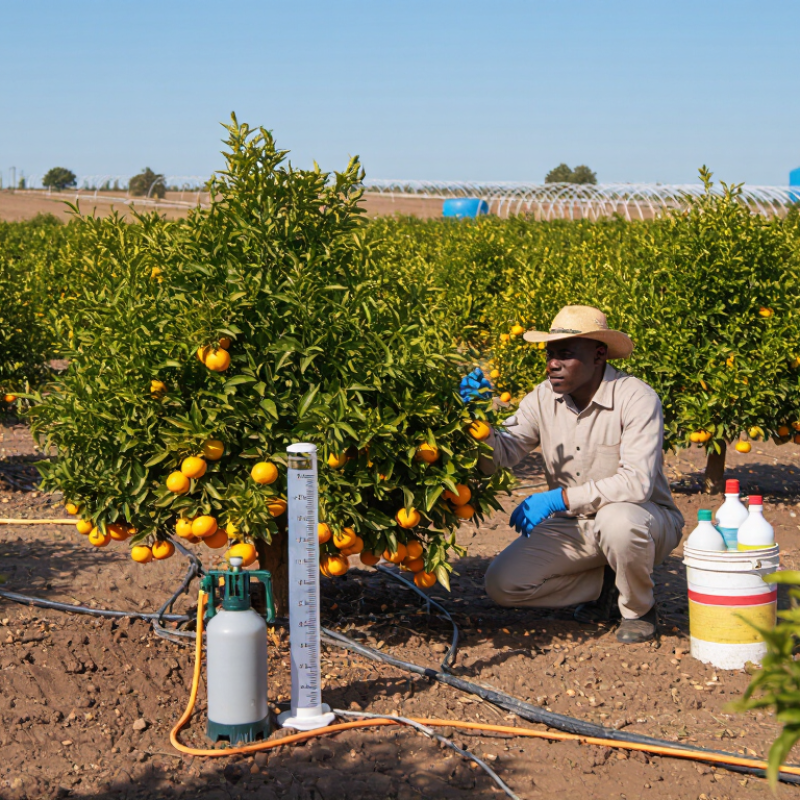
I still find timing easy to misjudge: a few days can change the result. Less can be more. Test a small block, record the date and dose, then compare treated and untreated rows before scaling up.
South African Compliance: Agricultural Remedies Act 36 of 1947
For a Chinese gibberellic acid supplier serving South Africa, compliance starts with the finished formulation, not just the active ingredient.
Under the Fertilizers, Farm Feeds, Agricultural Remedies and Stock Remedies Act 36 of 1947, agricultural remedies require registration before sale. Confirm the product’s South African registration status with the Department of Agriculture, and check that its label, crop uses, rates, and safety directions match the approved registration. An overseas certificate alone does not establish local approval.
The FAO’s FAOSTAT pesticide-use series reports 3.70 million tonnes of pesticides used in agriculture worldwide in 2022. This broad figure is not specific to gibberellic acid, but it shows why clear product records matter. Before shipment, request the formulation specification, certificate of analysis, safety data sheet, and stability information. Compare the declared concentration with the label and import documents. Small mismatches can delay clearance or create problems for growers keeping spray records. Registration details can change, so verify current requirements before ordering.
Tips: Check registration first. Keep batch documents and approved-label copies together. Ask a South African regulatory specialist to review the intended crop and use. A tidy file helps, but it does not replace registration.
China-to-South Africa Sourcing: Purity, Formulation, COA, and Batch Traceability
China-to-South Africa Sourcing: Purity, Formulation, COA, and Batch Traceability
Sourcing gibberellic acid from China requires more than comparing assay figures. The World Bank’s World Development Indicators report that agricultural land covers roughly 80% of South Africa’s land area. This includes extensive pasture, not only crops receiving plant-growth regulators. The figure provides context, but it cannot predict product demand. Check that the proposed formulation suits the intended crop and application method. Gibberellic acid’s limited water solubility makes formulation details practical, not cosmetic. Ask for the assay method, stated purity, moisture data, and storage conditions. A certificate of analysis should identify the tested batch and report results, not just specifications. HPLC results are useful when the method and reference standard are clearly stated.
Tips: Match the COA batch number to the container label and shipping documents. Request a recent, lot-specific COA, manufacturing date, and retain-sample policy. Confirm packaging protects the material from heat and moisture during transit. A polished document is not proof of a reliable lot. Review the test method, units, and laboratory details; if they are missing, ask. Traceability can feel tedious. It matters when results differ. Keep the supplier’s batch records with your receiving inspection, and record any damaged seals or unusual appearance. One weak point: paperwork alone cannot verify every shipment, so consider independent testing when the risk or order value warrants it.
Supplier Evaluation: Compare Specifications, Packaging, Lead Times, and Import Costs
China Best Gibberellic Acid Supplier in South Africa
Supplier Evaluation: Compare Specifications, Packaging, Lead Times, and Import Costs
A reliable comparison starts with the product documents, not the quoted price. Check the stated concentration, formulation, solubility, batch number, and shelf life. Request a current certificate of analysis and safety data sheet for the specific lot. Small differences in formulation can affect storage and application planning. Read the label carefully.
Packaging matters in South Africa’s warm storage conditions. Ask whether sealed, moisture-resistant containers are available in sizes that suit your operation. A large pack may lower the unit price but leave more product exposed after opening. Not ideal. Confirm the manufacturing date, storage guidance, and outer-carton details before shipment. For lead times, separate production time from transit and customs clearance. Get an estimated arrival window for your delivery point, such as Durban or an inland warehouse, and ask what could cause delays.
Compare landed costs, not just the supplier’s price. Include freight, insurance, customs charges, taxes, broker fees, and local delivery. Import costs depend on shipment details and applicable classification, so verify estimates with a qualified customs broker. Ask for the quote’s validity period and payment terms in writing. One detail can still be missed; review the documents and figures before placing an order.
China Gibberellic Acid Supplier Evaluation for South Africa
Suggested buyer-priority ratings for comparing supplier quotations (1 = lower priority, 5 = critical). These are evaluation priorities, not supplier performance scores or market-price data.
How to use this chart: Request comparable documentation for active-ingredient content and formulation, plus a Certificate of Analysis and Safety Data Sheet. Confirm packaging size, minimum order quantity, and dispatch lead time in writing. Compare delivered costs using the same Incoterms and include freight, insurance, customs charges, and local clearance fees; verify applicable import requirements and charges for the specific product and shipment.