site_4bbb466c-cafd-4edb-8869-71ed8e60d33a
Excellence in PGR technology
Gibberellic acid can influence tomato growth, but it is not a universal fix for weak flowering or poor fruit set. Its effects depend on the cultivar, plant stage, growing conditions, and product formulation. In a greenhouse, the same treatment may help under one set of conditions and disappoint under another. Small details matter.
Plant scientist Stephen G. Thomas studies gibberellin signaling. A cautious paraphrase of the practical lesson from this research is: “A plant’s response to gibberellin depends on its developmental stage and growing conditions.” This is a paraphrase, not a direct quotation. It captures why advice about gibberellic acid tomato plants should include more than a suggested spray rate.
This guide explains what to check before using a product, how timing and application can affect results, and which warning signs deserve attention. Read the product label carefully; formulations and permitted uses differ. Avoid guessing at concentrations or treating stressed plants as an experiment. Record the variety, application date, weather, and visible changes, such as unusually long stems or altered fruit development. Results may be uneven. That uncertainty is worth acknowledging. A careful trial, guided by the label and reliable local horticultural advice, is more useful than assuming one treatment will work for every tomato plant.
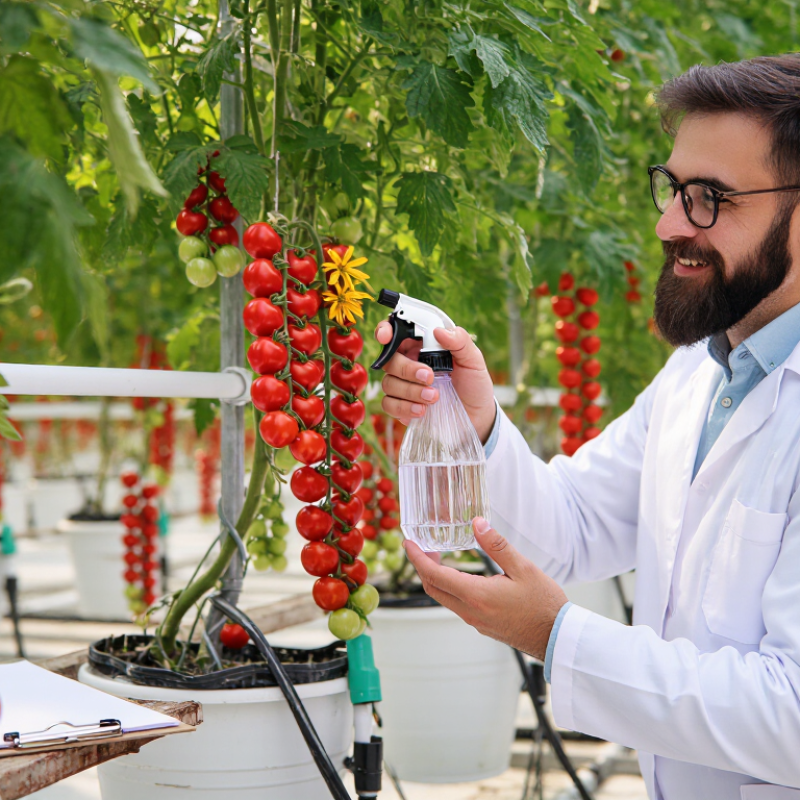
Gibberellic acid (GA₃) is a plant hormone that can encourage cell elongation and influence flowering and fruit development. On tomato plants, its effect depends on the cultivar, plant age, dose, and growing conditions. Serrani and colleagues’ 2007 tomato experiments found that gibberellin activity contributes to auxin-triggered fruit set: disrupting gibberellin production reduced the response, while added gibberellin supported fruit growth. This is experimental evidence, not a universal yield guarantee.
More growth is not always better. A treated tomato may develop longer stems or altered flowering, yet still produce fewer marketable fruits if pollination, temperature, or water supply is poor. Use only a formulation labeled for tomatoes, and follow its directions; research concentrations are not automatically safe or suitable garden rates. Test a small group of plants first, then compare untreated plants for stem length, flower retention, and fruit set. Keep notes. A simple dated photo can reveal changes that memory misses. I would be cautious about treating every plant: responses can be uneven, and a vigorous-looking vine is not proof of a better harvest.
Gibberellic acid products can differ in concentration, formulation, and approved use, so read the complete label before opening the container. Check that tomatoes are specifically listed; instructions for another crop do not establish a safe tomato application. Look for the stated purpose, such as supporting fruit set, and confirm the growth stage and application method. Small print matters.
Follow the tomato-specific rate exactly, using the measuring tool and water volume described on the label. Do not estimate by capfuls or borrow a rate from an online post. Check how often applications may be made, any temperature or weather limits, and the required interval before harvest. Wear the protective equipment listed, even when mixing a small amount. Easy to overlook.
If the label is unclear, pause and contact the manufacturer or a qualified local horticulture adviser before treating plants. Never assume that a stronger mix will work better; plant response can vary with variety, heat, and growing conditions. If the label permits a limited trial, treat only a small section and record the date, rate, and conditions. I would want clearer notes before repeating it. Dispose of leftover solution and rinse equipment only as directed on the label.
Gibberellic acid is most relevant when tomato plants are flowering, not while they are tiny seedlings. Check the product label for the crop, target stage, and permitted application method; concentrations vary, so there is no safe universal rate. Some uses target newly opened flowers or flower clusters to support fruit set under specific conditions. It does not replace good pollination, steady watering, or balanced nutrition. Timing matters.
Use a clean, calibrated sprayer and treat only the labeled plant parts. Aim for a light, even coating on the flower cluster, not runoff down the stem. Apply in calm, mild weather, and avoid spraying when bees are actively visiting flowers. Test a small section first, then observe new growth and fruit shape before treating more plants. Keep notes on the date and conditions; results can be uneven. I would not spray every cluster automatically. Excess or poorly timed treatment may encourage awkward growth or misshapen fruit, and that is frustrating to discover late. Follow label instructions for protective equipment, mixing, and repeat applications.
Before opening a gibberellic acid product, check that its label permits use on tomatoes. Rates and timing vary by formulation, so do not borrow a dose from another crop or online recipe. Wear the protective equipment specified on the label, and measure with a dedicated tool. Small errors matter. Prepare only the amount needed, in a ventilated area away from food, children, and pets. Use clean water and a calibrated sprayer; never guess at the mixing volume. I still find it worth checking the sprayer’s output with plain water first.
Apply under calm conditions, following label limits for temperature, timing, and repeat treatments. Avoid spraying flowers or fruit unless the directions explicitly call for it. Keep the solution off skin, eyes, and nearby plants, and prevent runoff into drains or ponds. The WHO-supported review by Boedeker and colleagues estimated 385 million cases of unintentional acute pesticide poisoning worldwide each year, across pesticides generally—not gibberellic acid specifically (BMC Public Health, 2020, 20:1875). That wider figure is a reason to take handling seriously, not a measure of this product’s risk. Store leftovers only as directed, and clean equipment as the label instructs. Record the date and rate. Check twice.
After applying gibberellic acid, treat each tomato block as a small trial. Keep comparable untreated plants nearby, and mark 20 flowers on each group. Record flower drop and fruit set after 7–10 days, then check fruit shape and stem growth weekly. Take photos from the same angle; a ruler beside young fruit makes changes easier to judge. Keep it simple. Note the spray date, product-label rate, weather, and watering, since heat or dry soil can confuse the results.
Serrani and colleagues’ tomato experiments, published in Plant Physiology in 2007, found that disrupting gibberellin production reduced fruit set, while gibberellin treatment restored development under the tested conditions. This is useful evidence, not a universal prediction: cultivar, growth stage, and environment matter. If treated plants show little change, resist the urge to increase the dose immediately. Compare them with untreated plants and check for uneven coverage or recent temperature stress. If fruit becomes misshapen or stems stretch noticeably, pause further applications and review the label directions. I would not call one uneven trial a failure; sometimes the notes are simply too thin to explain what happened. Use those observations to guide a cautious next treatment, within label instructions.
| Cookie | Duration | Description |
|---|---|---|
| _wpfuuid | 11 years | This cookie is used by the WPForms WordPress plugin. The cookie is used to allows the paid version of the plugin to connect entries by the same user and is used for some additional features like the Form Abandonment addon. |
| cookielawinfo-checkbox-analytics | 11 months | This cookie is set by GDPR Cookie Consent plugin. The cookie is used to store the user consent for the cookies in the category "Analytics". |
| cookielawinfo-checkbox-functional | 11 months | The cookie is set by GDPR cookie consent to record the user consent for the cookies in the category "Functional". |
| cookielawinfo-checkbox-necessary | 11 months | This cookie is set by GDPR Cookie Consent plugin. The cookies is used to store the user consent for the cookies in the category "Necessary". |
| cookielawinfo-checkbox-others | 11 months | This cookie is set by GDPR Cookie Consent plugin. The cookie is used to store the user consent for the cookies in the category "Other. |
| cookielawinfo-checkbox-performance | 11 months | This cookie is set by GDPR Cookie Consent plugin. The cookie is used to store the user consent for the cookies in the category "Performance". |
| viewed_cookie_policy | 11 months | The cookie is set by the GDPR Cookie Consent plugin and is used to store whether or not user has consented to the use of cookies. It does not store any personal data. |
| Cookie | Duration | Description |
|---|---|---|
| CONSENT | 2 years | YouTube sets this cookie via embedded youtube-videos and registers anonymous statistical data. |
| vuid | 2 years | Vimeo installs this cookie to collect tracking information by setting a unique ID to embed videos to the website. |