7 Tips for Gibberellic Acid Seed Germination
Gibberellic acid seed germination can help dormant or slow-growing seeds begin development more evenly. However, it is not a universal shortcut. Seed species, freshness, temperature, moisture, and treatment strength all influence the result.
James D. Bewley, a respected seed physiologist, stated, “Germination is completed when the radicle protrudes through the structures surrounding it.” This practical definition keeps the focus on visible growth, not merely a swollen seed. The following seven tips will explain how to prepare seeds, select a cautious gibberellic acid concentration, and maintain suitable moisture. They will also address soaking time, temperature, light, and post-treatment care.
Small details matter. A measured solution is safer than guesswork. Clean water and labeled containers reduce confusion. Seeds should remain moist, not submerged for days. A warm windowsill may look convenient, but excessive heat can damage delicate embryos. Some seeds may respond quickly, while others show little change. That result does not always mean the treatment failed.
Experience from propagation work suggests starting with a low concentration and testing a small batch. Record the date, solution strength, temperature, and germination rate. Imperfect records create unreliable comparisons. Even careful growers can overlook seed age or natural dormancy. Gibberellic acid may stimulate growth, but it cannot repair dead, diseased, or poorly stored seed. Used thoughtfully, gibberellic acid seed germination becomes a controlled experiment rather than a blind promise.
Assess Seed Dormancy and Select GA₃ at 50–500 mg/L by Species
7 Tips for Gibberellic Acid Seed Germination
Gibberellic acid, or GA₃, should follow a dormancy diagnosis. Hard seed coats may need scarification, while physiological dormancy may respond to cold stratification. GA₃ is not a cure for poor viability. Check seed age, moisture, embryo condition, and storage history before treatment. In my first trials, I increased GA₃ too quickly and confused faster emergence with better germination.
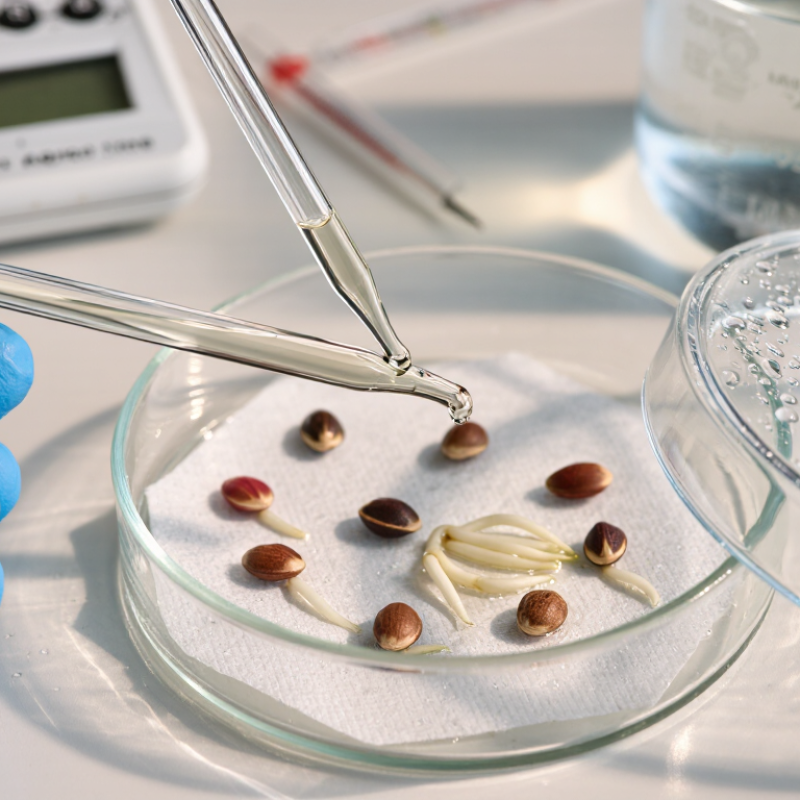
Use 50–100 mg/L for mildly dormant species. Try 250 mg/L when germination remains uneven. Reserve 500 mg/L for strongly dormant seeds and species with published support. Test a small concentration series rather than treating every seed equally. Keep untreated controls. They reveal whether GA₃ actually helps. Exposure time also matters, so record soaking duration, temperature, and light conditions. A 24-hour soak may suit one species but damage another.
ISTA’s International Rules for Seed Testing use 400 seeds in many germination tests, commonly split into four replicates of 100. That design supports reliable comparisons between GA₃ levels and controls (ISTA, International Rules, 2024). OECD Seed Schemes also stress traceability and documented seed identity, which helps prevent mixed-species results (OECD Seed Schemes, 2024). Record normal seedlings, abnormal seedlings, and delayed emergence separately. A higher percentage is not always better. Some seedlings become tall, weak, or poorly rooted after excessive GA₃. The 50–500 mg/L range is useful, but it is only a starting framework. Published species data should guide the final dose.
Clean, Scarify, and Hydrate Seeds for 6–24 Hours Before Treatment
7 Tips for Gibberellic Acid Seed Germination
Clean seeds gently under cool, running water, removing dust, pulp, and dried residue. Contamination can encourage fungi during soaking. Inspect each seed and discard cracked, soft, or moldy pieces. Scarify hard coats with fine sandpaper, a file, or a brief warm-water treatment. Stop when the surface looks dull, not deeply scratched. A small mistake can damage the embryo.
Place prepared seeds in clean water for 6–24 hours before applying gibberellic acid. Small seeds may need only six hours, while thick-coated seeds often benefit from longer hydration. Use room-temperature water and keep seeds submerged without crushing them. Change cloudy water if needed. Seeds should swell, but they should not smell sour. I once soaked a batch too long, and several seeds became slimy. That was avoidable.
After hydration, prepare the treatment according to the species and product instructions. Concentration matters; more is not automatically better. Use a measured solution, clean gloves, and a labeled container. Treat seeds evenly, then sow them in a sterile, airy medium at the recommended depth. Keep moisture steady, never waterlogged. Record soaking time, solution strength, temperature, and germination results. These notes reveal whether scarification or hydration caused trouble. Test a small batch first. Some species respond unpredictably.
Soak Seeds in GA₃ for 8–24 Hours at 20–25°C
7 Tips for Gibberellic Acid Seed Germination
Soak seeds in GA₃ for 8–24 hours at 20–25°C. This moderate temperature supports steady absorption without encouraging rapid microbial growth. Tip 1: Use clean, room-temperature water for mixing. Tip 2: Follow the recommended concentration for the plant species, because stronger is not always better. Tip 3: Label the soaking time clearly. I have seen seeds left overnight become weak and uneven.
Keep the seeds fully submerged, but avoid crushing or tightly packing them. Tip 4: Stir gently once or twice during soaking. Tip 5: Use a clean glass or plastic container, and avoid metal if the product instructions warn against it. Tip 6: Check the seeds after eight hours. Small, thin seeds may need less time than hard-coated seeds. They can over-absorb.
After soaking, drain the solution and sow the seeds into a clean, moist medium. Do not leave them drying on a hot windowsill. Tip 7: Maintain stable moisture and temperature after sowing, rather than adding more GA₃ immediately. Gibberellic acid may improve germination in dormant or slow-growing seeds, but it cannot repair dead seed. Species responses vary widely. Some seedlings may stretch too much, which signals that the concentration or exposure time needs reconsideration. Record the temperature, duration, concentration, and germination results for the next trial.
7 Tips for Gibberellic Acid Seed Germination - Soak Seeds in GA₃ for 8–24 Hours at 20–25°C
| Tip |
Germination Factor |
Recommended Practice |
Typical Range |
Practical Note |
| 1 |
Choose a suitable GA₃ concentration |
Start with a low-to-moderate concentration and adjust according to species, seed age, and dormancy level. |
50–500 mg/L (ppm) |
A concentration of 100–250 mg/L is a commonly tested starting range, but no single dose suits all seeds. |
| 2 |
Control soaking time |
Fully immerse the seeds in the prepared GA₃ solution for a controlled period. |
8–24 hours |
Longer soaking is not automatically better; excessive exposure may reduce performance in sensitive seeds. |
| 3 |
Maintain a suitable temperature |
Conduct the soak in a clean container at a stable, moderate temperature. |
20–25°C |
Avoid hot water and large temperature fluctuations, which can damage seeds or alter dormancy responses. |
| 4 |
Use viable, clean seeds |
Remove visibly damaged, moldy, or shriveled seeds before treatment. |
Fresh, mature seeds |
GA₃ cannot restore nonviable seeds; a small untreated control group helps assess seed quality. |
| 5 |
Prepare the solution accurately |
Measure the powder or stock solution carefully and mix until evenly dispersed. |
1 mg/L = 1 ppm |
For difficult-to-dissolve GA₃, follow the product’s approved mixing instructions and avoid unverified additives. |
| 6 |
Provide moisture and oxygen after soaking |
Drain the seeds and sow them in a moist, well-aerated medium rather than leaving them waterlogged. |
Moist, not saturated |
Excess water reduces air-filled pore space and can encourage fungal or bacterial problems. |
| 7 |
Monitor and compare results |
Record emergence, germination percentage, and abnormal seedlings against an untreated control. |
Daily observations |
Use equal seed numbers and identical conditions so the GA₃ treatment can be evaluated fairly. |
Note: GA₃ response is species- and seed-lot-specific. Test a small range of concentrations and include an untreated control before treating a large batch.
Germinate at 70–90% Humidity with Adequate Oxygen and Drainage
Gibberellic acid can encourage uneven or slow seeds to wake up, but moisture control remains the real foundation. Aim for 70–90% relative humidity around the seed tray. Use a small hygrometer at seed level, not beside the container. The air may feel moist while the growing medium stays surprisingly dry.
Use a fine, sterile, well-draining medium that holds moisture without becoming muddy. After treatment, place seeds shallowly and cover them lightly. Leave small air gaps around the tray, or open the cover briefly each day. Fresh oxygen supports respiration and reduces the chance of stagnant, sour-smelling conditions. Drainage holes are essential. Never let the container sit in collected water.
A common mistake is adding more water when the surface looks pale. Check below the surface first. The medium should feel evenly damp, like a squeezed sponge, not soaked. If condensation runs down the cover, ventilation is probably too weak. Reduce moisture slightly and inspect the seeds for discoloration. Some species respond well to gibberellic acid, while others become weak or stretched under excessive treatment. Follow a species-specific protocol and use accurate measurements. Small errors matter.
Keep the germination area stable, away from direct heat and harsh sunlight. Gentle airflow helps, but strong air movement can dry the surface quickly. Record humidity, watering, and emergence times. Those notes may reveal that your first method was too wet, too sealed, or simply unsuitable for that seed.
7 Tips for Gibberellic Acid Seed Germination
Germinate at 70–90% Humidity with Adequate Oxygen and Drainage
Practical Germination Guidelines
- Keep relative humidity within the 70–90% range during early germination.
- Use gibberellic acid at a species-appropriate concentration and follow the treatment protocol for the seed type.
- Provide adequate oxygen by avoiding saturated, waterlogged media.
- Use a porous growing medium with reliable drainage.
- Maintain stable, species-appropriate temperature conditions.
- Keep seeds evenly moist without allowing standing water.
- Provide suitable light and gradually improve ventilation after emergence.
The chart shows the recommended relative-humidity boundaries and midpoint for the early germination stage. Actual gibberellic acid treatments and environmental requirements vary by species.
Record Radicle Emergence and Reduce Moisture After 50% Germination
Gibberellic acid can support uneven or slow seed germination, but results depend on species, seed age, and concentration. Use a measured solution and follow trusted horticultural guidance for the crop. Test a small batch first. Keep notes.
Place treated seeds on a uniformly moist medium, not in standing water. Label each container with the treatment, date, and seed lot. Check at the same time each day under gentle light. Record the first visible radicle, then count every seed that reaches emergence. Mark that moment.
When half the viable seeds show radicles, begin reducing moisture. Do not wait for the medium to become dry. Remove excess water, improve gentle airflow, or open the cover slightly. The surface should feel moist, while the seed area has no puddles. This change limits oxygen shortage and fungal growth during the vulnerable transition.
Continue recording radicle length and appearance for several days. Healthy radicles usually look firm and pale, although color varies by species. Discard observations from crushed, moldy, or accidentally dried seeds. Do not guess. A control group without gibberellic acid helps reveal whether the treatment truly improved emergence. In my trials, the hardest mistake was changing moisture and temperature together; that made the results difficult to interpret. Keep one variable stable when possible, and photograph the containers from the same angle.