site_4bbb466c-cafd-4edb-8869-71ed8e60d33a
Excellence in PGR technology
Choosing the best gibberellic acid 20 for crops in 2026 starts with a practical question: what does the crop actually need? No single product is best for every field. Crop species, growth stage, weather, and application method can all affect results. The same treatment may support useful growth in one setting and disappoint in another.
Check the product label carefully. Confirm its stated concentration, formulation, target crops, application directions, and storage requirements. The name “gibberellic acid 20” alone may not tell you everything about a product’s composition or suitability. Look for clear manufacturer information and consistent batch documentation. Small details matter.
Reliable decisions also come from careful observation. Compare treated plants with untreated areas, and record timing, rate, weather, and visible crop response. Use only label-directed rates; applying more does not guarantee better results. A small, well-monitored trial can reveal issues before broader use, though one trial cannot predict every season. That limitation is worth remembering.
This guide will consider product quality, crop fit, application guidance, and evidence growers can use when comparing options in 2026. Recommendations should be checked against current product directions and advice from qualified local agronomists, especially when crop conditions are unusual. Results vary. Keep records, question bold claims, and choose a product for its documented fit—not just its marketing.
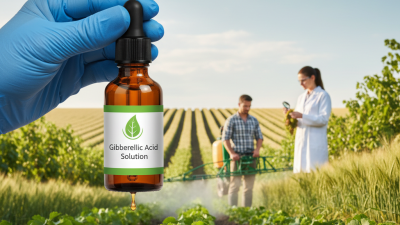
Gibberellic acid (GA₃) is a plant hormone that helps regulate growth. A product labeled “Gibberellic Acid 20” may contain a 20% formulation, but naming conventions can vary. Check its guaranteed analysis and label directions; the number alone does not determine the correct dose. It is not fertilizer. GA₃ does not replace nutrients or repair poor soil.
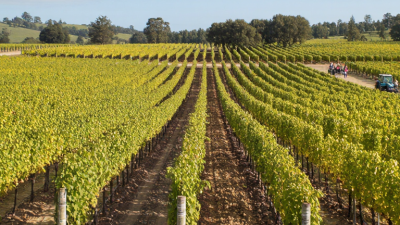
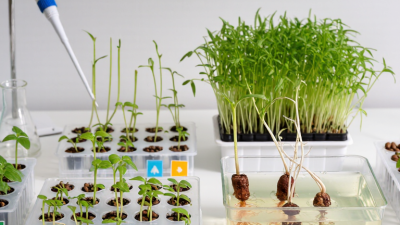
In crops, GA₃ can encourage cells to elongate and may affect seed germination, flowering, fruit set, or fruit size. The response depends on the crop, growth stage, weather, and application rate. For example, treating grapes near a specified development stage may alter berry growth, while the same timing may not suit another crop. More is not always better. Excessive or mistimed use can cause weak growth, uneven development, or reduced fruit quality.
A careful grower checks the crop-specific directions before mixing, then measures water and product accurately. Apply only under suitable conditions stated on the label, and record the date, rate, crop stage, and visible response. The tricky part is timing. A small test area can reveal how a particular variety responds before wider use. Results may still vary between seasons, so keep records rather than relying on memory.
Gibberellic acid (GA₃) is a plant hormone that can promote stem elongation, seed germination, and fruit development in responsive crops. Results depend on crop, growth stage, conditions, and product label directions.
The chart shows concentration by weight: a hypothetical 20% w/w formulation contains 200 g of GA₃ per 1 kg of formulation. These values are percentage calculations, not crop application rates or a comparison of product performance. Follow the crop-specific product label.
Which crops and growth stages can benefit from GA20 depends on the crop, formulation, and local product label. Gibberellic acid is not a general-purpose growth booster. It changes growth patterns, and the same treatment can help one crop while reducing quality in another.
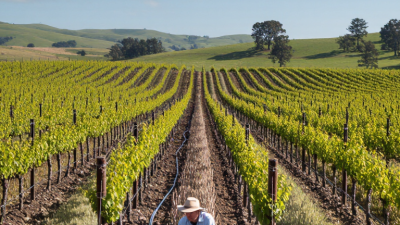
In table grapes, growers may use it around bloom to lengthen clusters, or after fruit set to enlarge berries, where permitted. Citrus treatments may target fruit set or fruit development, but responses vary by cultivar and conditions. In some leafy crops, gibberellic acid can encourage stem extension; that may be useful for production goals, but unwanted bolting can make leaves less marketable. Seedlings and actively growing plants may respond differently from mature crops. Timing matters.
Look closely at the crop’s stage, not just the calendar. A grape cluster near bloom is visibly different from one with pea-sized berries. Heat, water stress, and uneven growth can also shift the response. Easy to misjudge. Check the registered label for the crop, stage, and application method, and consult a qualified local adviser when timing is uncertain. A small trial on a limited area can reveal uneven growth or quality changes before wider use.
A useful GA20 product is not simply the one with the largest number on its label. Check the declared active ingredient, concentration, formulation, batch number, and expiry date. “GA20” can be shorthand, so confirm exactly what the product contains. Labels matter. Make sure the crop and intended use appear on its directions, and follow applicable local requirements. A clear label should also state dilution, application timing, protective measures, and storage conditions. If any detail is missing or unclear, ask a qualified crop adviser before use.
Fit matters more than a broad performance claim. Match the directions to the crop’s growth stage, then test the product on a small, representative area beside an untreated comparison. Small plots help. Record the rate, date, weather, and visible response, such as stem length, flowering, or fruit set. Compare results under similar conditions; heat, water stress, and uneven growth can distort a trial. Avoid changing several inputs at once. One trial may still mislead, especially when field conditions vary, so repeat it before scaling up. Store the product as directed and keep notes for the next season.
What Is the Best Gibberellic Acid 20 for Crops in 2026?
How to Apply GA20 Safely and Effectively
Choose a GA20 product only after checking its active ingredient, crop directions, and formulation on the label. “20” can describe concentration, not a universal field rate. Never transfer a dose from one crop or product to another. Use a calibrated sprayer and measure the treated area; uneven coverage can leave some leaves wet while others receive very little. Wear the protective equipment specified on the label, mix only what you need, and avoid spraying in gusty weather or near sensitive plants. Small details matter.
Timing is crop-specific. Apply at the growth stage stated on the label, and test a small area when local conditions or cultivar response are uncertain. Record the rate, water volume, weather, and crop stage. Review the result before treating the whole field. USDA’s 2023 Pesticide Data Program tested 10,845 food samples; about 99.5% had residues below EPA tolerances. This broad monitoring result is not GA20-specific, but it underscores why careful, label-directed use and residue records matter. I would not treat a favorable growth response as proof that the rate was right; repeat observations across blocks can reveal uneven effects.
What Is the Best Gibberellic Acid 20 for Crops in 2026?
What Factors Determine the Best GA20 Choice for Each Farm
The best GA20 choice depends on the crop, growth stage, and purpose of treatment—not simply the product concentration. A formulation suited to one crop may produce uneven results on another. Check the product label for approved crops, application timing, and directions. Compare active ingredient concentration and formulation, too; package size alone tells you little.
Farm conditions matter. A windy afternoon can reduce spray coverage, while uneven irrigation or stressed plants may affect crop response. Consider the equipment available, water quality, field size, and whether workers can apply the product consistently. Keep a simple trial record: note the date, crop stage, weather, treated area, and observed response. Results can vary, and one season is not always enough to confirm a pattern. I would be cautious about calling any option “best” without local field evidence.
Tips: Follow the label exactly, and do not assume rates transfer between crops or formulations. Test a small area when permitted, then compare it with untreated plants. If the crop or timing is unclear, ask a qualified local agronomist before applying.
| Farm or crop factor | Why it matters | What to check when choosing a GA20 product | Practical decision point |
|---|---|---|---|
| Active ingredient and concentration | “GA20” may be used informally to describe a 20% product, but product names alone do not establish the active ingredient or concentration. | Confirm the active ingredient, concentration, formulation, and units on the label. Do not assume every “20” product has the same composition. | Compare products on the basis of labeled active ingredient, not name or package size. |
| Crop and intended outcome | Plant growth regulators can have different effects across crops, cultivars, and growth stages. For example, GA₃ is used in some labeled table-grape programs to influence berry size or cluster characteristics. | Check that the specific crop and intended use—such as fruit sizing or another labeled quality objective—appear on the product label. | Choose for a defined, label-supported objective rather than a general expectation of increased yield. |
| Cultivar and crop stage | Response can depend on cultivar, plant condition, and application timing. The same treatment may not produce the same result across varieties or developmental stages. | Review label timing instructions and consult locally relevant extension guidance or trial data for the cultivar and production system. | Match the application window to the crop stage specified for that use; do not transfer timing from another crop or cultivar. |
| Formulation and application method | Formulation affects handling, mixing, and delivery. A product is only suitable if its labeled application method fits the farm’s equipment and target crop. | Check whether the label permits the intended spray or other application method, and follow its mixing, water-volume, and coverage directions. | Select a formulation that can be applied uniformly with available, properly calibrated equipment. |
| Water quality and tank compatibility | Water properties and tank mixes can affect spray preparation or crop safety. Compatibility should not be assumed from the active ingredient alone. | Follow label restrictions for water, adjuvants, and tank mixes. Check compatibility guidance and perform a jar test when appropriate. | Avoid unapproved mixtures; test a small area when permitted and follow label precautions. |
| Weather and field conditions | Rain, temperature, wind, and crop stress can affect application conditions and consistency. Directions differ among products and uses. | Check the label for weather-related restrictions, rainfastness information, and precautions for stressed or sensitive crops. | Apply only under conditions allowed by the label and suitable for safe, uniform coverage. |
| Registration and residue requirements | Approved crops, uses, preharvest intervals, and worker-protection requirements vary by country and product registration. | Use a product registered for the crop and purpose in the farm’s jurisdiction. Check preharvest intervals, restricted-entry intervals, and export-market requirements. | The local product label is the controlling source for legal use; do not rely on directions from another country. |
| Economics and evidence | A treatment’s value depends on whether the intended quality or production benefit covers product, labor, and application costs under local conditions. | Compare cost per treated area at the labeled rate, and look for independent, locally relevant research for the crop and target outcome. | Where permitted, consider a small untreated comparison area before adopting a program across the whole farm. |
| Cookie | Duration | Description |
|---|---|---|
| _wpfuuid | 11 years | This cookie is used by the WPForms WordPress plugin. The cookie is used to allows the paid version of the plugin to connect entries by the same user and is used for some additional features like the Form Abandonment addon. |
| cookielawinfo-checkbox-analytics | 11 months | This cookie is set by GDPR Cookie Consent plugin. The cookie is used to store the user consent for the cookies in the category "Analytics". |
| cookielawinfo-checkbox-functional | 11 months | The cookie is set by GDPR cookie consent to record the user consent for the cookies in the category "Functional". |
| cookielawinfo-checkbox-necessary | 11 months | This cookie is set by GDPR Cookie Consent plugin. The cookies is used to store the user consent for the cookies in the category "Necessary". |
| cookielawinfo-checkbox-others | 11 months | This cookie is set by GDPR Cookie Consent plugin. The cookie is used to store the user consent for the cookies in the category "Other. |
| cookielawinfo-checkbox-performance | 11 months | This cookie is set by GDPR Cookie Consent plugin. The cookie is used to store the user consent for the cookies in the category "Performance". |
| viewed_cookie_policy | 11 months | The cookie is set by the GDPR Cookie Consent plugin and is used to store whether or not user has consented to the use of cookies. It does not store any personal data. |
| Cookie | Duration | Description |
|---|---|---|
| CONSENT | 2 years | YouTube sets this cookie via embedded youtube-videos and registers anonymous statistical data. |
| vuid | 2 years | Vimeo installs this cookie to collect tracking information by setting a unique ID to embed videos to the website. |