
site_4bbb466c-cafd-4edb-8869-71ed8e60d33a
Excellence in PGR technology
China Top Gibberellic Acid for Plant Growth Supplier?
Demand for reliable gibberellic acid for plant growth is tied to growers’ need for consistent crop performance and precise application. MarketsandMarkets’ Plant Growth Regulators Market report estimated the global market at about USD 3.2 billion in 2023, with projected growth through 2028. This is a market estimate, not proof that every product or supplier performs equally. That distinction matters. Gibberellic acid, commonly sold as GA3, can support processes such as seed germination, stem elongation, and fruit development. Results depend on crop, concentration, timing, and growing conditions; a small dosing error can change the outcome.
For buyers comparing suppliers in China, the product name alone is a weak selection criterion. Review current assay results, batch-specific certificates of analysis, formulation details, and traceability records. Ask how the supplier controls quality between production batches. Request technical guidance for the intended crop, and verify that product documentation matches the destination market’s requirements. A clear answer is useful. A vague promise is not. Industry market reports can help explain broader demand, but they do not independently validate an individual manufacturer. This article examines how to assess Chinese suppliers of gibberellic acid for plant growth, including product consistency, documentation, communication, and practical support. The evaluation is not perfect: public information may be incomplete, and supplier capabilities can change. Independent checks remain essential before placing an order.
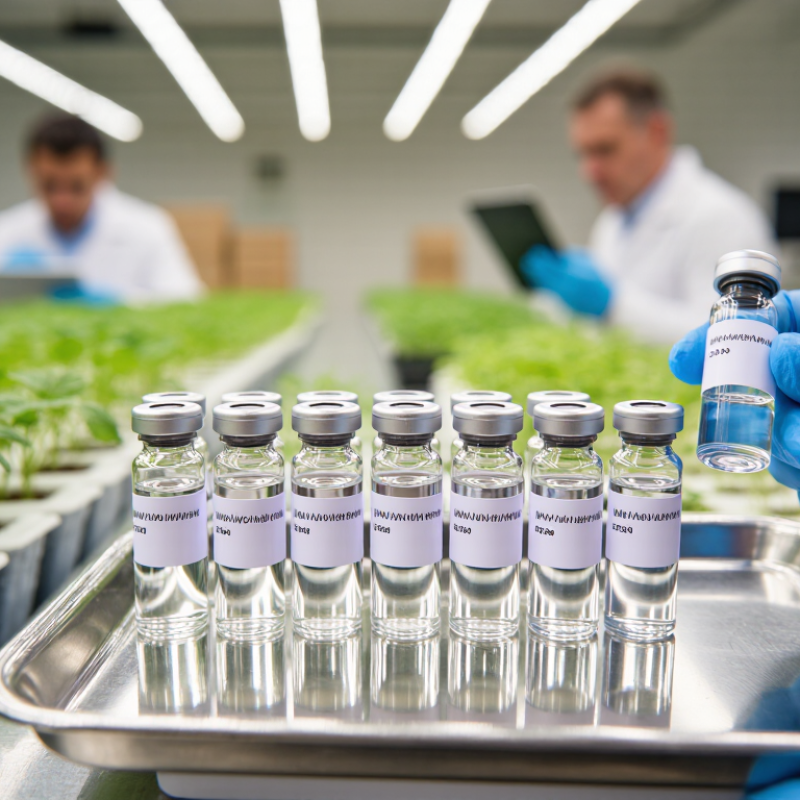
What Is Gibberellic Acid and How Does It Support Plant Growth?
Gibberellic acid, often called GA₃, is one of the gibberellin plant hormones. Plants produce gibberellins naturally. They help regulate growth and development. It is not a fertilizer. Rather, it acts as a signal, influencing how plant cells grow and when certain processes begin. Small amounts can have noticeable effects.
In seeds, gibberellic acid may help break dormancy and support germination when temperature and moisture are suitable. In growing shoots, it can encourage cell elongation, producing longer stems or larger leaves in some crops. It may also affect flowering, fruit set, or fruit size, depending on the plant and application stage. A useful observation: responses vary. The same treatment can produce different results across varieties or growing conditions.
Application requires care. Too much may cause excessive stem growth, weak plants, or uneven development. Follow the product label, use suitable measuring equipment, and test a small area before treating an entire crop. Keep notes on the crop stage, rate, and weather; they make results easier to assess later. Product quality and clear technical instructions matter, but even careful records cannot remove every variable. That part is easy to underestimate.
China Top Gibberellic Acid for Plant Growth Supplier? - What Is Gibberellic Acid and How Does It Support Plant Growth?
| Topic | What It Is or Does | Relevance to Plant Growth | Practical Consideration |
|---|---|---|---|
| Gibberellic acid (GA₃) | A naturally occurring plant growth regulator in the gibberellin group. GA₃ is also used in some agricultural products. | It influences processes such as stem growth, seed germination, flowering, and fruit development. | Responses depend on the plant species, growth stage, environment, and treatment conditions. |
| Stem and shoot elongation | Gibberellins can promote cell elongation and, in some tissues, cell division. | This can increase the length of stems or other growing structures. | Excessive or poorly timed growth-regulator use may cause unwanted elongation or weak growth. |
| Seed germination | In certain seeds, gibberellins help overcome dormancy and activate enzymes involved in mobilizing stored food reserves. | In cereals, gibberellin signaling can stimulate the production of enzymes such as alpha-amylase, which helps release sugars from stored starch. | Germination also depends on factors such as seed viability, water, temperature, and oxygen. |
| Flowering | Gibberellin effects on flowering vary among plant species and varieties. | In some plants, gibberellins can promote flowering or influence the development of flower stalks. | Flowering responses are not universal; crop-specific guidance is important. |
| Fruit development | In selected crops, gibberellin treatments may affect fruit set, fruit growth, or fruit characteristics. | For example, GA₃ is used in some grape-growing programs to influence berry development, depending on cultivar and production goals. | Timing and concentration can affect results and fruit quality. Follow the applicable product label and local regulations. |
| Breaking dormancy | Gibberellins can help release dormancy in certain seeds or buds under suitable conditions. | This may support more uniform or timely growth in specific propagation settings. | They do not replace appropriate chilling, light, temperature, or other crop-specific requirements. |
| Factors affecting results | Plant species, cultivar, developmental stage, temperature, light, water status, and application method can all influence the response. | The same treatment may produce different outcomes in different crops or growing conditions. | Use evidence-based, crop-specific directions rather than assuming one rate or schedule suits all plants. |
| Responsible use | Gibberellic acid is a plant growth regulator, not a complete fertilizer or a substitute for sound crop management. | It can affect selected growth processes but does not supply essential mineral nutrients. | Check product registration and label directions, use suitable protective equipment, and avoid unapproved applications. |
Related Posts
-

How to Source Gibberellic Acid Globally in 2026?
-
China Top Gibberellic Acid Germination Guide for Buyers
-
How to Use Gibberellic Acid for Plant Growth
-
How to Use Gibberellic Acid for Seed Germination?
-
2026 Top Gibberellic Acid Suppliers in South Africa
-
How to Use Gibberellic Acid for Plant Growth in 2026?