site_4bbb466c-cafd-4edb-8869-71ed8e60d33a
Excellence in PGR technology
Gibberellic acid is a plant growth regulator in the gibberellin family. It can help a seedling stretch toward light, encourage seeds to break dormancy, and influence flowering or fruit development. These effects are real, but they are not automatic. A plant’s species, age, environment, and dose all matter.
Plant hormone researcher Peter Hedden’s work supports a useful takeaway: gibberellins can promote growth, but the response depends on the plant and its stage of development. That distinction matters in gardens and agriculture. A treated stem may grow longer, while a different plant shows little visible change. In some crops, excessive stem growth can also make plants more prone to lodging. The same signal can have different outcomes.
The phrase “gibberellic acid effect on plants” covers more than taller stems. Gibberellic acid can affect germination, leaf and flower development, and fruit growth. In cereal seeds, gibberellins help trigger enzymes that release stored nutrients for the emerging seedling. Small changes can be hard to spot at first. Then a seed coat splits, or a flower stalk rises above the leaves.
The word “growth” can mislead. More is not always better, and results depend on context. Understanding how gibberellic acid works helps explain both its useful roles and its limits.
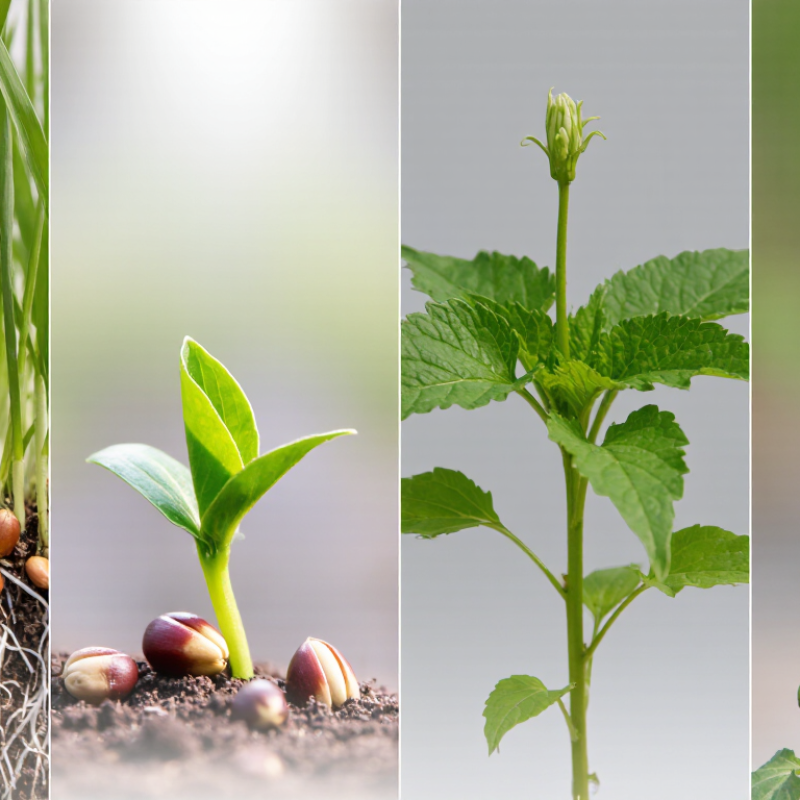
Gibberellic acid is one member of the gibberellin family, a group of plant hormones that influence growth and development. The name often refers specifically to GA3, a form first identified in a fungus but also found in plants. Plants make their own gibberellins through biochemical pathways inside their cells. These hormones are not food or fertilizer; they act as signals, helping coordinate processes such as stem growth and seed germination.
Production is strongest in actively developing tissues. Young leaves, shoot tips, root tips, and developing seeds can all make gibberellins, though the amount changes with a plant’s age and conditions. In a seed, the growing embryo can release signals that encourage nearby tissues to mobilize stored food. A cereal seed, for example, may begin breaking down starch as germination starts. Small signals. Big changes. Gibberellins can also move between tissues, so the place where a signal acts may not be the place where it was made. The details vary by species and growth stage, and researchers are still refining how these pathways interact. It is tempting to picture one hormone as a simple growth switch, but real plants use overlapping signals. That explanation is tidy, perhaps too tidy.
| Topic | What Is Known | Role in Plant Growth |
|---|---|---|
| What gibberellic acid is | Gibberellic acid, commonly abbreviated GA₃, is one member of the gibberellin family of plant hormones. Plants make several different gibberellins; the main active forms vary among species and tissues. | Gibberellins act as growth regulators, influencing processes such as stem growth, seed germination, flowering in some plants, and fruit development. |
| Shoot tips and young leaves | Gibberellins are produced in actively growing parts of plants, including shoot apices and young leaves. | They can promote cell elongation and contribute to the growth of stems and other developing tissues. |
| Developing seeds and embryos | Developing seeds and embryos are important sites of gibberellin production. The amount and type of gibberellin depend on the plant species and stage of development. | During germination, gibberellin signaling can help stimulate enzymes that mobilize stored food reserves for the growing seedling. |
| Roots and other growing tissues | Gibberellins can also be produced in roots and other actively developing tissues. Their production is not limited to one organ. | Local production and movement between tissues help coordinate growth throughout the plant. |
| How plants make gibberellins | Gibberellin biosynthesis proceeds through several chemical steps, beginning with precursors used to form ent-kaurene and continuing through later conversions to different gibberellins. | Plants regulate these steps to control the amount of active gibberellin available to particular tissues. |
| Movement and signaling | Gibberellins can act near where they are produced and can also move between plant tissues. Their effects depend on transport, breakdown, and the sensitivity of the responding cells. | This regulation helps match growth responses to developmental stage and environmental conditions. |
| Effects on seeds and fruits | Gibberellin activity is associated with seed germination and, in some species, flowering and fruit growth. | The specific response varies by species, tissue, developmental stage, and the gibberellin involved. |
Note: GA₃ is a well-known gibberellin, but it is not the only gibberellin plants produce. The principal gibberellins and their effects differ across plant species.
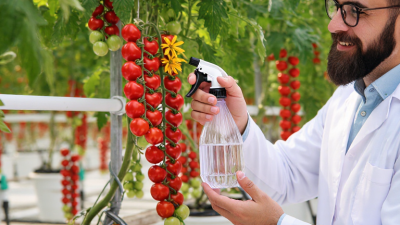
Gibberellic acid, often called GA, acts as a signal inside plant tissues. It does not simply force a stem to grow. A cell’s response depends on its developmental stage, surroundings, and sensitivity to the hormone. Small differences matter.
When GA reaches a responsive cell, it binds to a receptor protein called GID1. This pairing changes how the cell handles DELLA proteins, which normally restrain growth-related genes. The GA–GID1 complex helps recruit DELLA proteins to a cellular disposal system. Once they are broken down, those restraints loosen. The cell can then switch on genes involved in processes such as stem elongation or seed germination.
The signal becomes visible in ordinary details: a young shoot may lengthen, or a seed may begin using stored food. But GA is not a universal growth command. Light, temperature, and other hormones can alter the outcome, and different tissues may respond differently. A tall stem alone does not reveal the whole story. Plant signaling is more conditional than a simple “more hormone, more growth” explanation suggests. Researchers still investigate how these signals interact in specific species and environments.
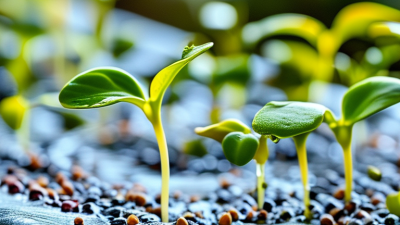
Gibberellic acid (GA₃) helps seeds leave dormancy by activating enzymes that release stored food for the embryo. In practical seed trials, researchers often compare concentrations such as 100, 250, and 500 mg/L; the best response depends on species and seed condition, not simply on using more. The seed physiology reference by Bewley and colleagues describes how gibberellins support reserve mobilisation during germination. A treatment can help a stubborn seed lot, but it cannot repair dead or poorly stored seeds.
The effect is visible. Once growth begins, GA also promotes cell expansion, especially in young stems and internodes. Rademacher’s review of plant growth regulators describes gibberellins’ role in stem elongation and their use in crop production. Taller growth may look vigorous, yet excessive elongation can leave stems thin and more prone to lodging. That trade-off is easy to miss when judging plants by height alone.
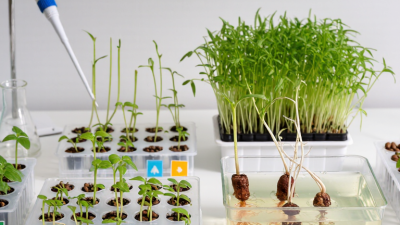
For a small trial, compare treated seeds with an untreated batch from the same lot, and record germination percentage and days to emergence. Keep temperature, moisture, and light consistent; otherwise, the result is difficult to interpret. Published concentration ranges are starting points, not universal recipes. I would be cautious about calling one dose “best” without repeating the test across seed lots.
Sources: Bewley et al., Seeds: Physiology of Development, Germination and Dormancy (2013); Rademacher, Plant Growth Regulation (2015).
Gibberellic acid (GA₃) can alter flowering, but its effect depends on species and timing. In rosette plants, it may stimulate stem elongation and flowering; in apples, some gibberellin treatments can reduce the formation of next season’s flower buds. That trade-off matters in orchards: more growth now may mean fewer blossoms later. Responses vary by cultivar and weather. Timing matters.
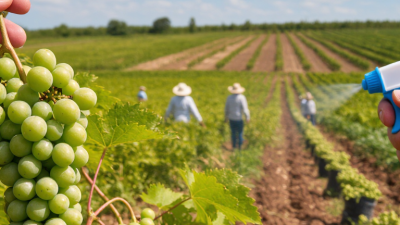
Fruit development offers a clearer example. UC Agriculture and Natural Resources’ table-grape guidance describes concentrations around 1–5 parts per million for cluster elongation and roughly 20–40 parts per million for berry sizing; these are crop-specific reference ranges, not universal recommendations. GA₃ can enlarge berries and loosen tight clusters, yet excessive or poorly timed treatment may leave uneven fruit or weaken next year’s crop. Dormancy is less predictable. Gibberellin signaling can support bud growth after rest, but it does not reliably replace the winter chilling many fruit trees need. The science is not a simple switch: temperature, plant age, and stored energy all shape the response. A grower should compare treated and untreated rows, then record bloom dates and fruit size—not just the season’s most impressive cluster.
Typical effects on flowering, fruit development, and dormancy
Gibberellic acid (GA₃) is a plant growth regulator. In responsive species, gibberellins can promote flowering and fruit growth and help release seed or bud dormancy. Bars show direction only, not measured effect size; responses depend on species, developmental stage, and conditions.
Gibberellic acid (GA₃) is a plant hormone used to manage growth, not a universal yield booster.
In table grapes, growers may use it around bloom to loosen clusters, then after fruit set to increase berry size. UC Integrated Pest Management guidance gives low single-digit parts per million for bloom-time thinning and higher concentrations for berry sizing; these are crop- and purpose-specific examples, not a general recipe. Timing matters. A spray applied to sunlit clusters on a dry morning may perform differently from one applied after rain or during heat stress.
Results depend on cultivar, dose, water status, temperature, and the plant’s stage of development. Too much or mistimed GA₃ can produce loose clusters, uneven berries, or delayed color, so field records and small test rows are useful.
Not magic. In malting barley, GA can also promote stem elongation, while seed treatments may support germination; responses still vary with seed quality and growing conditions.
University extension guidance and crop trials are more useful than a single headline rate, because local conditions change the outcome. Even careful growers may find a result disappointing: weather shifts quickly, and hormone responses are not perfectly predictable.
Follow the current crop-specific label and local extension recommendations.
| Cookie | Duration | Description |
|---|---|---|
| _wpfuuid | 11 years | This cookie is used by the WPForms WordPress plugin. The cookie is used to allows the paid version of the plugin to connect entries by the same user and is used for some additional features like the Form Abandonment addon. |
| cookielawinfo-checkbox-analytics | 11 months | This cookie is set by GDPR Cookie Consent plugin. The cookie is used to store the user consent for the cookies in the category "Analytics". |
| cookielawinfo-checkbox-functional | 11 months | The cookie is set by GDPR cookie consent to record the user consent for the cookies in the category "Functional". |
| cookielawinfo-checkbox-necessary | 11 months | This cookie is set by GDPR Cookie Consent plugin. The cookies is used to store the user consent for the cookies in the category "Necessary". |
| cookielawinfo-checkbox-others | 11 months | This cookie is set by GDPR Cookie Consent plugin. The cookie is used to store the user consent for the cookies in the category "Other. |
| cookielawinfo-checkbox-performance | 11 months | This cookie is set by GDPR Cookie Consent plugin. The cookie is used to store the user consent for the cookies in the category "Performance". |
| viewed_cookie_policy | 11 months | The cookie is set by the GDPR Cookie Consent plugin and is used to store whether or not user has consented to the use of cookies. It does not store any personal data. |
| Cookie | Duration | Description |
|---|---|---|
| CONSENT | 2 years | YouTube sets this cookie via embedded youtube-videos and registers anonymous statistical data. |
| vuid | 2 years | Vimeo installs this cookie to collect tracking information by setting a unique ID to embed videos to the website. |