site_4bbb466c-cafd-4edb-8869-71ed8e60d33a
Excellence in PGR technology
Gibberellic acid is a plant hormone that helps regulate growth, including seed germination, stem elongation, flowering, and fruit development. In agriculture, growers use carefully timed treatments to influence specific stages of a crop’s development. The aim is not simply to make plants grow faster. It may be to encourage more uniform germination, support fruit growth, or improve the size of certain crops. The benefits depend on the plant, its growth stage, and local conditions. Timing matters.
Understanding gibberellic acid use means looking at both the intended result and the limits of the treatment. A vineyard, for example, may apply it to grape clusters, while another crop may need a different method or may not benefit at all. Rates and timing should follow product directions and reliable crop-specific guidance. Weather, plant health, and application technique can affect outcomes, so results are not guaranteed. Results can vary. Even a well-planned treatment may produce uneven growth, and that possibility deserves attention. This article explores why farmers use gibberellic acid, how it can affect crops, and what practical factors shape its performance. It also considers the trade-offs: a useful growth response in one setting may be unnecessary or undesirable in another. Understanding those details helps growers make more informed decisions rather than treating the hormone as a universal solution.
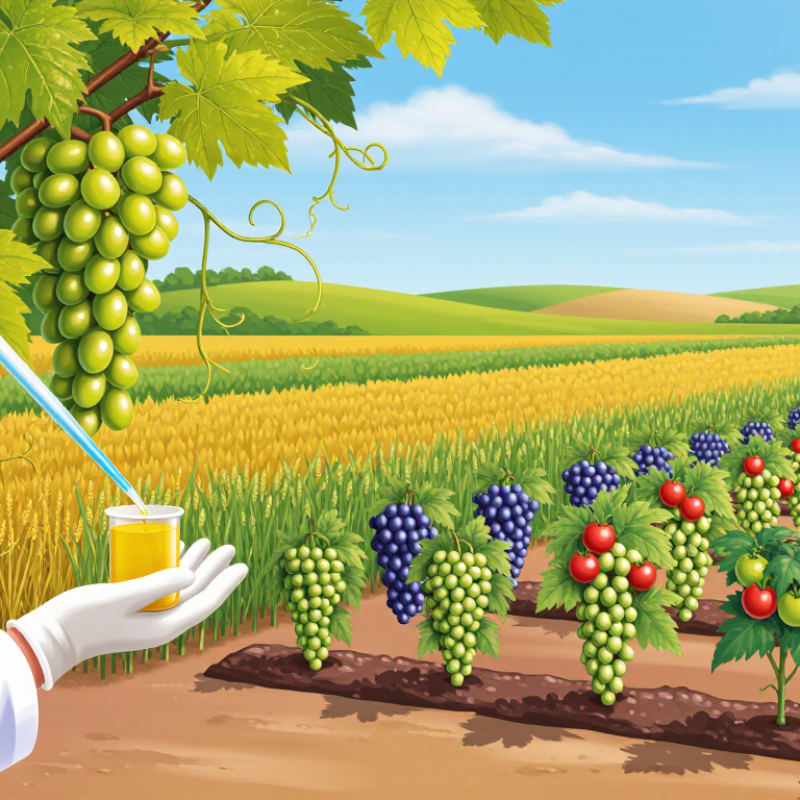
Gibberellic acid, commonly called GA₃, is a plant hormone that helps regulate cell elongation and seed development. In a young stem, GA₃ can encourage cells to lengthen, so shoots grow taller and leaves emerge farther apart. The effect depends on the crop, its growth stage, and the dose. Timing matters.
GA₃ also influences seeds. In some species, it helps overcome dormancy by activating processes that support germination; in others, it can improve fruit set or fruit size when applied at a suitable stage. Growers may notice the difference in a treated cluster: berries can become larger, but uneven application may produce uneven results. More is not always better. Excess hormone can cause overly stretched, weaker growth, and responses vary with temperature and plant condition. Field decisions should therefore follow crop-specific guidance, with careful measurement and small-scale trials where appropriate. Even experienced growers can misjudge timing; keeping treatment records helps reveal what actually worked.
In Thompson Seedless grapes, a bloom-time application of 1–2 ppm gibberellic acid (GA₃) may help manage cluster compactness. The aim is often to reduce fruit set slightly, leaving more space between berries as clusters develop. Better spacing can improve airflow and make clusters easier to handle. Small changes matter.
Bloom timing is a growth stage, not a fixed date. A spray that lands too early or late may produce a different response. Weather, vine vigor, canopy density, and spray coverage can also affect results. The same rate may not suit every block. That sounds tidy; vineyards rarely are.
Treat the 1–2 ppm range as a reference, not a universal prescription. Growers can compare a small treated area with an untreated strip, then record cluster shape, berry number, and harvest quality. Use accurate mixing and application equipment, and follow local agricultural guidance and product directions. A few well-observed rows may teach more than a whole-block guess.
The chart shows the stated 1–2 ppm GA₃ application range at bloom. The lower and upper values describe the range, not results from a field trial; actual rates depend on local recommendations and growing conditions.
For Thompson Seedless, gibberellic acid (GA₃) is used to encourage berry enlargement, not to replace good canopy and water management. UC ANR’s Table Grape Production Manual (Publication 3343) describes sizing programs in the 20–40 ppm range. Growers commonly target young berries around 4–6 mm, when fruit is responsive. Timing matters. A spray applied too early or too late may give uneven results. The actual response also depends on weather, vine vigor, and spray coverage.
At 20–40 ppm, the difference between rates is meaningful. A grower should follow current local extension guidance and the product label, and calibrate the sprayer before treating a block. UC Cooperative Extension field guidance emphasizes that GA₃ concentration and application timing affect berry size and bunch characteristics. More is not automatically better. Dense clusters can retain moisture, while excessive sizing may create loose or uneven bunches. I would treat the published range as a starting point, not a promise. Walk the rows, measure berries, and keep untreated comparison vines where practical. That small check can reveal whether a program fits a particular vineyard.
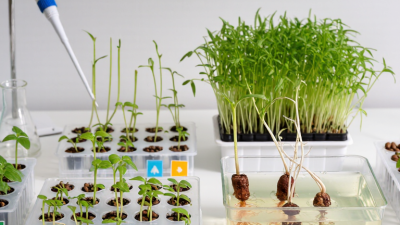
Gibberellic acid (GA₃) can help seeds resume growth when dormancy or slow emergence limits establishment. In a propagation tray, treated seeds may emerge sooner and more evenly, giving growers a more uniform stand. The response depends on species, seed condition, temperature, and dose; GA₃ is not a substitute for sound seed handling. Small trials matter.
Its role continues after germination. In some crops, carefully timed GA₃ applications can influence flowering, pollen development, or fruit set, while also affecting fruit growth. The outcome is not perfectly predictable. Excessive or poorly timed treatment may produce weak growth, misshapen fruit, or uneven maturity. Growers should follow crop-specific research and local label directions, then compare treated and untreated plants under the same conditions.
The scale of the sector makes reliable crop management important: FAOSTAT’s 2022 production series records roughly 2.1 billion tonnes of fruit and vegetables worldwide. That figure describes production, not a yield gain from GA₃. For a grower, useful records include treatment date, concentration, weather, flower retention, and harvest quality. One season can mislead. Repeating observations across blocks and seasons gives a firmer basis for deciding whether GA₃ supports germination, flowering, or fruit set on that farm.
Gibberellic acid can influence flowering, fruit set, or fruit size, but its effect depends on the crop and growth stage. A treatment suitable for one variety may cause uneven results in another. Labels matter. The approved crop label specifies the permitted rate, application method, and growth stage. Do not transfer a dose from a different crop or product.
Timing can be narrow. For example, an application may be allowed during a defined flowering period, not whenever plants look slow. Weather, water stress, and crop condition can affect the response. Check the label before mixing, then measure carefully and calibrate equipment so the spray reaches the intended area. Small differences count. Keep treatment records, including the date, crop stage, rate, and weather. These notes can explain uneven fruit development later.
The preharvest interval is the required time between the final application and harvest. Follow the exact interval on the applicable label; do not estimate it from another crop or treatment schedule. If harvest timing changes, recheck the interval before picking. Even careful records have gaps sometimes. That is a reason to verify details, not guess. When the crop, formulation, or instructions are unclear, seek guidance from a qualified local agricultural adviser.
| Cookie | Duration | Description |
|---|---|---|
| _wpfuuid | 11 years | This cookie is used by the WPForms WordPress plugin. The cookie is used to allows the paid version of the plugin to connect entries by the same user and is used for some additional features like the Form Abandonment addon. |
| cookielawinfo-checkbox-analytics | 11 months | This cookie is set by GDPR Cookie Consent plugin. The cookie is used to store the user consent for the cookies in the category "Analytics". |
| cookielawinfo-checkbox-functional | 11 months | The cookie is set by GDPR cookie consent to record the user consent for the cookies in the category "Functional". |
| cookielawinfo-checkbox-necessary | 11 months | This cookie is set by GDPR Cookie Consent plugin. The cookies is used to store the user consent for the cookies in the category "Necessary". |
| cookielawinfo-checkbox-others | 11 months | This cookie is set by GDPR Cookie Consent plugin. The cookie is used to store the user consent for the cookies in the category "Other. |
| cookielawinfo-checkbox-performance | 11 months | This cookie is set by GDPR Cookie Consent plugin. The cookie is used to store the user consent for the cookies in the category "Performance". |
| viewed_cookie_policy | 11 months | The cookie is set by the GDPR Cookie Consent plugin and is used to store whether or not user has consented to the use of cookies. It does not store any personal data. |
| Cookie | Duration | Description |
|---|---|---|
| CONSENT | 2 years | YouTube sets this cookie via embedded youtube-videos and registers anonymous statistical data. |
| vuid | 2 years | Vimeo installs this cookie to collect tracking information by setting a unique ID to embed videos to the website. |