site_4bbb466c-cafd-4edb-8869-71ed8e60d33a
Excellence in PGR technology
Gibberellic acid can stretch stems, loosen fruit clusters, and change flowering timing. Used carelessly, it can also create weak growth, uneven maturity, or disappointing fruit quality. This guide explains how to use gibberellic acid for plants safely in 2026, with practical attention to dosage, crop stage, weather, and records.
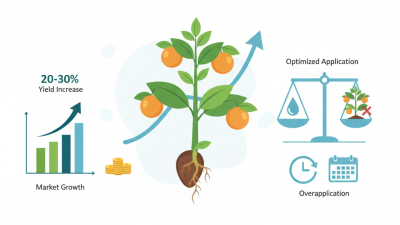
Industry evidence shows why careful handling matters. Grand View Research’s Gibberellins Market Size, Share & Trends Analysis Report, 2024–2030, describes continuing demand across fruit, vegetable, and ornamental production. FAOSTAT crop data also shows the enormous scale of global horticulture, where small treatment errors can affect substantial harvest volumes. However, market growth does not prove that higher rates improve results. That assumption needs questioning.
Plant physiologist Lincoln Taiz describes the active compounds clearly: “Gibberellins are a large family of tetracyclic diterpenoid acids.” Their biological strength requires restraint. Always identify the registered product, read its current label, and confirm the permitted crop and application method. Measure the formulation carefully. Do not copy a neighbor’s dilution. Test a small area first, especially on young plants, greenhouse crops, or stressed vines. Record water volume, temperature, growth stage, and visible results. Spray during suitable conditions, avoiding strong heat, rain, and drifting wind. Wear the protective equipment stated on the label, and store products securely. Small errors matter. This guide may simplify some decisions, because real farms rarely behave perfectly. Local extension specialists and national regulators remain the most reliable sources for crop-specific instructions.
Gibberellic acid (GA3) is a plant hormone that influences cell division, cell expansion, seed germination, and flowering. It is not a complete fertilizer. Think of it as a growth signal, not plant food. Applied to a young stem, it may create longer internodes, taller growth, or looser flower clusters. In some fruits, careful treatment can improve size or reduce dormancy. Results depend on species, growth stage, temperature, and plant health.
Safe use begins with restraint. Read the current product label and follow its crop, rate, timing, and protective-equipment directions. Never assume a stronger solution will work better. Too much GA can produce thin stems, excessive height, delayed maturity, poor color, or distorted flowers. Measure accurately, avoid windy conditions, and keep untreated plants separate during testing. A small trial area is wise. Photograph treated and untreated plants after several days. That comparison often reveals effects that memory misses. Local rules may differ, so check official agricultural guidance before application.
Tips: Use clean water and calibrated tools. Apply during calm, mild weather. Wear gloves and eye protection. Do not mix GA with other products unless the label permits it. Record concentration, date, plant stage, and weather. Careful notes can prevent repeated mistakes, although even good records cannot predict every cultivar’s response. If growth looks abnormal, stop treatment and seek qualified horticultural advice.
Gibberellic acid works best when timing matches the plant’s natural growth stage. Always read the current product label before mixing or spraying. Wear gloves, eye protection, and long sleeves during preparation. Test the solution on a few plants first. Plant responses can vary more than expected.
For fruit trees, growers often apply it around flowering or shortly after fruit set. The goal may include improving fruit size, loosening clusters, or supporting seedless fruit development. Timing differs between grapes, citrus, cherries, and other trees. A late application can produce weak shoots or delayed ripening. Start with the lowest permitted rate.
Ornamental plants may respond during active stem growth. Gibberellic acid can lengthen stems, but excessive growth may create thin, floppy plants. Use caution with compact houseplants and young seedlings. For flowering plants, treatment before visible bud expansion may affect height and bloom timing. Leafy vegetables usually need more restraint, because unwanted stretching reduces quality. Never guess the dilution. Measure water and concentrate accurately, and avoid windy weather. Keep treated plants away from children and pets until the label allows normal contact. I would also record the date, plant stage, weather, and result. My first schedule might look sensible, yet one cool week can change everything. Repeating the same treatment without reviewing those notes is an avoidable mistake.
The chart shows commonly reported gibberellic acid (GA3) concentration ranges used for different horticultural purposes. Grapes are generally treated around flowering or fruit set, cherries before harvest to support firmness and size, apples during the fruit-development period, ornamentals during active growth, and seeds before germination. Actual rates and timing depend on the crop, cultivar, weather, growth stage, and product label. Always test on a small number of plants first, wear suitable protective equipment, and never exceed the legally approved label rate.
How to Use Gibberellic Acid for Plants Safely in 2026?
Choose a product registered for your crop and intended use. Check the active ingredient percentage, formulation, expiry date, and label directions. The FAO/WHO pesticide specification system commonly uses assay standards near 90% for technical gibberellic acid, but commercial formulations may be far weaker. Never compare products by package size alone. Compare active concentration. Research summarized in the 2023 Horticulturae review shows that crop, variety, temperature, and application timing can change plant responses substantially. More is not safer. It may cause stretched stems, delayed flowering, or poor fruit quality.
Calculate the dose from the target concentration. The formula is: active ingredient needed in grams = ppm × water volume in liters ÷ 1,000. For 10 liters at 20 ppm, you need 0.2 grams of active ingredient. With a 4% soluble product, divide 0.2 by 0.04, requiring 5 grams of product. Check the label before mixing. Liquid products require their stated grams-per-liter or density, not guesswork. Apply with calibrated equipment, gloves, eye protection, and clean measuring tools. Test a few plants first. I still record weather, crop stage, batch strength, and visible effects because small errors matter. Do not spray during strong heat, wind, or before rain. Use only the labeled crop, rate, and interval, following local agricultural authority requirements.
| Decision or Calculation | Reliable Information | Practical Example or Action |
|---|---|---|
| Active ingredient | Look for gibberellic acid, commonly listed as GA3, and confirm the active-ingredient percentage on the legal label. | Do not calculate a dose from the product name alone. A product containing 90% GA3 requires a different product weight than a 4% liquid concentrate. |
| Formulation type | Water-soluble powders and liquid concentrates can both be used, but their active-ingredient concentrations may differ substantially. | Use the formulation-specific label rate, mixing instructions, storage requirements, and required personal protective equipment. |
| Permitted crop and use | GA3 rates depend on crop, cultivar, growth stage, application method, and local regulations. There is no universal safe rate for every plant. | Use only a product registered or legally permitted for the intended crop and application site. The product label is the controlling safety document. |
| Concentration unit | For dilute water solutions, 1 ppm is equivalent to 1 mg of GA3 per liter of final spray solution. | A 20 ppm solution contains 20 mg of active GA3 per liter of final solution, not 20 mg of formulated product unless the product is 100% active ingredient. |
| Core dosage formula | Product required (g/L) = target concentration (ppm) ÷ [1,000 × active-ingredient fraction]. | For a 90% powder at 20 ppm: 20 ÷ (1,000 × 0.90) = 0.022 g/L of product. |
| Liquid formulation formula | Product volume (mL/L) = target active concentration (mg/L) ÷ product active concentration (mg/mL). | The product label must provide density or an equivalent volume-based rate. If it does not, weigh the product or obtain manufacturer technical data instead of guessing. |
| Example: 90% soluble powder | The active fraction is 0.90. The following values are mathematical examples, not crop recommendations. |
10 ppm = 0.011 g/L 20 ppm = 0.022 g/L 50 ppm = 0.056 g/L 100 ppm = 0.111 g/L |
| Example: 4% soluble liquid | Assuming the label and product density allow conversion, 4% w/v equals approximately 40 mg of active ingredient per mL of product. |
10 ppm requires about 0.25 mL/L 20 ppm requires about 0.50 mL/L 50 ppm requires about 1.25 mL/L Confirm the actual label units before measuring. |
| Batch-size calculation | Total product = product required per liter × final solution volume in liters. | At 20 ppm using 90% powder for 10 L: 0.022 g/L × 10 = 0.22 g of product. Use a precision scale; do not estimate tiny quantities with a kitchen spoon. |
| Measuring a very small dose | Small quantities are prone to weighing errors, which can cause accidental overdosing. | Prepare a correctly calculated stock solution only when the product label permits it, then dilute accurately. Clearly label the stock solution and keep it away from children, pets, food, and animal feed. |
| Water and mixing | Use clean water and follow the label regarding water quality, compatibility, order of mixing, and spray volume. Do not assume that every tank mix is compatible. | Fill the tank partly with water, measure the product carefully, mix as directed, and then bring the solution to the final volume. Perform a jar test when permitted and appropriate. |
| Timing and plant condition | GA3 responses vary with developmental stage, temperature, cultivar, plant vigor, and environmental stress. | Apply only at the label-specified stage. Avoid treating drought-stressed, heat-stressed, diseased, or severely nutrient-deficient plants unless the label specifically permits it. |
| Small-area test | Overapplication may produce excessive elongation, weak growth, delayed maturity, abnormal form, or other crop-specific injury. | Test the lowest permitted label rate on a small number of representative plants before treating the entire crop. |
| Personal protection | Wear the personal protective equipment specified by the product label, typically including protective gloves, eye protection, long sleeves, long trousers, and closed footwear when required. | Avoid breathing spray mist, eating, drinking, or smoking during mixing and application. Wash hands and exposed skin after use. |
| Spray drift and runoff | GA3 can affect unintended plants, and agricultural products must be used in a way that prevents contamination of water and neighboring areas. | Do not spray in strong or gusty wind. Keep the spray away from ponds, streams, drains, sensitive plants, children, pets, and bystanders according to local label requirements. |
| Re-entry and harvest interval | Some labels specify a restricted-entry interval, pre-harvest interval, or both. Requirements vary by jurisdiction and crop. | Record the product, batch concentration, date, crop stage, weather, treated area, and any required re-entry or harvest interval. |
| Final safety check | A mathematically correct concentration is not automatically a legally approved or agronomically safe application. | Before use, verify the current local label, permitted crop, maximum rate, number of applications, spray volume, PPE, re-entry interval, and pre-harvest interval. |
Measure the product only after reading the current label. Approved rates differ by crop, growth stage, and formulation. Wear gloves, eye protection, long sleeves, and work outdoors or in strong ventilation. Keep children, pets, food, and drinks away from the mixing area.
Use clean water and a calibrated measuring tool. Add water to a labeled spray container first, then add the measured gibberellic acid slowly. Close the container and mix gently. Never guess the concentration. A stronger solution does not guarantee better growth. It may cause thin stems, excessive stretching, poor flowering, or delayed fruit development.
Test the mixture on one small plant or a few leaves. Wait several days and record the weather, rate, and visible response. Spray evenly until the foliage is lightly covered, not dripping. Avoid windy conditions, intense midday heat, drought-stressed plants, and unexpected rain. Clean equipment according to the label, and never pour leftover solution into drains or natural water. I would not treat every disappointing result as a chemical problem; light, temperature, watering, and plant age can matter more. Even careful applications can produce uneven results, especially when the crop is already stressed.
Gibberellic acid can change plant growth quickly, so monitoring should begin before application. Read the product label and follow its permitted crop, dilution, and protective-equipment instructions. Measure water with a clean container, and use a calibrated sprayer. Do not estimate by eye.
Wear gloves, eye protection, long sleeves, and avoid breathing spray mist. Keep children, pets, food, and drinking water away from the treatment area.
Start with a small group of plants. Leave similar untreated plants nearby as a comparison. Record the date, dilution, weather, plant height, leaf color, and flower development.
Check the plants after 24 hours, then again over the next week. Watch for stretched stems, pale leaves, weak growth, delayed flowering, or distorted fruit.
These signs may indicate excessive exposure, poor timing, or plant stress from heat and drought. Stop further applications when damage appears. Do not increase the dose because results seem slow.
Apply only during calm weather, preferably when leaves can dry safely. Avoid windy conditions and prevent drift toward gardens, waterways, or neighboring plants.
Wash equipment separately, and dispose of leftover solution according to the label and local rules.
In practice, records are easy to neglect. I still miss a note sometimes. That mistake can make a successful treatment difficult to repeat.
If results look unusual, consult a qualified horticulturist or agricultural extension professional before treating again.
| Cookie | Duration | Description |
|---|---|---|
| _wpfuuid | 11 years | This cookie is used by the WPForms WordPress plugin. The cookie is used to allows the paid version of the plugin to connect entries by the same user and is used for some additional features like the Form Abandonment addon. |
| cookielawinfo-checkbox-analytics | 11 months | This cookie is set by GDPR Cookie Consent plugin. The cookie is used to store the user consent for the cookies in the category "Analytics". |
| cookielawinfo-checkbox-functional | 11 months | The cookie is set by GDPR cookie consent to record the user consent for the cookies in the category "Functional". |
| cookielawinfo-checkbox-necessary | 11 months | This cookie is set by GDPR Cookie Consent plugin. The cookies is used to store the user consent for the cookies in the category "Necessary". |
| cookielawinfo-checkbox-others | 11 months | This cookie is set by GDPR Cookie Consent plugin. The cookie is used to store the user consent for the cookies in the category "Other. |
| cookielawinfo-checkbox-performance | 11 months | This cookie is set by GDPR Cookie Consent plugin. The cookie is used to store the user consent for the cookies in the category "Performance". |
| viewed_cookie_policy | 11 months | The cookie is set by the GDPR Cookie Consent plugin and is used to store whether or not user has consented to the use of cookies. It does not store any personal data. |
| Cookie | Duration | Description |
|---|---|---|
| CONSENT | 2 years | YouTube sets this cookie via embedded youtube-videos and registers anonymous statistical data. |
| vuid | 2 years | Vimeo installs this cookie to collect tracking information by setting a unique ID to embed videos to the website. |