site_4bbb466c-cafd-4edb-8869-71ed8e60d33a
Excellence in PGR technology
Tomatoes are a major food crop, but a large harvest depends on more than fertilizer and sunshine. FAOSTAT’s 2022 crop-production data put global tomato output above 186 million tonnes. That scale makes careful, evidence-led growing practices important. Gibberellic acid can influence plant growth and fruit development, but results depend on cultivar, timing, concentration, and growing conditions. It is not a guaranteed shortcut to better yields.
For gibberellic acid tomato plants, the details matter: a misted leaf, a developing flower cluster, and an incorrectly mixed solution can lead to very different outcomes. Plant hormone researcher Peter Hedden’s published work explains gibberellins’ roles in plant growth and development. A practical paraphrase of that research is: “Plant response depends on how and when growth signals act.” This is a paraphrase, not a verbatim quotation. The seven tips below focus on checking the product label, choosing an appropriate growth stage, measuring carefully, and recording plant responses. They also flag what growers should not assume: results from one tomato variety or trial may not transfer to another. Keep notes. Look closely. A few yellowing leaves or uneven fruit set can matter. The aim is informed use, not more chemical by default.
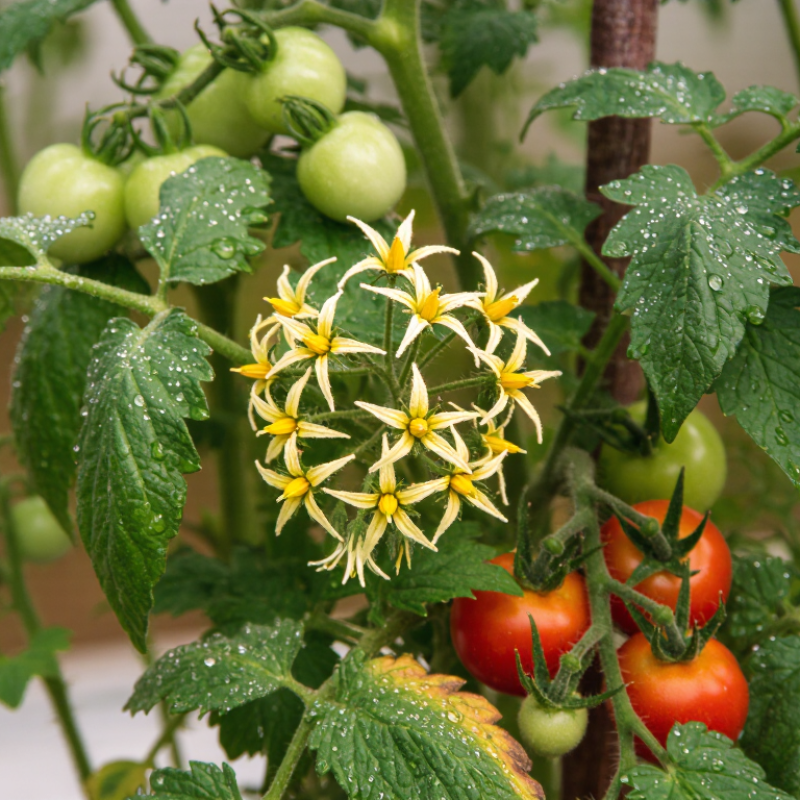
Gibberellic acid (GA) is a plant hormone that promotes cell expansion and stem elongation. In tomatoes, its effects can extend to flowering and fruit development, but they depend on cultivar, timing, and growing conditions. Serrani et al. (2007), in Plant Physiology, reported that gibberellin treatment could induce fruit growth in tomato flowers that had not been pollinated. That finding explains the hormone’s potential, not a guaranteed harvest result.
Small changes matter.
Watch the plant, not just its height. Check the distance between leaf joints, flower retention, and whether young fruit begins to swell.
The awkward part: more growth is not always better. Excessive elongation can leave plants tall and less sturdy, while flowers may still fail under heat or water stress.
FAOSTAT recorded about 186.1 million tonnes of tomatoes produced worldwide in 2022; that scale makes reliable crop decisions important, though production totals do not prove that GA improves yield.
Keep treatment records and compare similar plants. I would be cautious about drawing conclusions from one row or one season.
Gibberellic acid may be useful when tomato flowers form but pollination or fruit set is unreliable. In controlled production, growers sometimes use it to encourage fruit development when pollen release is limited. It is not a substitute for correcting poor temperature, humidity, or airflow.
The University of California Agriculture and Natural Resources notes that daytime temperatures above 90°F or nighttime temperatures above 70°F can disrupt tomato fruit set. Check the growing conditions before reaching for a plant growth regulator. Sometimes the flowers simply need better conditions.
Research supports the mechanism, but not a universal recipe. Serrani and colleagues, in a 2007 Plant Physiology study, showed that gibberellins can promote tomato fruit growth, including fruit development without fertilization.
That response can be uneven. Fruit may be misshapen, and results depend on cultivar, dose, timing, and growing conditions. Follow the product label and local guidance; never assume a rate used on another crop applies to tomatoes.
I would also record treated and untreated flowers side by side. Small trial. Clear notes. It is easy to mistake natural recovery for a treatment effect, especially when weather shifts during flowering.
Choosing a gibberellic acid product starts with the label, not the price. Check that it is specifically labeled for tomato plants and the use you have in mind. The concentration and formulation matter; products are not automatically interchangeable. Read the directions for the crop stage, application method, and treated area. Look for clear instructions. If the label is vague or does not mention tomatoes, choose another product rather than guessing.
Follow the stated rate exactly. A kitchen spoon is not a reliable measuring tool, and a stronger mix is not necessarily more effective. Use the protective equipment listed, and check any re-entry or harvest interval before spraying. Wind can carry droplets onto nearby plants, so choose calm conditions when the label allows. Small details matter. Keep a note of the date, rate, and plant stage; it can help explain uneven results later. One good result does not prove the same approach will work next time. Weather and plant condition can change the outcome, and I would be cautious about changing several things at once.
Before mixing, read the product label: gibberellic acid formulations differ, so a rate from one cannot safely be transferred to another. FAOSTAT recorded about 186 million tonnes of tomatoes produced worldwide in 2022, but that scale does not make one treatment suitable for every garden. Use the label’s stated crop, concentration, and application timing. Wear gloves and eye protection, and measure with a dedicated graduated syringe—not a kitchen spoon.
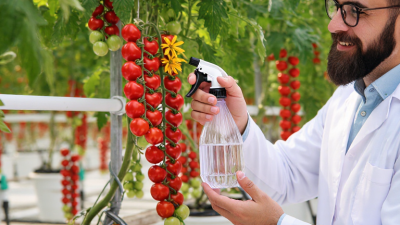
Tip: Mix only what you need. Add the measured product to clean water in a clearly marked sprayer, then gently swirl. Do not guess the dose or combine it with other sprays unless the label permits it. Test a few blossoms first. Keep notes on the date, weather, and treated plants; results can vary with cultivar and growing conditions.
Apply evenly to the flower clusters named on the label, avoiding runoff onto leaves and soil. Choose a calm, dry period, and keep people and pets away until the label’s re-entry directions are met. Clean the sprayer as directed after use. Small details matter. A missed measurement is easy to overlook, and I would rather discard an uncertain mix than risk treating every plant with it.
Before treating, record each plant’s height, new-leaf size, flower count, and fruit set. Photograph the same flower clusters every few days, and compare treated plants with untreated controls. Keep a control row. This makes it easier to separate a treatment effect from heat, watering, or normal growth. Check the product label carefully; concentration and permitted use vary by formulation.
Tip: Apply to a small, clearly marked group first. Watch for unusually long, weak stems, curled leaves, flower drop, or misshapen fruit. These can signal stress or an unsuitable treatment. Don’t repeat an application just because growth looks slow; allow time for a visible response and review your notes. I would avoid judging results from one plant alone.
UF/IFAS tomato-growing guidance places favorable fruit-set conditions around 70–85°F days and 59–68°F nights. When temperatures move beyond that range, poor fruit set may reflect heat or cold rather than gibberellic acid. Check the canopy and a simple thermometer before drawing conclusions. Small changes matter. If symptoms worsen, stop treatment and seek advice from a local horticulture extension service.
| Tip | What to do | What to monitor | Possible problem and response |
|---|---|---|---|
| 1. Confirm that treatment is appropriate | Check the product label and local requirements before use. Gibberellic acid (GA) is a plant growth regulator, and permitted uses, application methods, and directions vary by product and location. | Record the product’s labeled crop use, application timing, and any harvest interval or protective-equipment instructions. | Do not use a product on tomatoes unless its label permits that use. Do not assume directions for another crop or formulation apply. |
| 2. Record a baseline first | Before treatment, note plant height, stem strength, leaf condition, flower number, and the number of developing fruit. Photograph a few representative plants. | Compare treated plants with their own baseline and, where practical, a similar untreated group grown under the same conditions. | Without a baseline or comparison, changes caused by weather, watering, nutrition, or normal plant development can be mistaken for a GA response. |
| 3. Follow the labeled rate and timing | Measure and apply only as directed on the label. Do not increase the concentration or repeat an application to try to force a faster response. | Keep a record of the application date, amount prepared, treated area, plant stage, and weather conditions. | Excessive or mistimed GA can cause unwanted growth responses. If the label directions are unclear, consult a qualified local agricultural adviser before applying. |
| 4. Apply evenly and avoid drift | Use the application method specified on the label and aim for consistent coverage. Follow label guidance on weather, drying time, and nearby sensitive plants. | Check whether plants were covered evenly and whether spray moved onto untreated plants or other crops. | Uneven exposure can produce inconsistent responses; drift can affect non-target plants. Stop if conditions are unsuitable under the label and follow its cleanup instructions. |
| 5. Watch stems and overall growth | Inspect plants regularly after treatment and compare new growth with untreated plants. GA can influence stem and shoot elongation, with effects depending on cultivar, dose, and growing conditions. | Look for changes in internode length, plant height, stem firmness, and whether shoots remain upright. | If growth becomes unusually elongated or weak, do not apply more. Review application records and maintain appropriate support, spacing, and routine care. |
| 6. Track flowers and fruit development | Count open flowers and newly set fruit on the same plants over time. Flowering and fruit-set responses to GA are not uniform and may vary with temperature, cultivar, and application timing. | Note flower retention, fruit set, and fruit shape as fruit develops; compare like-for-like plants rather than judging from a single cluster. | If flowers drop, fruit set changes unexpectedly, or fruit develops irregularly, avoid repeat applications until the cause is assessed. Temperature, pollination, water stress, and nutrition can also affect these outcomes. |
| 7. Keep conditions and records consistent | Maintain steady irrigation and balanced routine care, and avoid changing several practices at once. Record significant heat, cold, drought, or other stress alongside plant observations. | Review notes weekly for trends in growth, leaf condition, flowering, and fruit development. Follow the label for re-entry and harvest precautions. | Stress can complicate interpretation and may worsen plant performance. Do not use GA to compensate for unresolved watering, temperature, pest, or disease problems. |
Note: Gibberellic acid responses depend on the formulation, application, tomato cultivar, plant stage, and growing environment. The product label is the authority for permitted use and application directions.
| Cookie | Duration | Description |
|---|---|---|
| _wpfuuid | 11 years | This cookie is used by the WPForms WordPress plugin. The cookie is used to allows the paid version of the plugin to connect entries by the same user and is used for some additional features like the Form Abandonment addon. |
| cookielawinfo-checkbox-analytics | 11 months | This cookie is set by GDPR Cookie Consent plugin. The cookie is used to store the user consent for the cookies in the category "Analytics". |
| cookielawinfo-checkbox-functional | 11 months | The cookie is set by GDPR cookie consent to record the user consent for the cookies in the category "Functional". |
| cookielawinfo-checkbox-necessary | 11 months | This cookie is set by GDPR Cookie Consent plugin. The cookies is used to store the user consent for the cookies in the category "Necessary". |
| cookielawinfo-checkbox-others | 11 months | This cookie is set by GDPR Cookie Consent plugin. The cookie is used to store the user consent for the cookies in the category "Other. |
| cookielawinfo-checkbox-performance | 11 months | This cookie is set by GDPR Cookie Consent plugin. The cookie is used to store the user consent for the cookies in the category "Performance". |
| viewed_cookie_policy | 11 months | The cookie is set by the GDPR Cookie Consent plugin and is used to store whether or not user has consented to the use of cookies. It does not store any personal data. |
| Cookie | Duration | Description |
|---|---|---|
| CONSENT | 2 years | YouTube sets this cookie via embedded youtube-videos and registers anonymous statistical data. |
| vuid | 2 years | Vimeo installs this cookie to collect tracking information by setting a unique ID to embed videos to the website. |