site_4bbb466c-cafd-4edb-8869-71ed8e60d33a
Excellence in PGR technology
Buying ga3 gibberellic acid in 2026 requires more than comparing prices per bottle. Product concentration, formulation, crop fit, supplier documentation, and local registration can all affect whether a purchase is suitable. Small differences matter. A label showing 90% technical material is not interchangeable with a soluble product formulated for field application.
Reliable market data also has limits. FAO’s World Food and Agriculture Statistical Yearbook 2024 provides context on global crop production, while USDA National Agricultural Statistics Service Agricultural Chemical Use reports describe input use across selected U.S. crops. These sources help buyers understand agricultural trends, but they do not provide a dependable global price series or a complete account of GA3 purchases. That gap matters. It means broad market estimates should be treated cautiously, especially when they lack a clear method or regional detail.
For a practical 2026 buying decision, compare suppliers using verifiable details: active-ingredient concentration, batch number, certificate of analysis, safety data sheet, storage conditions, and shelf life. Check that the product label matches the intended crop and application method, and confirm that its sale and use comply with applicable local requirements. Ask for written specifications before paying. A low quote is not proof of quality. I would also be wary of treating one supplier’s advice as independent evidence; even careful buyers can miss a formulation detail when comparing products quickly.
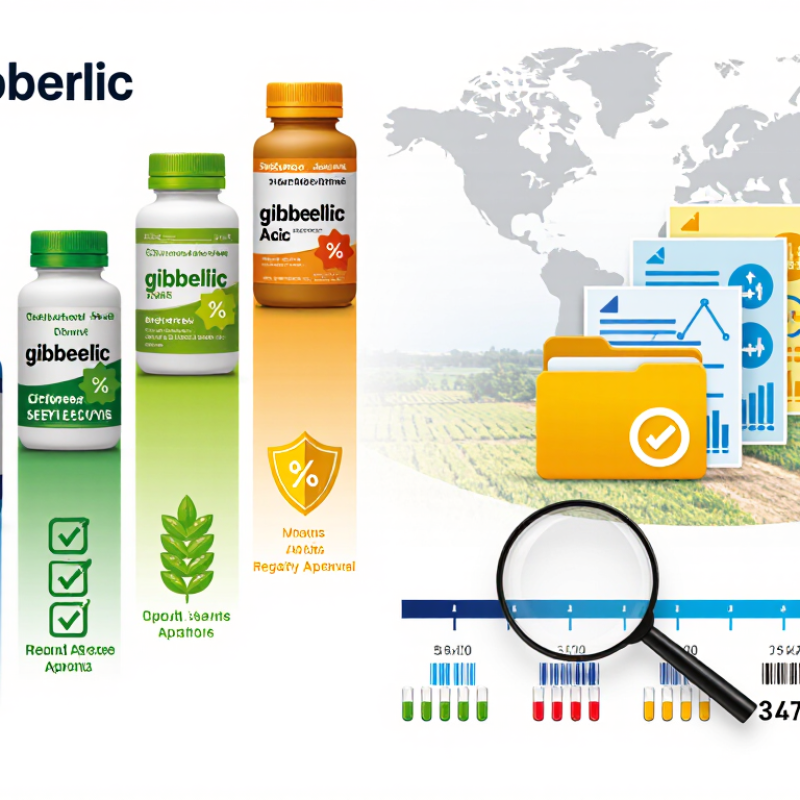
GA3, or gibberellic acid, is a plant growth regulator that can influence stem elongation, flowering, seed germination, and fruit development. Its effects depend on crop variety, plant stage, temperature, and application method. Yamaguchi’s review in Annual Review of Plant Biology (2008) describes how gibberellins regulate plant growth and development. In commercial horticulture, GA3 is used in crops such as table grapes to support berry growth and adjust cluster structure. The same treatment can produce different results across cultivars. That matters.
The scale is significant. FAOSTAT reports global fruit production of about 933 million tonnes in 2022, spanning crops with very different growth habits and handling needs. A number alone does not tell growers whether GA3 is suitable for a particular block. Field records should capture cultivar, timing, weather, and observed response; otherwise, a larger berry may be mistaken for a reliable treatment effect. Follow the product label and local agricultural guidance, and test a small area before wider use. Results can be uneven. That is worth admitting.
For GA3, match the formulation to how you will measure and apply it. Soluble powders suit growers who prepare fresh spray mixtures, while liquids can be easier to measure in small batches. Check the active ingredient concentration, not just the package size. A 4% product and a 90% product require very different calculations. Also confirm that the formulation dissolves in your water and fits your spray equipment. Small details matter.
Concentration depends on crop and timing, not on a universal “best” strength. UC Agriculture and Natural Resources table-grape guidance illustrates the point: bloom treatments may use about 10 ppm, while berry-sizing sprays can use roughly 20–40 ppm. These are crop-specific reference rates, not directions for other crops. Product labels and local extension guidance should determine your final rate. I would not assume a familiar crop responds the same way in a different season or site.
Tips: Compare cost per gram of active ingredient, then check measuring instructions and storage limits. Keep a clean syringe or scale for dosing. Never estimate by eye. Record the crop, growth stage, concentration, and weather after each application; those notes can reveal when a chosen rate needs review.
How to read this chart: The bars show the nominal grams of GA3 in 100 g of material at each stated concentration (a direct percentage-to-grams conversion). Soluble powders and technical-grade material may differ in intended use and handling. Check the product label, local registration, and concentration units before buying; formulations and availability vary by market.
Buying GA3 gibberellic acid in 2026 starts with checking the rules where it will be used. Requirements may differ by country, crop, product formulation, and intended use. Consult the relevant agricultural or pesticide authority before ordering. Do not assume that a product sold online is approved for your situation. Keep a note of the authority’s guidance and any registration or import requirements.
Tips: Ask suppliers for current product registration details, a safety data sheet, and a batch-specific certificate of analysis. Check that the documents name the same formulation and concentration shown on the label. Request traceability information, such as a lot number and manufacturing date. Verify the seller’s business identity and address independently. A polished website is not proof. Records can still be incomplete; pause and seek clarification rather than guessing.
Before purchase, compare the label directions with your crop, application method, and local rules. Confirm storage instructions and packaging condition, especially if the product must remain dry or protected from heat. Save invoices, labels, and supplier correspondence. If the seller avoids documentation or pressures you to buy quickly, choose another source. A careful check takes time. It can prevent costly mistakes.
How to Buy GA3 Gibberellic Acid in 2026?
Comparing product specifications means looking beyond the percentage on the front label. Check the stated GA3 concentration, formulation, net weight, and recommended storage conditions. A powder and a prepared solution may have different handling needs, so compare like with like. Ask for a current batch certificate of analysis and safety data sheet, and confirm that the label matches your intended crop and use. Details matter.
Packaging affects both convenience and product condition. Small, tightly sealed containers may suit limited use, while larger packs can reduce the cost per gram. Check whether the closure protects against moisture and whether the lot number and expiry date are clearly printed. Avoid buying more than you can store as directed. I still find package size easy to underestimate.
Price comparisons are meaningful only when the active ingredient amount and formulation match. Calculate the cost per gram of GA3, then include shipping, taxes, and any handling fees. A low unit price may not be the better value if the pack is oversized or documentation is incomplete. Small packs cost more. Availability, labeling, and permitted uses can differ by location, so verify current local requirements before ordering.
When ordering GA3, compare the stated purity, formulation, batch number, expiry date, and certificate of analysis. Ask for the current safety data sheet before purchase, not after delivery. UNEP’s Global Chemicals Outlook II projected that global chemical sales could nearly double between 2017 and 2030, making clear supplier records and traceable batches increasingly important. That broad industry forecast is not specific to GA3, but it reinforces a practical point: keep order documents with the product. Small detail. It matters.
On arrival, inspect the seal and label, then follow the product’s own safety data sheet. GA3 powder is commonly stored tightly closed in a cool, dry place, away from direct light; exact conditions can differ by formulation. Keep it in its original container, separate from food and drink, and record the opening date. Prepare only the solution needed for the task, since diluted solutions may not retain the dry product’s stability. FAO and WHO storage guidance emphasizes controlled access, clear identification, and preventing leaks; these are sound principles for agricultural inputs, though the guidance is not a GA3-specific stability study. A refrigerator is not automatically safer. Check the stated temperature range, avoid moisture and contamination, and do not rely on appearance alone to judge product quality.
| Cookie | Duration | Description |
|---|---|---|
| _wpfuuid | 11 years | This cookie is used by the WPForms WordPress plugin. The cookie is used to allows the paid version of the plugin to connect entries by the same user and is used for some additional features like the Form Abandonment addon. |
| cookielawinfo-checkbox-analytics | 11 months | This cookie is set by GDPR Cookie Consent plugin. The cookie is used to store the user consent for the cookies in the category "Analytics". |
| cookielawinfo-checkbox-functional | 11 months | The cookie is set by GDPR cookie consent to record the user consent for the cookies in the category "Functional". |
| cookielawinfo-checkbox-necessary | 11 months | This cookie is set by GDPR Cookie Consent plugin. The cookies is used to store the user consent for the cookies in the category "Necessary". |
| cookielawinfo-checkbox-others | 11 months | This cookie is set by GDPR Cookie Consent plugin. The cookie is used to store the user consent for the cookies in the category "Other. |
| cookielawinfo-checkbox-performance | 11 months | This cookie is set by GDPR Cookie Consent plugin. The cookie is used to store the user consent for the cookies in the category "Performance". |
| viewed_cookie_policy | 11 months | The cookie is set by the GDPR Cookie Consent plugin and is used to store whether or not user has consented to the use of cookies. It does not store any personal data. |
| Cookie | Duration | Description |
|---|---|---|
| CONSENT | 2 years | YouTube sets this cookie via embedded youtube-videos and registers anonymous statistical data. |
| vuid | 2 years | Vimeo installs this cookie to collect tracking information by setting a unique ID to embed videos to the website. |