site_4bbb466c-cafd-4edb-8869-71ed8e60d33a
Excellence in PGR technology
Using ga3 gibberellic acid can encourage specific growth responses, but it is not a universal plant tonic. The same treatment may affect seed germination, stem elongation, or flowering differently, depending on the species and its growth stage. A useful expert takeaway, paraphrased from plant hormone researcher Peter Hedden’s work, is that gibberellin effects depend on concentration and plant development. This is a paraphrase, not a verbatim quotation.
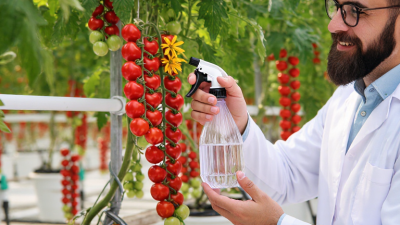
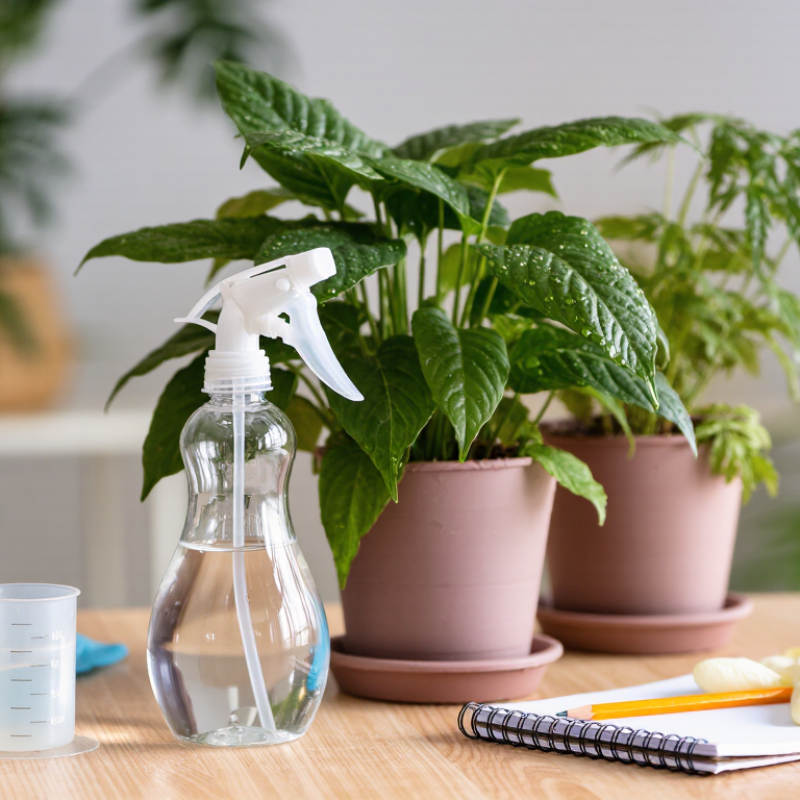
Start with the product label. Check its stated concentration, approved application method, and plant-specific directions before mixing anything. A small measuring tool and clean spray bottle help avoid guesswork. If the label allows foliar application, test a few plants first; droplets should lightly coat the intended leaves, not run off the edges. Keep notes on the dose, date, weather, and visible changes. Details matter.
Less can be safer. Too much GA3 may cause weak, stretched stems or uneven growth, and a result on one plant does not predict another’s response. Avoid treating stressed plants without understanding the cause of the stress. Even experienced growers can misread a quick growth spurt as success. That deserves a second look. This guide explains how to choose a cautious approach, apply the product consistently, and assess results over time. It also highlights where evidence, labels, and careful observation should guide decisions—not a one-size-fits-all recipe.
GA3, or gibberellic acid, is a plant hormone—not a fertilizer. It helps coordinate growth signals already present in a plant. A peer-reviewed review counted 136 identified gibberellins, though only a small number are major active forms in plants (Hedden and Sponsel, Journal of Plant Growth Regulation, 2015). GA3 is one of them. Small molecule. Large effect.
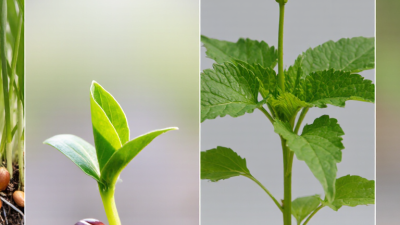
Inside plant tissues, gibberellin signaling can release growth restraints and promote cell expansion. In seeds, it helps trigger enzymes that turn stored reserves into fuel for germination. In stems, stronger signaling may lengthen the spaces between leaves, making a young plant taller and sometimes less sturdy. Effects vary. Species, developmental stage, light, and temperature all matter.
For practical use, treat GA3 as a growth regulator, not a general-purpose tonic. Follow the product label for the crop and purpose, since concentration and timing can change the result. A few treated plants beside untreated controls can reveal whether stems stretch, seeds sprout, or fruit set changes under your conditions. That distinction is easy to miss. Tall growth is not automatically better growth, and a response in one cultivar may not repeat in another.
| Topic | What It Means | Practical Guidance |
|---|---|---|
| What GA3 is | GA3, or gibberellic acid (gibberellin A3), is a plant growth regulator in the gibberellin family. Plants produce gibberellins naturally, and GA3 is also used in some agricultural products. | Use only a product registered for the intended crop and purpose in your location, and follow its label. |
| Stem and shoot growth | Gibberellins can promote cell elongation and may increase stem or shoot growth. The response depends on the plant species, its growth stage, and the treatment. | Do not assume that more growth is always beneficial. Excessive or poorly timed treatment can produce unwanted elongation or weak growth. |
| Seed germination and dormancy | GA3 can help break dormancy and stimulate germination in certain seeds, but it does not work equally well for every species or seed lot. | Check species-specific propagation guidance. Some seeds also require treatments such as chilling, scarification, or suitable light and temperature conditions. |
| Flowering and fruit development | In some crops, GA3 treatments can influence flowering, fruit set, fruit growth, or fruit shape. Effects are crop- and timing-dependent. | Apply only where the product label or reliable crop-specific guidance supports the use. A treatment suitable for one crop may be unsuitable for another. |
| Choosing a concentration | There is no single concentration or application rate that is appropriate for all plants. Product strength, crop, target response, and application method all matter. | Use the rate and dilution stated on the product label. Do not convert rates from another crop or product without qualified guidance. |
| Preparing a solution | GA3 products may be formulated differently, and their solubility can vary. The label specifies how to measure, mix, and use each formulation. | Measure accurately, use the specified water and mixing procedure, and prepare only the amount needed for the labeled application. |
| Application timing | Plant response often depends strongly on developmental stage. The appropriate timing for seed treatment, foliar application, or another method varies by crop and purpose. | Follow the label’s timing and application method. Avoid treating stressed plants unless the label or qualified crop guidance says otherwise. |
| Testing before wider use | Genetics, growing conditions, and plant health can affect the outcome, so results may differ even within the same species. | Where permitted by the label, test on a small number of plants first and observe them before considering broader use. |
| Safety and handling | Plant growth regulators must be handled according to their product-specific safety instructions. | Wear the protective equipment listed on the label, avoid contact with skin and eyes, and store and dispose of the product as directed. Keep it away from children and animals. |
| Key limitation | GA3 affects plant growth; it is not a general-purpose fertilizer and does not replace suitable light, water, nutrients, or other growing conditions. | Use it only for a clearly identified, label-supported purpose, and follow local regulations and all label precautions. |
GA3 may help plants with specific growth barriers, but it is not a general-purpose tonic. Some dormant seeds respond with faster or more even germination, including certain species that need a chemical cue. Results vary by seed age, temperature, and light. Check species-specific guidance before treating a whole batch.
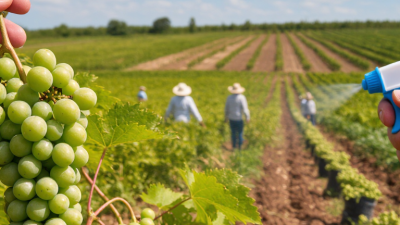
Selected fruit crops may also respond. In seedless grapes, for example, carefully timed GA3 treatments can encourage berry enlargement or looser clusters. Some ornamental plants may benefit when longer stems are wanted for display or propagation. That same elongation can be a problem in compact plants. The stems may become thin and floppy.
Match the treatment to the goal. A plant already growing vigorously may gain little, while a dose that is too strong can produce lanky growth or disrupt flowering. Start with a small trial, compare treated and untreated plants, and record the timing and conditions. It is easy to focus on taller growth and miss weaker stems. Follow product-label directions, since concentration and application timing differ among plants.
Plant goals that may benefit from GA₃ in suitable species
Each bar marks a response reported in some plants; it does not indicate effect size or guarantee a result. GA₃ may help break seed dormancy, promote stem elongation or bolting, and support fruit set or growth in certain crops. Results depend on species, cultivar, dose, timing, and growing conditions. Follow the product label and crop-specific guidance.
Selecting a GA3 formulation starts with its active-ingredient concentration, not the package size. Soluble powders and liquids can differ greatly in strength, so check the label before measuring. For a 10-liter spray tank, a target of 20 mg/L requires 200 mg of active ingredient. The amount of product depends on its stated concentration. Small differences matter. Dissolve powders fully, use clean water, and prepare only what the label allows.
Dose depends on crop, cultivar, growth stage, and purpose. UC ANR’s Grape Pest Management guidance treats gibberellic acid rates as timing- and use-specific; table-grape programs may use roughly 10 mg/L for thinning and 20–40 mg/L for berry sizing. These are crop-specific examples, not universal rates. A concentration that enlarges berries at one stage may cause unwanted effects at another. Follow the locally registered product label and test a small area when permitted.
Record the formulation, dilution, date, weather, and plant response. Apply evenly, avoiding runoff from leaves and clusters. I would not assume that a stronger solution works better; that’s an easy mistake, and crop response can be uneven. Recheck the label if switching formulations, since equal product volumes may deliver very different amounts of GA3.
GA3 can influence stem growth, flowering, or seed germination, but the response depends on plant species and timing. Read the product label before mixing; use its stated concentration and application directions, not a guessed dose. Measure the powder or liquid with a dedicated tool, then prepare only the amount you need. Follow the label’s instructions for dissolving and dilution. Wear gloves and eye protection, and avoid splashing the solution onto skin or into eyes. Keep it away from children and pets.
Tips: Try the solution on a few plants first. Use a clean, clearly marked sprayer, and apply a fine, even mist without soaking leaves or letting it run off. Choose calm conditions so spray does not drift. Record the concentration, date, plant type, and visible changes. Small notes help.
Apply only when the label and the plant’s growth stage support it. Avoid treating plants that are already stressed by heat, drought, or disease. Do not combine GA3 with other products unless the label permits it. Results can be uneven, even among similar plants; that is a reason to reassess the dose and timing, not to repeat an application quickly. Store any remaining solution as directed, and clean equipment safely.
After applying GA3, compare treated plants with similar untreated plants growing under the same light, temperature, and watering conditions. Keep conditions alike. Record the application date, product concentration, plant age, and growth stage; follow the product label rather than assuming one rate suits every species. Once a week, measure stem length and note leaf number, flowering, and overall firmness. A ruler beside the stem makes changes easier to judge. Take photos from the same angle, since memory can be unreliable.
Watch for unusually long, thin stems, leaning growth, or flowering that occurs earlier or later than expected. These changes may indicate that the treatment was too strong or poorly timed, but other growing conditions can also be responsible. Do not repeat an application just because results seem slow; allow time for the plant to respond. Small trials matter. If growth is weak or uneven, check watering, light, and plant health before changing the treatment. In future trials, adjust only one factor at a time, such as timing or concentration, and stay within label directions. Some results may remain unclear, especially when plants differ in age or vigor. That uncertainty is worth recording, not hiding.
| Cookie | Duration | Description |
|---|---|---|
| _wpfuuid | 11 years | This cookie is used by the WPForms WordPress plugin. The cookie is used to allows the paid version of the plugin to connect entries by the same user and is used for some additional features like the Form Abandonment addon. |
| cookielawinfo-checkbox-analytics | 11 months | This cookie is set by GDPR Cookie Consent plugin. The cookie is used to store the user consent for the cookies in the category "Analytics". |
| cookielawinfo-checkbox-functional | 11 months | The cookie is set by GDPR cookie consent to record the user consent for the cookies in the category "Functional". |
| cookielawinfo-checkbox-necessary | 11 months | This cookie is set by GDPR Cookie Consent plugin. The cookies is used to store the user consent for the cookies in the category "Necessary". |
| cookielawinfo-checkbox-others | 11 months | This cookie is set by GDPR Cookie Consent plugin. The cookie is used to store the user consent for the cookies in the category "Other. |
| cookielawinfo-checkbox-performance | 11 months | This cookie is set by GDPR Cookie Consent plugin. The cookie is used to store the user consent for the cookies in the category "Performance". |
| viewed_cookie_policy | 11 months | The cookie is set by the GDPR Cookie Consent plugin and is used to store whether or not user has consented to the use of cookies. It does not store any personal data. |
| Cookie | Duration | Description |
|---|---|---|
| CONSENT | 2 years | YouTube sets this cookie via embedded youtube-videos and registers anonymous statistical data. |
| vuid | 2 years | Vimeo installs this cookie to collect tracking information by setting a unique ID to embed videos to the website. |